A Lawless Time Leia Organa Spotlight Deck Guide: Aspects, Experience, and Timing
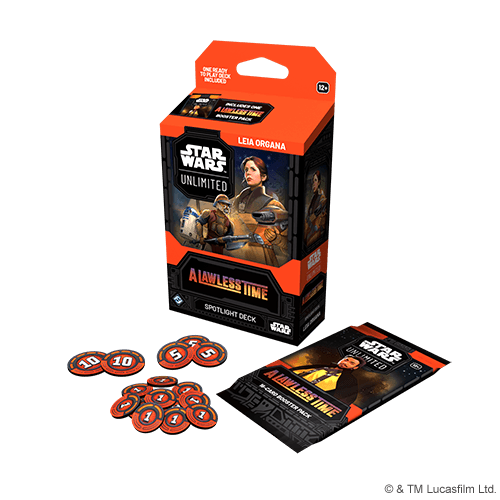
Leia's A Lawless Time deck makes aspects a tactical resource as well as a deckbuilding restriction. A unit with several different aspect icons can receive a larger temporary boost, while a board showing several aspects can make deployment deliver a substantial permanent upgrade. The same colorful cards that raise the payoff can also make your hand harder to pay for.
I would choose this deck for someone who enjoys building a team whose pieces matter to one another. It asks more planning than “play every Rebel and attack.” You need to distinguish the aspects on one unit, the aspects among your units, and the icons your leader and base provide for paying costs. Confusing those three counts is the quickest way to make the deck look stronger than it is.


Jump to a section
- Someone Who Loves You: the exact leader
- Three aspect counts, with examples
- A keepable hand has a payable curve
- Build the target before buying the boost
- Plan the five-resource deployment
- Protecting a tall unit without overcommitting
- Finding the right piece and finishing the game
- Three practice decisions
- Weaknesses and upgrade experiments
- B3's verdict
- Official fixed 50-card main deck
- Buying the deck and choosing upgrades
- Learn the rules, then test the fixed deck
Someone Who Loves You: the exact leader
Leia Organa — Someone Who Loves You is A Lawless Time #010, Command/Heroism. Her leader action costs two resources and exhausts her. It gives one unit +1/+1 for the phase for each different aspect that unit has. Two copies of the same aspect are still one different aspect for that count.
She deploys at five resources as a 2-power, 2-HP ground leader with Overwhelm. When deployed, she can give a chosen unit an Experience token for each different aspect among units you control. This is a separate calculation from the non-unit action. The printed body is small because the deployment reward can make a unit much larger; do not read her as an ordinary unassisted 2/2 combat leader.
Daimyo's Palace is the supplied Vigilance base. Its once-per-game aspect tool helps play a card outside the normal coverage, but it does not permanently add a missing aspect to every future purchase. Treat that exception as a resource you allocate to a particular important play.
Three aspect counts, with examples
Suppose a unit shows Vigilance, Aggression, and Heroism. It has three different aspects, so Leia's paid leader action would ordinarily give that unit +3/+3 for the phase. That does not give every friendly unit the same boost, and it does not make the icons permanent additions to your leader/base payment coverage.
Now suppose Leia is deployed and your friendly units collectively show Vigilance, Command, Aggression, and Heroism. Her deployment trigger counts four different aspects across those units and can supply four Experience tokens to its chosen unit. You do not add another point for a second Aggression unit. A Cunning unit could add a new aspect; another unit showing only already-present icons would not.
An Experience token is +1 power and +1 HP. A temporary phase boost expires instead. Before counting a unit as safely out of defeat range after a fight, remember what its HP will be when temporary effects end. The permanent deployment upgrade and the paid leader action should not be tracked with indistinguishable counters.
A keepable hand has a payable curve
Find an early unit and a follow-up that your leader and base can actually pay for. A hand of excellent multi-aspect cards may be slow if several need penalties or the same once-per-game base exception. Decide which card gets that exception before treating the whole hand as playable.
Lepi Lookout, Massassi Group Marines, and Phoenix Squadron A-Wing offer ways to begin developing rather than wait for the largest payoff. Keep space coverage in mind: putting every useful icon on the ground does not automatically defend the base against ships.
When choosing resources, preserve both a functional early curve and the aspects needed for the deployment you are actually pursuing. Do not keep an unpayable card only because its icon would look useful in play. An aspect stranded in your hand does not contribute to a count among controlled units.
Build the target before buying the boost
Han Solo and Lando Calrissian give you attractive reasons to invest in a unit. The question is whether the next boost changes a fight, protects a valuable ability, or creates a faster base clock. A larger number with no useful attack can be wasted development.
For a simplified example, your ready 3-power unit faces an unshielded enemy with four remaining HP. A correctly calculated boost may turn that into a defeat rather than an incomplete trade. Check your own remaining HP and the return damage as well. Extra power and extra HP solve different parts of the exchange.
Spending two on Leia also means not spending those two on another unit. In an early round, a second body may improve both board presence and your later aspect count. I would not activate the leader every round merely because the card permits it. Name the specific attack or survival breakpoint you are buying.
Plan the five-resource deployment
Count the actual different aspects among your units before you deploy. An earlier unit play might add the missing aspect and increase the Experience reward, but the opponent gets an action between that play and deployment. If they can remove the only unit showing an important icon, your planned count may shrink.
Suppose you control units showing Vigilance, Aggression, and Heroism. Deployed Leia supplies Command as a unit herself. That can make four distinct aspects at the point the deployment trigger resolves, before considering any Cunning presence. Check which units remain in play rather than relying on the colors printed on the original decklist.
You can choose where the Experience tokens go. Making Leia larger may protect the leader and leverage Overwhelm. Boosting an established ready attacker may produce immediate pressure on a later action. Neither choice is automatically correct. Ask which unit is most likely to survive the opponent's next response and convert the investment into useful damage.
Protecting a tall unit without overcommitting
Cinta Kaz's upgraded condition and Bodhi Rook's Sentinel support can make a boosted board more difficult to attack profitably. Leia's Disguise can add protection under its conditions. Those effects matter because investing several resources into one unit creates an inviting removal target.
Sentinel is arena-specific. A Sentinel protecting your ground does not ordinarily stop a space attack at the base. A Shield token prevents a damage event, not every possible card effect. Do not describe a tall protected unit as invulnerable; describe which opposing actions its protection actually answers.
If you already have one threatening upgraded unit, the next useful action may be developing a second threat instead of making the first larger. That forces removal to solve more than one problem and leaves you a game plan if the original investment disappears.
Finding the right piece and finishing the game
R2-D2, Rogue One, and Putting a Team Together provide access to units rather than raw damage. Before searching, decide whether you need an affordable body, a missing arena, a missing aspect, or a particular effect. Searching for the most exciting named character is less useful than searching for the card that changes the position.
Common Cause can produce a temporary burst, while Nothing Left to Fear rewards having a suitably powerful unit. Sequence these with the actual target and costs visible. Do not rely on a power value from a temporary effect after that effect has expired.
Once a large unit has cleared the enemy's key defenders, stop finding unnecessary trades. The win condition is still the opposing base. Leia's deployed Overwhelm can punish a small defender, but it does not bypass prevention or every Sentinel restriction by itself.
Three practice decisions
First, choose between paying two for Leia's boost and playing another useful two-cost unit. Write down which specific combat changes with the boost. If no meaningful result changes, development deserves priority.
Second, count aspects before deployment, then remove one of your units hypothetically. Recount. That shows which piece the opponent has the greatest incentive to disrupt and whether you should bank the deployment now instead of waiting for a perfect board.
Third, compare giving four Experience tokens to Leia with giving them to a surviving ship. The leader may become a strong ground attacker, but a space threat may solve a completely different problem. Arena coverage can matter more than the most photogenic final stat line.
Weaknesses and upgrade experiments
Aspect penalties can make the curve clumsy. Removal can punish concentrated upgrades. Losing your only early body can leave boosts without a useful target. Keep those failure modes separate when changing the list.
The deck has two different C-3PO printings. Treat them as distinct card identities and check their exact subtitles and set numbers; do not collapse the two entries into a mistaken four-copy upgrade recommendation. Many central pieces, including Han, Lando, R2-D2, and Leia's Disguise, already begin at three.
If early hands repeatedly stall, test a third supplied affordable unit currently at two copies rather than adding another expensive multi-aspect payoff. If you consistently want a missing effect, consider a third Cinta Kaz or Scarif Lieutenant after checking what you can remove and whether that change preserves payment coverage. These are controlled experiments, not a tested tournament upgrade list.
B3's verdict
Leia is rewarding when you enjoy preparing a deployment rather than merely reaching its number. The interesting decisions are which aspects to preserve, which temporary boosts actually matter, and where permanent tokens create the best next attack. I would start with the fixed list, learn its payment constraints, and resist turning every hand into a hunt for the maximum possible Experience count.
Official fixed 50-card main deck
The leader and Daimyo’s Palace base sit outside these 50 main-deck cards. Counts below follow the official product list; earlier printings and same-name cards can have different abilities. Use the linked original for printed card numbers and previous-set markers.
- 1 each: Jyn Erso; Bodhi Rook; Rogue One; Sabine’s Masterpiece; Mon Mothma.
- 2 each: Scarif Lieutenant; C-3PO (Secrets of Power 93); C-3PO (A Lawless Time 152); Cinta Kaz; Maarva Andor; Ezra Bridger; Zeb Orrelios; Putting a Team Together; Nothing Left to Fear.
- 3 each: Han Solo; Lepi Lookout; Phoenix Squadron A-Wing; R2-D2; Massassi Group Marines; Jaunty Light Freighter; Lando Calrissian; Leia’s Disguise; Common Cause.
Inspect the official complete decklist image. The list includes both paired products; use the section headed Leia Organa.

Buying the deck and choosing upgrades
This is one player’s preconstructed deck, not a two-deck starter. An opponent needs their own playable deck. Check language, sealed condition, included accessories, and whether the listing is a single deck rather than a display or an individual leader card. Compare delivered prices; no live price or stock promise is made here.
As an Amazon Associate, B3 earns from qualifying purchases.
View the A Lawless Time Leia Organa Spotlight Deck on Amazon.
Learn the rules, then test the fixed deck
For a quick visual introduction, B3’s How to Play guide includes an 8:45 beginner tutorial. It explains the core action rhythm; use the worked examples here for this exact leader and fixed deck.
Keep the stock deck together for the first games. Record one resource choice, one action-order decision, and one card that felt stranded. Change a few slots only after identifying a repeated problem. For the next purchase, compare complete decks, singles, and boosters in the buying guide.
Event play: check the current format, reprint eligibility, errata, and suspended list before bringing the stock deck to an event. These products mix printings from different sets; an old printing may remain legal through an eligible reprint, but a recent package is not itself a legality certificate. Proposed upgrades here are small experiments, not a verified competitive list.
Card and inventory checks: October 20, 2026. Sources: official Spotlight Deck overview, official first look and leader images, current rules, errata, and suspended cards, and the original decklist linked above. Future rule or format changes take precedence.
Return to B3’s Star Wars: Unlimited hub.
Scope: the official A Lawless Time fixed Spotlight Deck, led by Leia Organa — Someone Who Loves You. This is rules-based analysis of the printed deck, with proposed practice and upgrade ideas; it does not claim B3 tournament results or hands-on testing.
Compare the paired deck: A Lawless Time Jabba the Hutt Spotlight Deck Guide: Credits, Ambush, and the Sarlacc. Browse all twelve Spotlight Deck guides and the SWU learning guides.
Considering packs for upgrades? Read the A Lawless Time booster buying guide before choosing a sealed product. For premium treatments, see Carbonite packs explained.