Ursula’s Return Guide: Starter Decks, Songs, Boosters, and Deep Trouble
Affiliate disclosure: As an Amazon Associate, B3 earns from qualifying purchases.
Ursula’s Return has two quite different invitations. Its numbered set expands Lorcana’s characters, songs, and deckbuilding options. Its companion Illumineer’s Quest box, Deep Trouble, offers cooperative play against Ursula. I would decide between those experiences before shopping, because a booster display does not contain the complete cooperative scenario.
For a player interested in ordinary head-to-head matches, I would start by examining the two fixed decks or a short list of specific cards. For a group that wants to share a win or loss, I would inspect Deep Trouble as a separate product. The story connection does not make both purchases necessary.
Mirabel wants the family to quest after her
Mirabel Madrigal — Gift of the Family has Support and, when she quests, gives your other Madrigal characters an extra lore for the turn. Those rewards make ordering important. Quest with Mirabel before the other qualifying Madrigals if you want their later quests to benefit.
Imagine two other dry Madrigals are ready and safe to quest. Mirabel’s trigger can improve both quests while her Support helps a separate useful challenge. If you quested with the other Madrigals first, their completed quests do not retroactively gain lore. This is a concrete reason to organize a turn rather than merely rotate cards one at a time.
The family plan needs a surviving group. Trading away a qualifying character before the lore push can cost more than its ordinary quest value. Conversely, preserving every character at any cost can allow the opponent to win. Compare the total lore you can produce now with the interaction needed to earn another turn.
The deck’s Bruno cards and other Madrigals should be evaluated by their own text, not by a presumption that every family member performs the same role. When choosing replacements, count the actual classification and the affordable plays that let Mirabel arrive behind a functioning board.
Anna gives the Hero deck its own ordering lesson
Anna — True-Hearted is the Sapphire/Steel starter’s featured Anna. When she quests, her other Hero characters gain an extra lore for the turn. The practical pattern resembles Mirabel’s family turn, but the qualifying classification is Hero, so the supporting cast and deckbuilding choices differ.
I would count the eligible ready Heroes before committing to challenges. If Anna can safely quest first and the others can finish the race, further fighting may be unnecessary. If an opposing engine threatens a winning response, reserve the smallest useful interaction package and quest with the rest.
Anna — Braving the Storm is a different version. Its benefit depends on having another Hero in play. Do not transfer the larger Anna’s quest trigger onto every card with Anna’s name. Full version names matter, particularly when comparing singles or remembering what a card did in a previous game.
Build the matchup around a visible finish
Both starters reward a coordinated board. That can make a game suddenly accelerate when the relevant character and several teammates are dry together. Before passing the turn, calculate the opponent’s plausible next quest under their actual bonuses rather than counting only the printed lore symbols in isolation.
For a teaching exercise, pause a developed game and let each player state their next-turn lore ceiling. Then identify which single opposing card most changes that number. This reveals when an apparently ordinary teammate is part of a winning board and when a dramatic challenge would merely be a distraction.
Upgrade by preserving the plan’s useful density. Add more qualifying characters only when their cost, inkability, and role support the turns you need. A higher classification count can make the headline trigger more reliable while still leaving you with a worse opening hand.
Card references: Mirabel Madrigal card reference · Anna card reference. Gallery illustrations may show a reprint or alternate treatment; the analysis concerns the named card’s abilities, not a promise of that treatment in the starter.
Songs become a team decision
The set introduced Sing Together. Rather than relying on one character meeting a song’s singing requirement, multiple eligible characters can contribute their costs as the card instructs. Each singer is still giving up its ordinary opportunity to quest or challenge.
That is the real calculation. Suppose two dry characters could collect four lore between them. Singing a powerful song with both may save a large amount of ink, but the song and the plays made with that ink must justify losing those four lore this turn. If the song clears threats that would otherwise win next turn, the exchange can be excellent. If you already had a safe winning quest, it may be unnecessary.
I would plan the entire turn before exerting the first singer. Identify the song’s legal effect, the characters that can contribute, what ink remains available, and what you will do with it. “The song was free” is an incomplete description when it consumed your entire ready team.
Mirabel and Bruno: build a useful team, then decide who quests
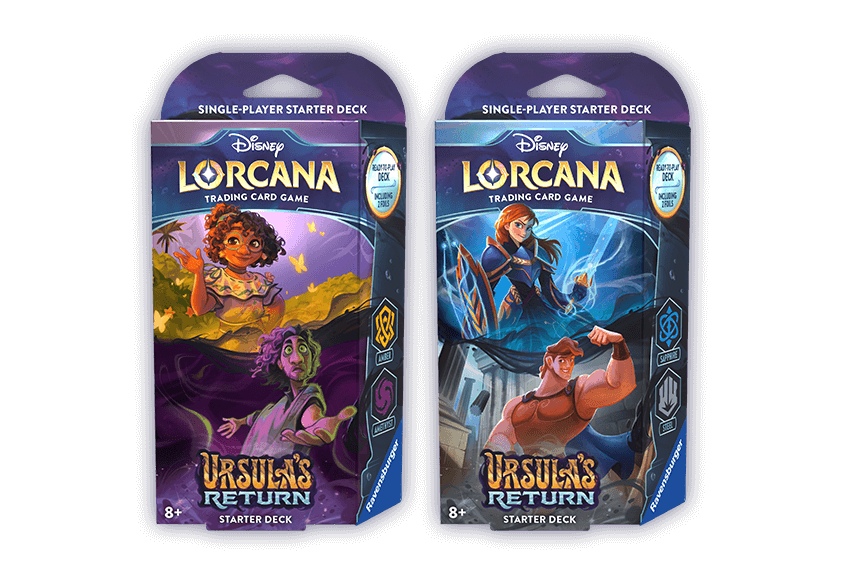
The Amber/Amethyst starter features Mirabel Madrigal and Bruno Madrigal. Its family and character connections make it an inviting product to examine, but the practical lesson is deciding which pieces improve other pieces. A support character can be worth protecting even when its immediate lore is modest.
Before questing every available character, look at the opponent’s legal challenges. Which character is safe to expose? Which is enabling a bonus that several other cards rely on? You do not need to preserve every character, but trading away an engine for one extra lore can be expensive if the lost engine supported the next several turns.
I would use a stock matchup to practice one question each turn: if the opponent removes one exposed character, which loss would hurt most? The answer helps decide quest order and whether an interaction should happen before a lore push.
Hercules and Anna: strength is not the whole combat calculation
The Sapphire/Steel starter features Hercules and Anna. I would inspect it for players interested in a Hero-oriented team, resource development, and combat planning. It is a different route to learning that a deck’s classifications can matter as much as familiar character names.
When considering a challenge, count both characters’ existing damage and the actual modifiers in effect. A favorable Strength comparison does not guarantee the attacker survives. A temporary bonus can remove a threat while leaving a damaged attacker vulnerable to the next small challenge.
Resource development also requires timing. Spending a turn preparing additional ink can be sensible when your hand has useful follow-up plays. Doing so while the opponent’s board is one quest away from winning can be a plan for a turn that will never arrive. Compare the current lore race with the future payoff before choosing ramp over interaction.
Buy the numbered set for its cards
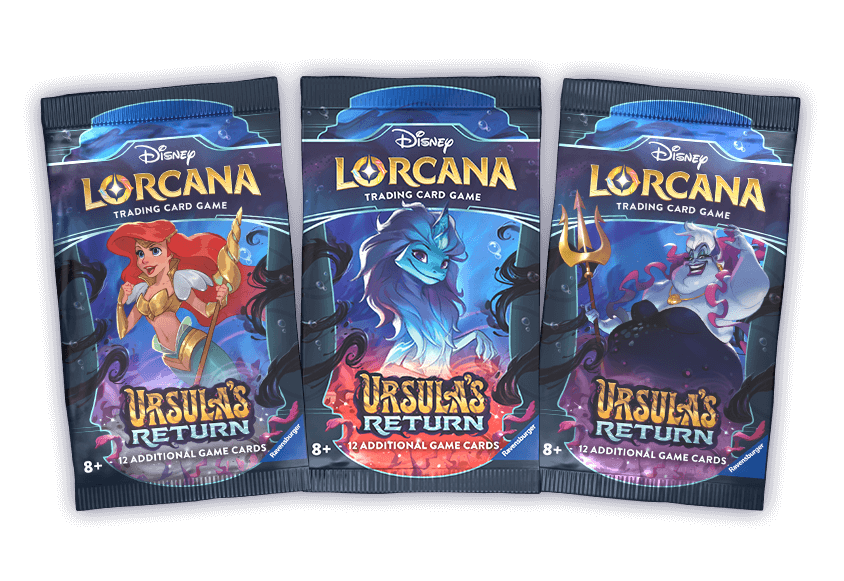
The twelve-card boosters provide randomized additions. The Trove includes eight packs, a storage box, six dividers, six damage dice, and a lore counter. Compare the delivered cost of the same pack quantity and decide separately whether the accessories solve a real need.
I would not open a display solely to assemble a particular Sing Together package. That plan can require specific singers and a specific song, while the box distributes cards across the set. Price the exact components before assuming a large random purchase is the most practical beginning.
For collecting, separate ordinary cards from special treatments. It is perfectly reasonable to follow Encanto artwork or another favorite group without defining completion as every premium version. A clear album project makes the next purchase easier to evaluate and makes it possible to stop when the project is finished.
Deep Trouble is the cooperative product
The named Quest box provides an Ursula scenario deck, two prebuilt player decks, battleground cards, and dedicated tracking components. The scenario has its own rules and difficulty choices. It is a product for playing an adventure, rather than another way to buy an ordinary random selection from Ursula’s Return.
The two supplied player decks feature Yen Sid and Mulan. The official product supports solo play or play with a friend using the included contents; adding further players requires additional suitable decks. Follow the scenario instructions for scaling and turn procedure instead of importing the ordinary two-player head-to-head structure unchanged.
I would learn the base Lorcana turn first, then read the Quest instructions together. A cooperative product can help people discuss choices openly, but it still expects them to understand the underlying actions. Team play is not the same as a simplified staged teaching product such as Gateway.
Format and purchase decision
Ursula’s Return is an older set outside the current Core pool, with legal-reprint exceptions checked by full card identity. Infinity and agreed casual play provide other uses, subject to their rules. Do not buy the whole stock deck expecting a current Core event list without checking it.
I would choose its fixed decks for the particular matchup and lessons they offer, singles for a named song or character package, and Deep Trouble for cooperative play. The best purchase is the one that supplies the activity your group actually wants that evening.
Find the product
View Ursula's Return booster display on Amazon. Confirm the selected quantity, language, seller, and delivered price.
Continue with B3’s Lorcana guides
Browse all Lorcana guides · Learn to play · Compare your first purchase.
Sources and scope
Checked October 21, 2026: official Ursula's Return products and card previews, current rules and release notes, and the official rotation explanation. Product facts and printed mechanics are separated above from B3’s proposed buying and practice methods. Prices in worked examples are hypothetical; live prices, stock, event availability, and pull odds are not promised.