Secrets of Power Booster Buying Guide: Plot, Disclose, and Packs with a Purpose
Secrets of Power makes a hand of cards feel like information you must manage. Some cards want you to reveal aspects, while Plot turns a resource choice into preparation for deployment. I find that a more compelling reason to investigate the set than a generic promise of powerful cards: it offers a particular kind of decision.
For learning that decision with a coherent list, I would begin with Padmé or Chancellor Palpatine's fixed Spotlight Deck. For a group that enjoys building from an uncertain pool, standard boosters have a clear job. For two exact upgrades, I would compare singles before paying to discover everything else.
In this buying guide
- What you get: compare the actual packages
- Disclose makes the cards you keep matter twice
- Plot rewards planning around deployment
- Padmé and Palpatine make the choice more predictable
- This set’s packs predate the Lawless changes
- A useful sealed-pool review
- Who should buy a display?
- Price the experience, then set a stopping point
- Find the correct product
- Keep exploring
What you get: compare the actual packages
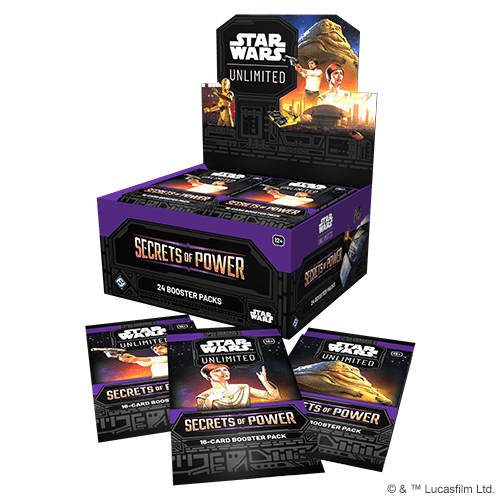
A standard display contains 24 packs. At 16 cards per pack, that is 384 cards, including leader and base/token slots; it is not 384 distinct main-deck cards. A prerelease box provides six packs and supporting materials. A retail prerelease box does not automatically include entry to a store event.
This set uses the earlier pack structure: nine commons, three uncommons, one rare or legendary, one leader, one base/token, and one foil card, with applicable variant replacements. Neither a legendary nor a particular card is guaranteed in each pack.
The fixed Padmé Amidala or Chancellor Palpatine Spotlight Deck is a different product. Buy it for the supplied list; buy boosters for randomized cards. There is also a separate 12-pack Carbonite display. Compare editions and quantities before comparing a price labeled simply “box.”
Disclose makes the cards you keep matter twice
Disclose requires revealing cards from hand to satisfy specified aspect icons. Revealing is not discarding, and the same retained card may help satisfy later abilities. That creates a real tension between playing a useful card now and preserving the aspect combination another effect needs.
For example, imagine one card is your best available unit and also the only card covering a disclosure requirement. Playing it can improve the board while switching off a later option. Holding it preserves the option while leaving less pressure in play. This is the kind of tradeoff I would want the collection to support, rather than simply maximizing the number of cards labeled with the new mechanic.
Plot rewards planning around deployment
Plot cards can be played from resources when you deploy your leader, following the keyword's costs and replacement procedure. They are not free simply because they were already resources. Your ready resources and the order of the effects still determine which plays you can afford.
When evaluating an opened pool, mark which cards are useful normal plays and which you would be happy to set up as plots. A hand of elaborate future turns still needs affordable units now. If a deck repeatedly collapses before deployment, another expensive payoff is unlikely to repair the problem.
Padmé and Palpatine make the choice more predictable
The two Spotlight Decks demonstrate different emphases: Padmé turns disclosures and discards into pressure, while Chancellor Palpatine builds toward a Plot deployment turn. They are fixed individual products, and their published lists mix new cards with selected earlier printings.
I would use the full deck guides to choose the plan, then play the supplied list before ordering replacements. Take notes on which hand you wished you had kept and which resource you regretted committing. That evidence leads to a focused upgrade, whereas opening a box first can leave you trying to make every interesting new card belong in the same deck.
This set’s packs predate the Lawless changes
Secrets standard packs use the earlier foil-slot configuration. Do not assume a guaranteed Hyperspace-foil or the later standard-pack Prestige chance applies because a current SWU opening video mentions it. The product's set and edition determine the configuration.
The Carbonite product offers premium variants for this specific set. If you want a particular artwork, identify its card name, set, and treatment before comparing prices. A regular foil, Hyperspace-foil, Showcase leader, and Prestige card are different collecting targets even when a listing groups them under shiny cards.
A useful sealed-pool review
After opening, sort by aspect and identify the disclosures your pool can satisfy consistently. A strong-looking ability becomes less useful when the required icons seldom remain in hand. Then check whether your chosen leader's deployment timing fits the plots you expect to fund.
I would play the first games with the pool intact and record three things: a resource decision, a disclosure you could not pay, and a turn where the opponent interrupted your planned sequence by taking their normal action. These reveal whether the deck needs different cards or simply a more realistic plan.
Who should buy a display?
I would consider a display for a committed group limited session or someone who enjoys discovering multiple strategies across a set. I would lean toward a Spotlight Deck for a newcomer wanting one of these two leaders. For a known constructed list, I would price the missing cards and verify current format eligibility first.
Do not buy to complete an imagined perfect deployment turn without checking every cost. The best purchase is the one that lets you test a decision you actually enjoy. If the only justification is that one more rare might solve everything, pause and write down what the existing deck is failing to do.

Price the experience, then set a stopping point
Use delivered cost rather than the headline price. In a hypothetical comparison, a $96 display is $4 per pack; six loose packs at $5 each cost $30. The display has the lower unit price but requires $66 more spending. If you only arranged a six-pack experience, the larger order has to justify its extra quantity.
For a group, write down the format, number of players, required packs, token supplies, sleeves, and who keeps the cards before ordering. A normal draft uses three packs per person; sealed uses six. A 24-pack display therefore supplies eight draft entries or four sealed pools, before prize support or spare packs. Confirm the current procedure with your organizer.
For a deck upgrade, price the exact missing copies with shipping. Set your opening budget so the ordinary contents and the games are enough to justify it. Do not count on selling a chase card to make the purchase affordable.
Find the correct product
As an Amazon Associate, B3 earns from qualifying purchases.
View the Secrets of Power standard booster display on Amazon.
Confirm the selected edition, language, sealed condition, quantity, seller, and delivered price. This is a product-identity check, not a live stock or price promise.
Keep exploring
Learn the game · compare your first purchase · browse all SWU guides · Secrets of Power Padmé Amidala Spotlight Deck Guide: Disclose and Control the Board · Secrets of Power Chancellor Palpatine Spotlight Deck Guide: Plan the Plot Turn · understand Carbonite packs and their changing contents.
Product and rules check: October 22, 2026. Official sources: set products; secrets of power; disclosing plots; secrets of limited play; limited play; current rules, errata, and suspensions. B3’s buying recommendations and planning examples are editorial analysis; prices used above are hypothetical.