Attack of the Vine! Buying Guide: Boosters, Shift, and the Cooperative Box
Affiliate disclosure: As an Amazon Associate, B3 earns from qualifying purchases.
Attack of the Vine! turns Lorcana’s ongoing story into a useful deckbuilding question: what happens when familiar characters become part of something more dangerous? Its Vineling glimmers, new Shift variations, and Pixar cast make the set more than a change of booster artwork. I would approach it by choosing a mechanic or collection theme, then matching the product to that goal.
The most important product distinction is easy to miss. Attack of the Vine! boosters are random cards. Illumineer’s Quest: The Great Hunny Rescue is a separate cooperative game product with player decks and a scenario. Buying packs from the story’s set does not supply the entire cooperative experience.
What is in the set’s identity?
Monsters, Inc., Turning Red, and Up bring recognizable glimmers into the vine-invasion story. Vineling versions of familiar characters and character pairings give collectors obvious themes to follow. Players should go one step further and read the conditions attached to those themes.
An effect that benefits Floodborn characters is not automatically useful in a deck just because a few of its cards depict leafy versions of characters. Count the relevant classifications and the ways they enter play. Similarly, a paired-character card is not permission to improvise a new rule about how ordinary Shift works. Its printed ability tells you which cards qualify and what happens to the stack.
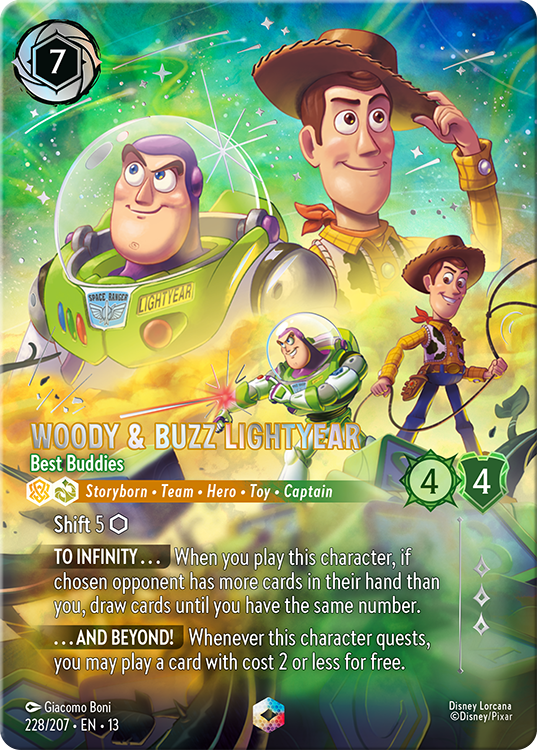
I would begin with one narrow objective: build around a particular Shift interaction, collect a film’s ordinary cards, or explore the cooperative story. That decision determines whether you need singles, a few packs, or the separate Quest box.
Shift variations require more than remembering “play it cheaper”
Shift is appealing because it can turn an existing character into a more capable one. But the lower character, the alternative cost, and the state of the resulting stack all matter. A new version does not automatically erase damage, ready an exerted character, or grant permission to act when the original character could not.
For this set’s variations, keep the specific reminder text and current release notes beside you during the first games. Ask four questions before paying: what can this be played on, what cost am I paying, what happens to the cards already there, and is there a later instruction that reverses or changes the arrangement?
My suggested practice method is to use an undamaged ready character, an exerted character, and a damaged character as three separate examples. Work through the ability with each. A mechanic often appears simple in the most favorable state and becomes confusing only when the underlying character has already acted or taken damage.
Avoid turning this practice into a claim that one combination is a finished competitive deck. Demonstrating a legal interaction is the first step. A dependable list also needs affordable plays, enough inkable cards, ways to find its pieces, and a plan against disruption.
Compare the booster products
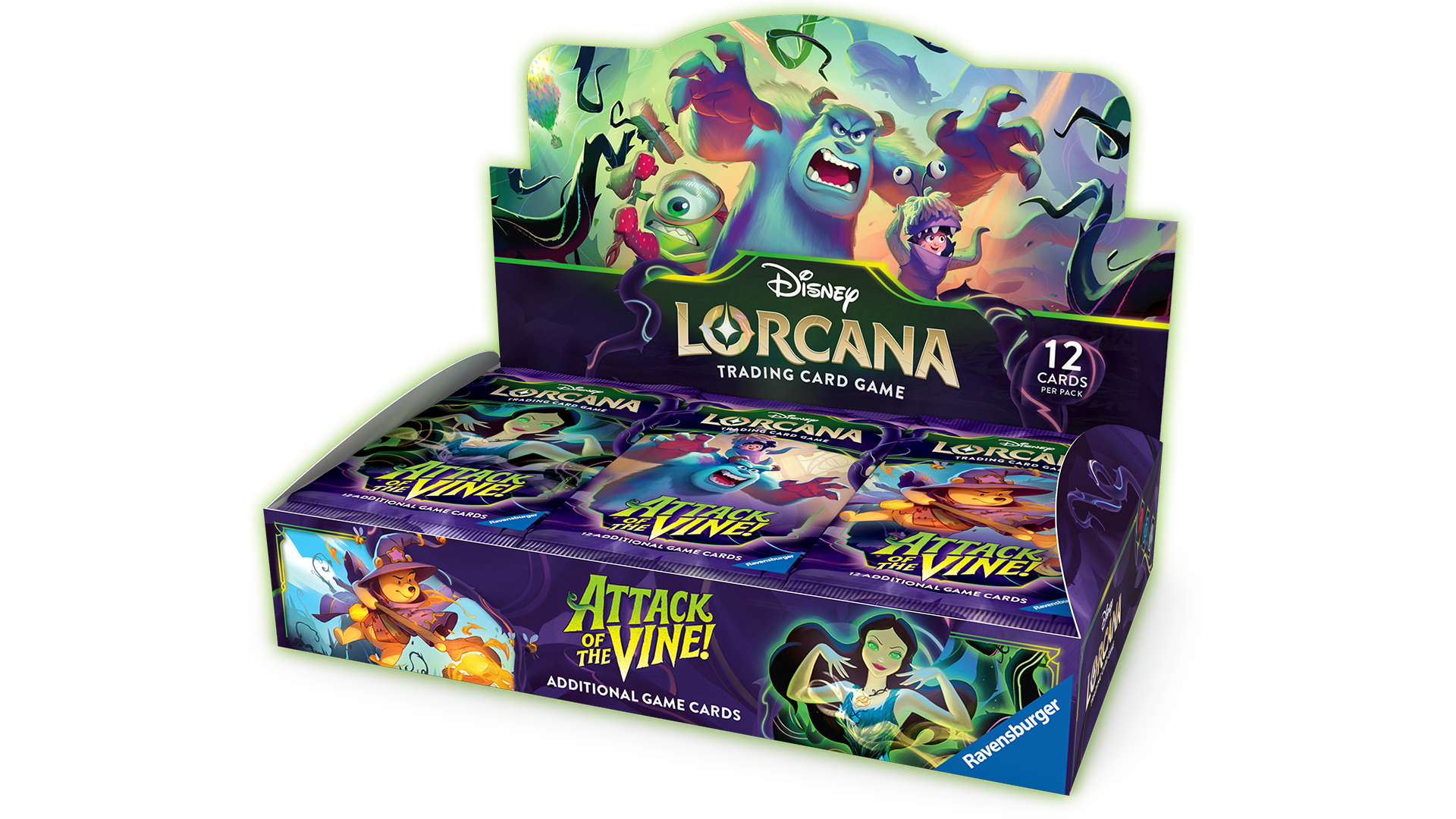
Single packs suit a limited opening or a small gift for someone already collecting. A sealed display is a larger commitment to random contents. The Trove combines eight packs, six damage dice, and a spin-dial lore counter with its storage presentation. A prerelease box adds its own event-themed extras, including a poster and promo card.
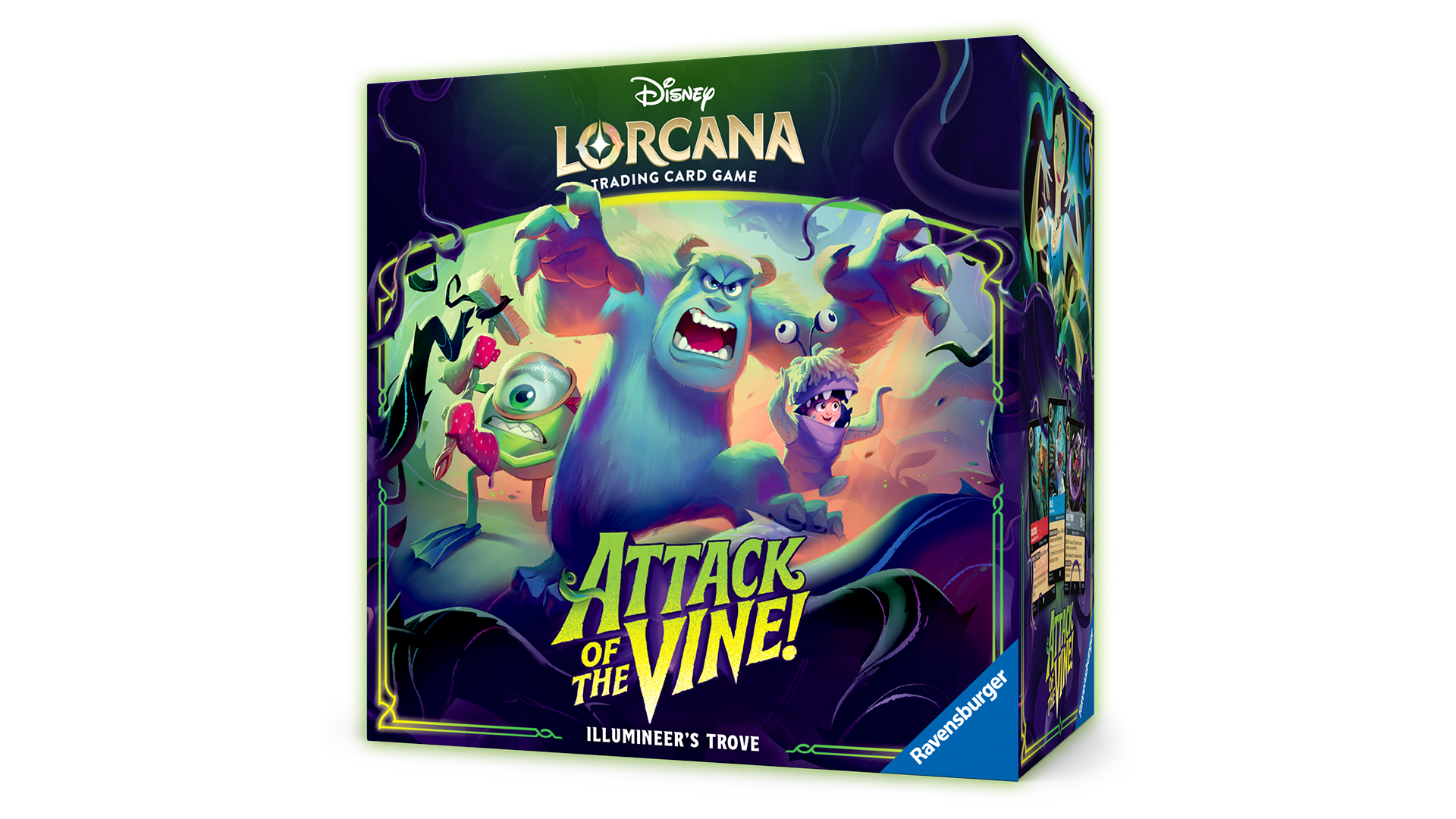
Use exact product names when comparing listings. A picture showing several wrapper designs may represent one assorted pack. A display photograph may appear on a listing whose selected option is a single pack. Check the quantity in the selected offer, the language, and the seller’s description before calculating value.
I would compare a Trove against the same number of packs plus the accessories I would genuinely use. I would compare a prerelease purchase with the event experience when buying through a participating store. Neither box should be valued as though its external packaging guarantees a chase card.
A display is not a recipe for the theme on its lid
It is tempting to see Monsters, Inc. artwork and imagine opening a complete Monsters, Inc. deck. Random packs distribute cards across inks and roles. Even a substantial opening can leave your chosen theme short of early characters, interaction, or enough copies of an important card.
Before buying more, sort what you opened and create a short list. Include exact names and quantities. “Two more useful early characters” is a deckbuilding problem; “more packs from this set” is only one possible purchasing response. If you know which card fills the role, an exact single is easier to evaluate.
For a collector, define the theme just as precisely. Ordinary cards featuring a favorite film are a manageable target. Every foil and premium treatment is a separate project. You can enjoy the latter, but it deserves a separate budget and checklist rather than quietly expanding the first goal.
The Great Hunny Rescue is the cooperative branch
If your group wants to work together against the Vine, inspect the named Illumineer’s Quest box. It supplies a Vine scenario deck, two player decks, encounters, tendrils, a board, and other dedicated components. Those scenario components are not equivalent to random booster cards.
I would choose it when the reason for gathering is cooperative play. I would choose ordinary booster products when the reason is expanding decks or collecting the numbered set. Owning the Quest box does not obligate you to buy a display, and owning the numbered set’s cards is not a prerequisite for purchasing the cooperative box.
If you later customize the player decks, start by identifying the scenario problem you are trying to solve. An upgrade designed only to race a human opponent may be less useful against a scenario with specific threats and encounter demands. Preserve the supplied lists so you can reset the intended experience.
What I would do after opening
Set aside the cards for one experiment and leave the rest organized by ink. Test the experiment against a familiar deck before adding several more new packages. Record whether the key interaction happened, whether it improved the board, and whether you could still play when the pieces arrived in the wrong order.
That last test matters most. A combination that requires the correct low-cost character, its partner, and a favorable board can feel astonishing once and unreliable over an evening. Improving consistency may mean reducing the number of ambitious combinations rather than adding another payoff.
My recommendation is a small, purposeful opening for discovery, singles for a defined constructed plan, and the separate Quest product for cooperative play. The Vine connects the story across products; it does not make every product necessary for the same buyer.
Find the product
View Attack of the Vine! booster display on Amazon. Confirm the selected quantity, language, seller, and delivered price.
Continue with B3’s Lorcana guides
Browse all Lorcana guides · Learn to play · Compare your first purchase.
Sources and scope
Checked October 21, 2026: official Attack of the Vine! products and card previews, current rules and release notes, and the official rotation explanation. Product facts and printed mechanics are separated above from B3’s proposed buying and practice methods. Prices in worked examples are hypothetical; live prices, stock, event availability, and pull odds are not promised.