Playing Disney Lorcana with Kids: A Practical Family Guide
Affiliate disclosure: As an Amazon Associate, B3 earns from qualifying purchases.
The question I would ask before introducing Disney Lorcana to a child is not “Do they know these characters?” It is “Will they enjoy making choices with them?” Recognition gets a game onto the table. Reading an ability, giving up a favorite card as ink, and accepting that an opposing character can banish it are what keep the game moving.
Lorcana can support a family game night, but it also supports an open-ended collecting hobby. Those do not have to become the same household commitment. You can own two fixed decks, play repeatedly, and stop buying. This guide is a proposed teaching approach, not a developmental assessment or a report of B3 family playtests.
Look at the tasks, not only the age label
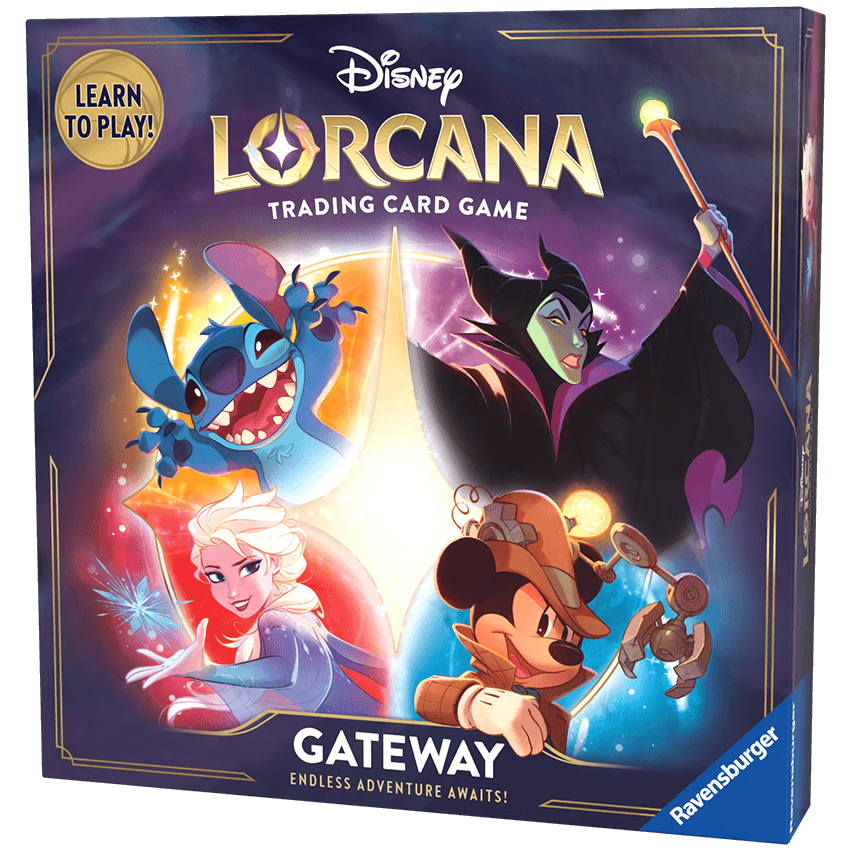
Ravensburger markets Lorcana products such as Gateway for ages eight and up. That is useful context, but an individual learner may need help with reading, arithmetic, handling cards, or accepting competitive setbacks. Instead of turning the printed age into a promise, walk through the actual tasks together.
Can the learner distinguish cost from Strength and Willpower? Can they add damage counters and follow a sentence containing a condition such as “whenever this character quests”? Can they wait through another person's turn and choose between two reasonable plays? Help is perfectly compatible with enjoying the game. The practical question is whether that help makes the experience pleasant for both people.
Do not assume a Disney theme makes every card simple. A familiar character can have several versions with different abilities. Point to the full name and subtitle when discussing a card. “My Elsa does this” is not a reliable rule for every Elsa someone later opens.
Choose a complete shared experience
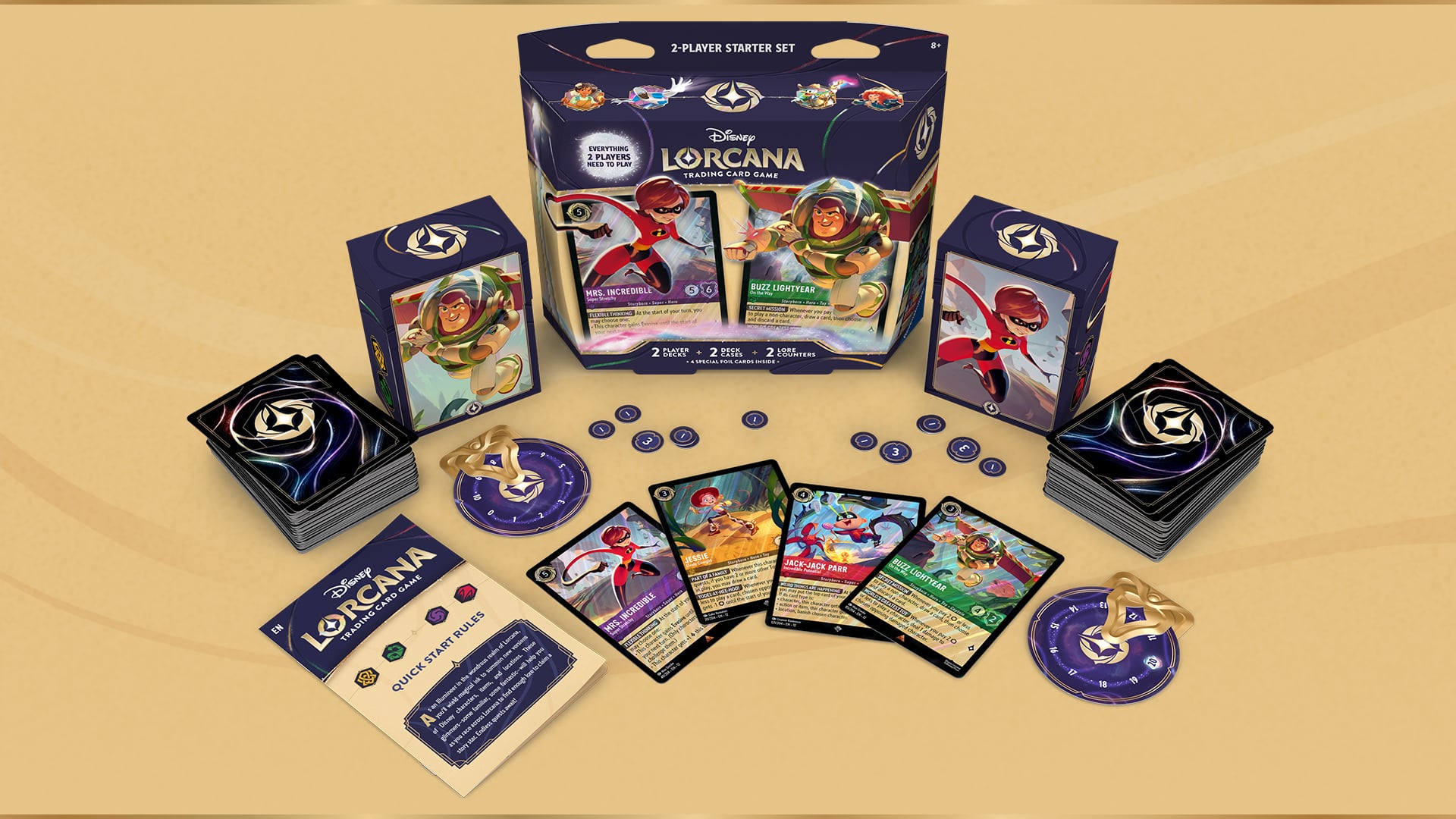
For a family in which nobody knows the game, compare Gateway's gradual teaching structure with a two-player starter set that supplies two complete decks immediately. Gateway includes a board and staged additions. The two-player starter set provides two ready-to-play 60-card decks, with The Incredibles and Toy Story themes. Either is a more predictable first evening than trying to build from a small pile of random packs.
If an adult already knows Lorcana, two individual decks may be enough. Choose based on how much instruction the child wants and which decisions the decks involve. Giving the adult an efficient engine deck and the learner an unrelated pile of favorites is not automatically a fair learning matchup, even if both lists contain 60 cards.
Agree on three things before dealing
First, are you learning with open advice or playing independently? Second, are these household decks staying intact? Third, are extra purchases part of the plan? Agreeing before anyone loses or sees a shiny card makes those decisions less emotionally charged.
For a teaching game, I would allow questions and discuss visible board information. Avoid hovering over every choice. Offer two sensible options and explain their consequences, then let the learner pick. If you correct each move until they make the adult's preferred choice, you are playing both sides while asking them to hold the cards.
Keep the first session easy to stop. An ordinary game still aims for 20 lore; you can agree to pause and resume a teaching session rather than secretly changing the win condition halfway through. If you deliberately use a shorter household practice exercise, call it that so it does not become a misunderstood rule later.
Teach one decision at a time
Begin with paying for a character and recognizing drying. Then explain questing for lore. Once an exerted character offers a natural target, introduce the challenge decision and do the damage calculation together. Add songs and complicated abilities when they actually appear, or follow Gateway's supplied order.
An invented two-choice example works better than a lecture. A dry character can quest for two lore or challenge a threatening enemy. Ask the learner to count what each option changes. Do not insist that the “aggressive” choice is always correct: sometimes taking the lore wins, and sometimes removing a threat protects more scoring later.
Use three spoken checks: “What does it cost?”, “What changes?”, and “What can still act?” They are concrete enough to repeat without feeling like a quiz. After a few turns, invite the learner to ask the adult the same questions. Teaching becomes more collaborative when both sides explain their moves.
Help with ink choices without taking over
Turning a favorite character into facedown ink can feel wrong. Explain that the card is helping the rest of the hand become playable. It supplies one ink regardless of the character's printed cost. Choose a card based on what you can afford now and what you hope to do next turn, rather than treating a beloved character as automatically untouchable.
For a learning exercise, compare an expensive duplicate with the only affordable early character. Which gives the hand a better next two turns if it becomes ink? There may be exceptions, but the comparison creates a reason the learner can understand. Once a card is normally in the inkwell, don't keep looking at it and renegotiating the decision.
If both players agree before a casual teaching game, a limited takeback can help explain a misunderstood rule. Distinguish correcting a rule error from reversing a sound choice after seeing new information. Store events have their own policies; a household learning convention does not override them.
Make damage and readiness visible
Separate newly played characters into a drying row. Use clearly readable counters, announce damage totals, and keep lore where both people can see it. Ask before touching the other player's cards. If small counters or shuffling are frustrating, an adult can handle those jobs while leaving the strategic choice with the learner.
Keep drinks away from the play area and give each deck its own labeled container. Matching sleeves may help protect heavily used cards, but an elaborate accessory bundle is unnecessary. Solve the handling problem in front of you instead of treating premium supplies as a condition for participating.
The adult should also follow the same visible procedures. Readying everything silently, resolving several abilities at once, or leaving damage in your head makes the game harder to learn. Clear play is a teaching aid, not a concession.
Keep playing and collecting as separate choices
Fixed decks offer known contents. Boosters offer surprise. A rare-looking card may be exciting without fitting either household deck, and an ordinary-looking common may be the card that makes a plan work. Avoid teaching that losing means another pack purchase is necessary.
I would establish a modest, explicit collecting budget if the family wants that side of the hobby. Decide whether packs are occasional gifts, allowance purchases, or something you simply are not doing yet. Do not make reaching the next purchase the reward for tolerating an otherwise unwanted game.
When a learner wants a particular card, identify its exact full name and version together. A precise request can lead to comparing a single-card purchase with random packs. That is a useful opportunity to discuss certainty: buying a pack buys its unknown contents, not a promise of the card on the wish list.
Trades and store visits need a little preparation
Before trading, agree on what belongs to whom and which cards are available. For younger collectors, adult review can prevent an impulsive exchange of a valuable or especially meaningful card. The purpose is a comfortable hobby, not teaching every child to speculate on prices.
For a first store visit, contact the store about beginner-friendly sessions, format, entry cost, expected duration, and any requirements for younger participants. Bring a complete deck and tracking supplies. Do not assume “Lorcana event” means a teaching session; an established competitive event may expect independent rules knowledge and an eligible list.
What to do after an upsetting game
A banished favorite can feel personal to a new player. Explain before the first challenge that banishment is a normal game action and the card will be back for another game. Afterwards, discuss a decision rather than judging the player's ability. “What did questing expose?” is more useful than “You shouldn't have done that.”
Swapping decks can reveal that both sides contain awkward hands and difficult choices. It does not prove the matchup is perfectly balanced, but it helps separate an individual loss from the idea that one player always gets the good characters. If a learner consistently dislikes the core trade-offs, choose another activity instead of making more purchases to force interest.
My recommendation for a family start
Choose one complete way to play, teach openly, and keep the lists unchanged for the first several games. Spend attention on one resource choice and one challenge decision each time. Introduce collecting only if the family wants that additional hobby.
The best sign of success is a learner asking to play again because the choices were interesting. You do not need a growing stack of sealed boxes to make that happen.
View Disney Lorcana Gateway on Amazon
Continue with B3’s Lorcana guides
Learn the rules with worked turns and example videos, or compare Gateway, decks, boosters, and other first purchases.
Sources and further reading
Checked October 20, 2026: official rules and release notes, including the October 8 comprehensive rules; official teaching lessons; Gateway contents; Fabled products and official art; two-player set contents; and formats.
B3 is an independent publication and is not affiliated with or endorsed by Disney or Ravensburger. Official card art and product images remain the property of their respective rights holders. Images are shown for product identification and discussion; depicted premium treatments are identified where applicable.