Jump to Lightspeed Booster Buying Guide: Ships, Pilots, and Standard vs. Carbonite
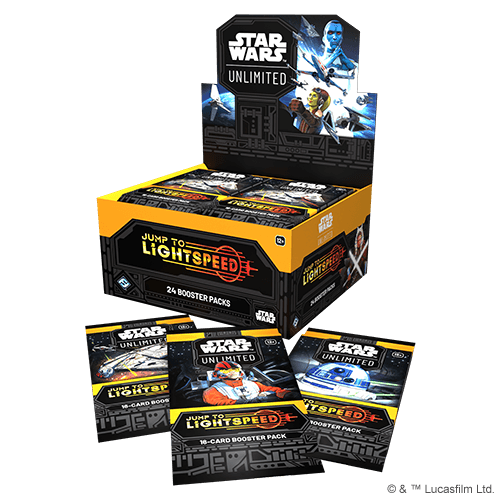
Jump to Lightspeed is a tempting booster purchase because it makes the space arena feel like the main event. The ships are the attraction, but pilots create the buying puzzle: do you want a ready-made fleet, a randomized pool for building, or premium versions to collect? Those three goals point toward different boxes.
I would start with a Spotlight Deck if I wanted to learn one supplied pilot plan. I would buy standard boosters for a deliberate draft, sealed session, or broad set exploration. Carbonite would come from a separate collecting budget, with no expectation that premium cardboard improves the underlying rules of the deck.
In this buying guide
- What you get: compare the actual packages
- Piloting changes what a card can do for your board
- Indirect damage is not a shopping shortcut to guaranteed removal
- Han and Boba give you a fixed starting point
- This is where Carbonite begins
- How I would organize a flight-themed limited night
- A format check before chasing an old combo
- Price the experience, then set a stopping point
- Find the correct product
- Keep exploring
What you get: compare the actual packages
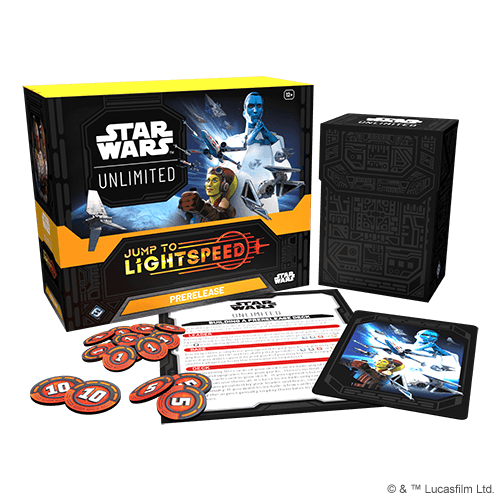
A standard display contains 24 packs. At 16 cards per pack, that is 384 cards, including leader and base/token slots; it is not 384 distinct main-deck cards. A prerelease box provides six packs and supporting materials. A retail prerelease box does not automatically include entry to a store event.
This set uses the earlier pack structure: nine commons, three uncommons, one rare or legendary, one leader, one base/token, and one foil card, with applicable variant replacements. Neither a legendary nor a particular card is guaranteed in each pack.
The fixed Han Solo or Boba Fett Spotlight Deck is a different product. Buy it for the supplied list; buy boosters for randomized cards. There is also a separate 12-pack Carbonite display. Compare editions and quantities before comparing a price labeled simply “box.”
Piloting changes what a card can do for your board
A card with Piloting can be played as a unit or as a Pilot upgrade using its alternate cost and restrictions. That creates a meaningful choice between another body and strengthening an eligible Vehicle. The pilot form can make a ship impressive while concentrating several cards into one target.
This is why I would look at hosts, pilots, and ordinary early units together when assessing an opened pool. Drawing three attractive pilots does not help much if there is no affordable eligible Vehicle. A separate ground body can also be the correct use of a character, even in a set sold on space battles.
Indirect damage is not a shopping shortcut to guaranteed removal
The set also highlights indirect damage, which the affected player distributes under its rules. It is different from choosing exactly which unit takes a targeted damage effect. If a deck needs a dependable answer to one threatening unit, buying another source of indirect pressure may not solve the problem you identified.
When evaluating an upgrade, write down the board state it should improve. Are you losing the space race, failing to find a host, or unable to finish damaged units? These lead to different card choices. A box full of ships is not a substitute for that diagnosis.
Han and Boba give you a fixed starting point
The Han Solo and Boba Fett Spotlight Decks are separate ready-made products. They let you learn a supplied list and leader before deciding which pieces to replace. Their names and subtitles matter: an earlier Boba leader or another Han card does not have the same abilities.
If the goal is that exact leader's play pattern, I would choose the deck and keep its stock list together initially. Record when a pilot was stranded or a Vehicle absorbed too much investment. Then buy the cards that address the pattern. Opening packs first often reverses the process: you start inventing reasons to use what you happened to pull.
This is where Carbonite begins
Jump to Lightspeed introduced Carbonite Edition, a premium randomized product focused on aesthetic variants. The original set's Carbonite configuration differs from the configuration introduced with A Lawless Time. Do not apply a newer unboxing video's slot description to this older product.
There was no original Carbonite product for Spark, Shadows, or Twilight. A listing that groups those names into generic Carbonite search text needs closer inspection. Buy the edition printed on the actual package, not a seller's broad keyword list.
How I would organize a flight-themed limited night
Keep standard packs for the agreed pool and put all the leaders, bases, and tokens where players can identify them easily. Before deck construction, explain Piloting and ordinary attachment restrictions. A few minutes spent distinguishing a unit from its upgrade form prevents the most attractive cards from becoming the least understandable ones.
During construction, count affordable hosts and the early plays that keep you alive while developing. During games, track whether a concentrated ship plan loses several cards to one answer. That observation is useful whether you later buy singles or decide the limited environment is the experience you want to repeat.
A format check before chasing an old combo
Use current format and suspension information before buying a list from an old video. Premier and Eternal can restrict different cards, and a character name alone is not a card identity. The set being available does not validate every historical combo involving it.
My stopping rule would be simple: once I can identify the few missing cards for the next deck experiment, I move to singles. I would open another display only if I still wanted its randomized experience, with a budget that remains comfortable even without the desired pull.
Price the experience, then set a stopping point
Use delivered cost rather than the headline price. In a hypothetical comparison, a $96 display is $4 per pack; six loose packs at $5 each cost $30. The display has the lower unit price but requires $66 more spending. If you only arranged a six-pack experience, the larger order has to justify its extra quantity.
For a group, write down the format, number of players, required packs, token supplies, sleeves, and who keeps the cards before ordering. A normal draft uses three packs per person; sealed uses six. A 24-pack display therefore supplies eight draft entries or four sealed pools, before prize support or spare packs. Confirm the current procedure with your organizer.
For a deck upgrade, price the exact missing copies with shipping. Set your opening budget so the ordinary contents and the games are enough to justify it. Do not count on selling a chase card to make the purchase affordable.
Find the correct product
As an Amazon Associate, B3 earns from qualifying purchases.
View the Jump to Lightspeed standard booster display on Amazon.
Confirm the selected edition, language, sealed condition, quantity, seller, and delivered price. This is a product-identity check, not a live stock or price promise.
Keep exploring
Learn the game · compare your first purchase · browse all SWU guides · Jump to Lightspeed Han Solo Spotlight Deck Guide: Odd Costs and Pilot Deployment · Jump to Lightspeed Boba Fett Spotlight Deck Guide: Indirect Damage and Pilots · understand Carbonite packs and their changing contents.
Product and rules check: October 22, 2026. Official sources: set products; jump to lightspeed; disintegrating the odds; packs of prestige; limited play; current rules, errata, and suspensions. B3’s buying recommendations and planning examples are editorial analysis; prices used above are hypothetical.