Hyperia City Buying Guide: Boosters, Ink Drops, and What to Buy
Affiliate disclosure: As an Amazon Associate, B3 earns from qualifying purchases.
Hyperia City is the Lorcana set I would investigate for its resource decisions before its chase cards. Ink drops let a deck borrow spending power without permanently becoming a Sapphire ramp deck. That can create a spectacular turn, but the interesting question is what the turn leaves behind. An expensive character played early still needs to survive, and spending three temporary resources is different from adding three reusable cards to an inkwell.
This guide covers the set’s booster products and the practical consequences of its new mechanics. The examples are proposed lines of play, not reports of B3 tournament testing. Hyperia City’s game-store prerelease began October 16, 2026; its wider retail release is October 23. A listing seen before that second date may be a preorder rather than an item ready to ship.
What makes this set different
The setting brings Coco into Lorcana alongside familiar Disney characters exploring a city of music, art, and suspicious activity. That theme matters to a collector choosing an album project. For a player, I would narrow the gallery by function: cards that create ink drops, cards that reward spending them, songs that preserve ordinary ink, and cards that use the discard pile as a resource.
Those groups overlap, but they are not interchangeable. A beautiful eight-cost payoff is not an engine. An engine needs affordable ways to get started, enough useful cards to draw afterward, and a fallback plan when the payoff is absent. Before buying packs for a new deck, identify which part you actually need.

Ink drops: temporary resources, lasting choices
An ink drop is a counter, not a deck card. You remove it to pay one ink toward a cost. You can combine drops with ordinary ink or pay entirely with drops, and you can spend a drop during the turn you make it. It is removed when used rather than exerted for reuse next turn. Unspent drops can be saved; “temporary” does not mean they all expire at the end of the turn.
Suppose you have five ready ordinary ink and three drops. You can pay eight for one card, or spend some drops on a smaller play while retaining ordinary ink for another action. The first line maximizes the size of one play. The second can leave more characters in play or preserve a useful activated ability. Neither is automatically correct: compare the resulting board, your remaining hand, and the opponent’s likely response.
Higitus Figitus is a six-cost song that makes three drops. A suitable dry singer can sing it while leaving ordinary ink ready. The singer’s lost quest is part of the price, however. If that character could have scored the last lore you needed, preparing an impressive eight-cost turn is a distraction. If the early large play stabilizes a losing board, the same exchange can be excellent.
Do not put printed ink-drop counters into your shuffled deck or count them toward its minimum size. You can represent them with clear physical markers if you do not own the printed pieces. A booster purchase is not necessary just to obtain permission to use the mechanic.
Pay attention to how a card was paid for
Some cards care about spending an ink drop, not simply owning one. Jousting Match is a useful illustration: its damage improves when a drop pays toward playing it. That creates a reason to preserve one drop even when ordinary ink could pay the full cost.
My proposed practice exercise is to mark three columns on paper: ordinary ink left, drops left, and cards left. Work through the same turn twice, changing which resource pays the first cost. If the final board is identical but one line preserves a resource needed for a later condition, the sequencing difference is real. “I had eight resources” is too coarse a description of that turn.
Adventurous does not mean Reckless
Hyperia City introduces Adventurous, which prevents challenging and requires a character to quest each turn if able. It points toward lore rather than combat. A card’s ability to sing or otherwise exert can interact with that requirement, so use the current card text and release notes rather than treating “must quest” as an instruction to quest immediately before doing anything else.
This is especially relevant when a card offers attractive lore at a low cost. Ask whether its inability to challenge leaves you exposed to an opposing engine. Your deck still needs a way to interact. Filling every early slot with efficient questers can turn an otherwise reasonable hand into a board that watches the opponent’s key character operate uncontested.
Choose the product for the evening you want
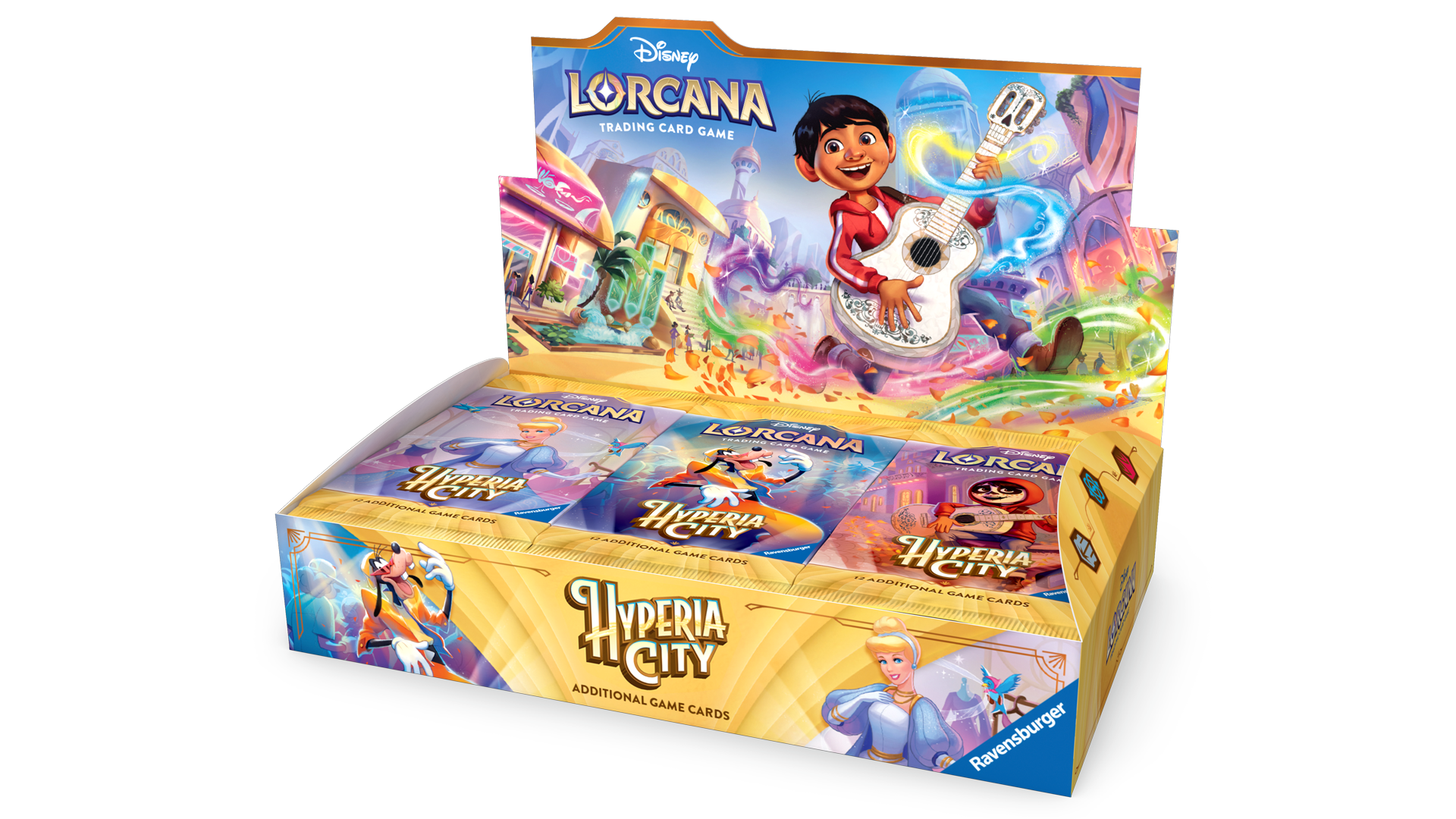
The booster display and individual packs supply random cards. The Illumineer’s Trove combines eight packs with storage and tracking accessories. The prerelease box belongs to a different decision: whether you want a supported first event and the product’s specific extras. None of these is a curated sixty-card deck.
For a new pair of players I would buy playable decks first, then add Hyperia City packs as a separate activity. For an established player pursuing a particular ink-drop package, I would price the exact singles before deciding on sealed product. For a collector who enjoys the city’s artwork, a small opening followed by a numbered wants list gives the project a stopping point.
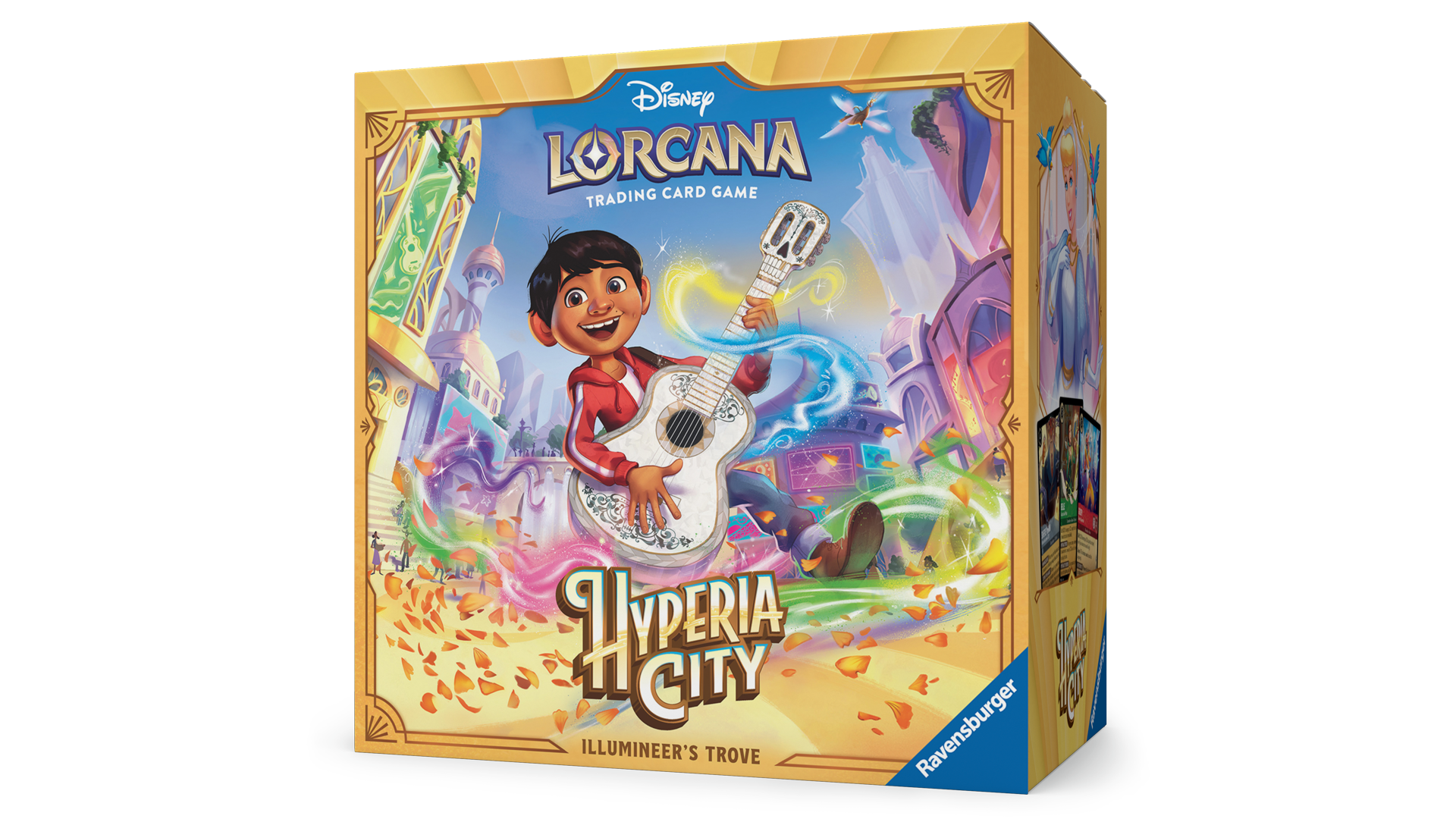
Compare total delivered prices divided by the actual number of packs. Then value the accessories separately. If a Trove costs T and its eight equivalent packs cost P each, the extra price for storage and accessories is T minus eight times P. That calculation is more useful than assigning the entire difference to supposedly better pulls. Product format alone does not promise a particular chase card.
Build an ink-drop package without filling the deck with setup
Start by writing a concrete objective: “use a drop to improve a removal action,” or “reach one expensive payoff a turn earlier.” Choose a small package that supports that objective and test it inside an otherwise functioning deck. Keep the number of changes low enough that you can identify what improved.
Record whether your problem was finding a generator, having a payoff, or surviving until either mattered. Those failures need different changes. More expensive payoffs will not fix a hand that cannot develop early characters. More generators may not help a deck that already ends games with unused drops and an empty hand.
Also test the unimpressive draw. If your best drop generator is near the bottom of the deck, can you still play a fair game? I prefer a package that makes ordinary turns better before depending on a perfect sequence. That is a design judgment, not a claim that a particular competitive list is currently best.
What I would buy, and what I would leave
I would choose a few packs for discovery, a Trove when I need its storage, or an event product when the event itself is the attraction. I would choose singles for a specific constructed upgrade. I would leave a larger box on the shelf if my only justification were that opening enough packs must eventually supply the card I want.
Hyperia City gives a collection a distinctive theme and gives deckbuilders a new resource to manage. The useful purchase is the one that supports a real next step: a game, an event, an album page, or a small tested upgrade. Make that decision before the artwork makes every box feel essential.
Find the product
Search Amazon for Hyperia City booster displays (Search link; check the exact edition, language, quantity, and seller.)
Continue with B3’s Lorcana guides
Browse all Lorcana guides · Learn to play · Compare your first purchase.
Sources and scope
Checked October 21, 2026: official Hyperia City products and card previews, current rules and release notes, and the official rotation explanation. Product facts and printed mechanics are separated above from B3’s proposed buying and practice methods. Prices in worked examples are hypothetical; live prices, stock, event availability, and pull odds are not promised.
Mechanics references: Ink Drop Deep Dive and Hyperia City release notes.