7 Sci-Fi Book and Board Game Pairings for Your Next Game Night
A book-and-game pairing works best when the game gives you a new way to think about the book. Matching a spaceship on one cover to a spaceship on another is easy. The more interesting match connects a question in the fiction to a decision at the table.
These seven pairings connect ideas rather than promise matching plots. Most of the games are not adaptations of the paired novels, and nobody needs to finish a book before joining the game. Use a familiar passage, a spoiler-free premise, or a question over dinner. Then play the game on its own terms. I have included the limit of each pairing because a useful connection should survive acknowledging where it stops.
Dune + Dune: Imperium: what does access cost?
Read the full Dune: Imperium review and buying guide →

Amazon affiliate link · As an Amazon Associate, B3 earns from qualifying purchases.
Compare Dune by Frank Herbert on Amazon →Amazon affiliate link · As an Amazon Associate, B3 earns from qualifying purchases.
Compare Dune: Imperium on Amazon →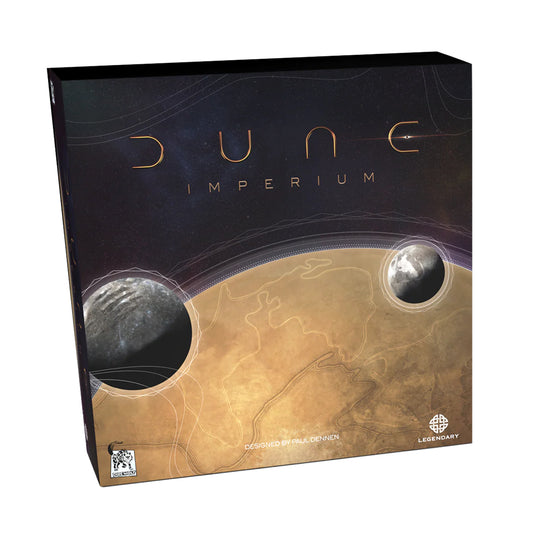
Frank Herbert's novel makes power depend on ecology, institutions, loyalty, and control of a crucial resource. Dune: Imperium compresses parts of that political environment into a competition over opportunities, relationships, and timing.
At the table: cards determine which worker-placement spaces your agents can reach. You must decide when to spend a card for access and when to save it for your reveal turn. A coveted space being taken changes your plans immediately. That is the concrete link to institutional power: having resources does not guarantee permission to use them.
What the pairing reveals: an action can be valuable partly because it denies a rival access. A move that appears modest can matter if it changes what everyone else can do. That is a productive lens for discussing power as a network rather than a single impressive leader.
Where it stops: the game is not the novel's full political or philosophical argument. Its incentives make a competitive system work; they do not settle what the book means.
Ask afterward: which relationship did you cultivate because you valued it, and which because it opened a door? Confirm whether you are choosing the original Dune: Imperium or Uprising when planning the night.
Leviathan Wakes + Twilight Imperium: who can afford to wait?

Amazon affiliate link · As an Amazon Associate, B3 earns from qualifying purchases.
Compare Leviathan Wakes by James S. A. Corey on Amazon →Amazon affiliate link · As an Amazon Associate, B3 earns from qualifying purchases.
Twilight Imperium: Fourth Edition →Read our complete Twilight Imperium Fourth Edition guide →
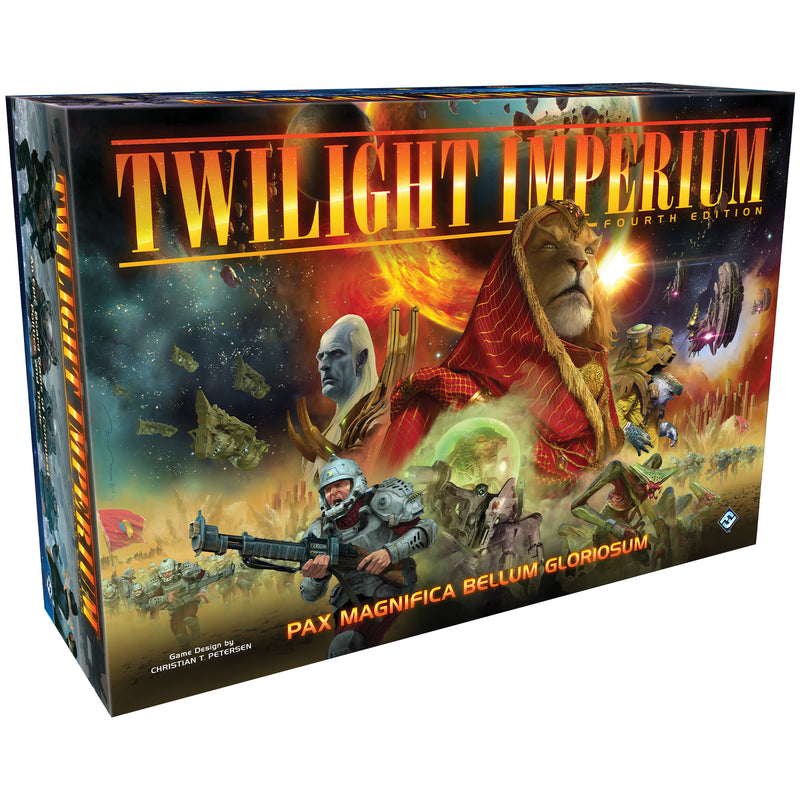
James S. A. Corey's novel grounds a vast political environment in people trying to understand a crisis. Twilight Imperium broadens the perspective to competing powers, objectives, and negotiations across a galaxy.
At the table: you choose strategy cards, expand fleets, negotiate exchanges, and pursue scoring objectives. A fleet is a bargaining position as much as a weapon. The important distinction for this pairing is that winning a battle and advancing toward victory are different jobs; a concession can be better than an impressive but unproductive war.
What the pairing reveals: uncertainty feels different depending on your position. An actor with resources can wait for evidence; someone vulnerable may have to act before the picture is clear. At the table, delays and commitments can expose who feels secure.
Where it stops: Twilight Imperium is not an Expanse adaptation, and its grand strategy does not reproduce the novel's grounded investigative perspective. The difference is part of the comparison.
Ask afterward: whose urgent problem did the table treat as somebody else's concern? Reserve an appropriately long session; this pairing is a substantial strategy event, not a casual after-dinner filler.
Read the full Leviathan Wakes review →
Neuromancer + Android: Netrunner: what does the defender know?
Read the full Android: Netrunner review and buying guide →
Amazon affiliate link · As an Amazon Associate, B3 earns from qualifying purchases.
Compare Neuromancer by William Gibson on Amazon →Amazon affiliate link · As an Amazon Associate, B3 earns from qualifying purchases.
Compare Android: Netrunner on Amazon →
William Gibson's novel is a strong companion to a game structured around unequal roles and uncertain threats. Android: Netrunner's corporation-versus-runner contest turns intrusion, concealment, and risk into different experiences for each side.
At the table: the corporation installs hidden cards and protects servers with ice; the runner builds an economy and programs to challenge those defenses. A run can reveal an agenda, an expensive distraction, or a trap. The tension comes from paying for information before you know whether the information will justify the expense.
What the pairing reveals: the same encounter can feel like an opportunity to one person and an intolerable exposure to another. Security depends partly on shaping the opponent's expectations, not just possessing a stronger barrier.
Where it stops: the game's structured contest is different from the novel's relationships and identity questions. Also, the original Fantasy Flight product line ended in 2018. I would use an existing or borrowed collection for this pairing rather than imply it is an easy current retail starter purchase.
Ask afterward: what made you hesitate more: a danger you could calculate, or a possibility you could not confirm? For a current entry point, Null Signal Games’ System Gateway provides teaching decks and a deckbuilding pack; it is a different product from the old Fantasy Flight box shown above. Supply your own small objects for trackers, as its instructions explain.
Read the full Neuromancer review →
Ender's Game + Star Realms: how does a system teach you to value victory?
Read the full Star Realms review and buying guide →

Amazon affiliate link · As an Amazon Associate, B3 earns from qualifying purchases.
Compare Ender’s Game by Orson Scott Card on Amazon →Amazon affiliate link · As an Amazon Associate, B3 earns from qualifying purchases.
Compare Star Realms on Amazon →
Orson Scott Card's novel raises difficult questions about training, distance, and the meaning of a successful outcome. Star Realms is a compact competitive deck builder rather than a narrative adaptation, which makes the contrast useful.
At the table: both players buy ships and bases from a shared trade row, improving their decks during play. Trade buys future strength; combat attacks your opponent or their bases. Matching faction effects makes purchases work together. The question becomes whether to improve your engine or convert what you already have into enough damage to end the contest.
What the pairing reveals: players quickly learn to evaluate actions through the conditions the game rewards. Something can feel sensible inside a system because that system defines the goal. The book asks us to consider what that perspective can exclude.
Where it stops: a friendly card game does not simulate the novel's moral stakes. Keep the analogy about incentives and interpretation rather than claiming the evening recreates its central dilemma.
Ask afterward: when did you stop treating a card as a fictional object and start seeing only what it could accomplish? This is a good pairing when you want a shorter game and a longer conversation.
Read the full Ender's Game review →
Snow Crash + Shadowrun: Crossfire: when is cooperation a transaction?
Read the full Shadowrun: Crossfire review and buying guide →

Amazon affiliate link · As an Amazon Associate, B3 earns from qualifying purchases.
Compare Snow Crash by Neal Stephenson on Amazon →Amazon affiliate link · As an Amazon Associate, B3 earns from qualifying purchases.
Compare Shadowrun: Crossfire Prime Runner Edition on Amazon →
Neal Stephenson's novel supplies a world of fractured authority, commercial power, and fast-moving information. Shadowrun: Crossfire offers a cooperative cyberpunk fantasy challenge, with its own distinct setting and identity.
At the table: runners coordinate cards against obstacles and use earned money to improve their decks. Different capabilities make target assignment consequential: clearing your own threat may leave a teammate facing a problem their hand cannot efficiently solve. Agree on priorities together, but let each player make their own decisions rather than appointing a team director.
What the pairing reveals: a team's shared goal does not eliminate the problem of coordinating scarce capabilities. The interesting conversation is how people decide who absorbs risk and whose resources are protected.
Where it stops: Shadowrun includes fantasy elements and is not the world of Snow Crash. The pairing is about operating amid unstable institutions and reliance on a team, not matching every technology or premise.
Ask afterward: did “best for the team” distribute the burden evenly, or did one player keep making the sacrifice? Check the edition and availability before planning around a purchase; an older product can be a worthwhile pairing without being the most convenient starting point.
Read the full Snow Crash review →
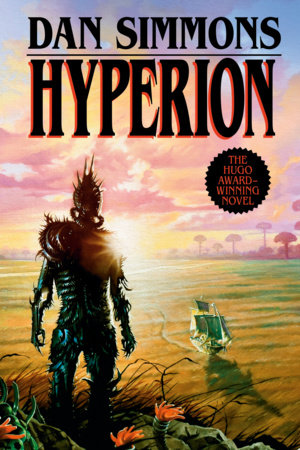
Hyperion + Eclipse: Second Dawn for the Galaxy: what does the map hide?
Read the full Eclipse: Second Dawn for the Galaxy review and buying guide →
Amazon affiliate link · As an Amazon Associate, B3 earns from qualifying purchases.
Compare Hyperion by Dan Simmons on Amazon →Amazon affiliate link · As an Amazon Associate, B3 earns from qualifying purchases.
Compare Eclipse: Second Dawn for the Galaxy on Amazon →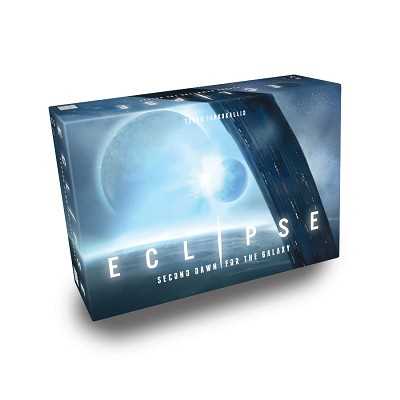
Dan Simmons's novel connects different personal stories to a larger mystery. Eclipse offers a strategic galaxy in which exploration and development change the possibilities players see.
At the table: exploration reveals sectors while technology and ship upgrades change how confidently you can contest them. A tempting discovery is also a commitment: expanding your reach creates more space to defend and more demands on your economy. For the discussion, notice the moment a location changes from an intriguing unknown into something you feel entitled to hold.
What the pairing reveals: discovery is not merely collecting information. A new place can alter priorities and make an earlier plan obsolete. That gives you a way to discuss how a setting becomes an active pressure on a story.
Where it stops: Eclipse does not reproduce Hyperion's multiple narrative voices or pilgrimage structure. Its mechanical exploration is a contrast to literary revelation, not an equivalent.
Ask afterward: which discovery changed your interpretation of your position rather than simply increasing your resources? Choose this pairing for a group comfortable with a substantial strategy game.
Read the full Hyperion review →
Altered Carbon + In Too Deep: what remains yours when action is borrowed?
Read the full In Too Deep review and buying guide →

Amazon affiliate link · As an Amazon Associate, B3 earns from qualifying purchases.
Compare Altered Carbon by Richard K. Morgan on Amazon →Amazon affiliate link · As an Amazon Associate, B3 earns from qualifying purchases.
Compare In Too Deep on Amazon →
Richard K. Morgan's novel makes embodiment and unequal access to technology central concerns. In Too Deep, the cyberpunk board game from Burnt Island Games, offers a thematic connection through infiltration and control of criminal figures.
At the table: you take control of criminal figures and use their positions and actions to complete objectives. Those figures are contested pieces in a shared city rather than permanently owned heroes. Another player can interfere with the criminal or location your plan depends on, making borrowed agency a practical planning problem as well as a thematic idea.
What the pairing reveals: acting through another identity raises questions about responsibility. The distance between an agent, a body, and an action can make consequences easier to ignore in fiction. A game offers a smaller space in which to notice that tendency.
Where it stops: these are different fictional technologies and different stories. The game should not be described as an Altered Carbon adaptation. Also confirm the designer/publisher when finding it: other products share the title In Too Deep.
Ask afterward: did the character you controlled become a person in the table's conversation, or remain a tool? That distinction is the reason for the pairing, not a claim that either work gives a simple answer about identity.
Read the full Altered Carbon review →
Give the pairing one job
Choose one question and bring it up after play. Do not interrupt every turn to explain the literary connection. If someone has not read the book, introduce the premise without spoilers and let their interpretation count equally.
My favorite outcome is a small change in attention: a reader notices an institution they previously treated as background, or a player recognizes how a rule shaped the behavior they called natural. That is enough. The pairing has worked when each experience leaves the other more interesting.
Availability context: the current community-supported entry point to Netrunner.
Books and games mentioned
As an Amazon Associate I earn from qualifying purchases.
- Dune by Frank Herbert — Amazon search; check edition and format
- Dune: Imperium — Amazon search
- Leviathan Wakes by James S. A. Corey — Amazon search; check edition and format
- Twilight Imperium: Fourth Edition — Amazon product listing
- Neuromancer by William Gibson — Amazon search; check edition and format
- Android: Netrunner — Amazon search for discontinued stock; check completeness
- Ender’s Game by Orson Scott Card — Amazon search; check edition and format
- Star Realms — Amazon search
- Snow Crash by Neal Stephenson — Amazon search; check edition and format
- Shadowrun: Crossfire Prime Runner Edition — Amazon search; check edition and condition
- Hyperion by Dan Simmons — Amazon search; check edition and format
- Eclipse: Second Dawn for the Galaxy — Amazon search
- Altered Carbon by Richard K. Morgan — Amazon search; check edition and format
- In Too Deep — Amazon search
For a closer buying decision, see our Dune: Imperium review and In Too Deep review. Explore more pairings and recommendations in the board-game hub.