Sleeping Gods Review: Is the Journey Worth the Commitment?
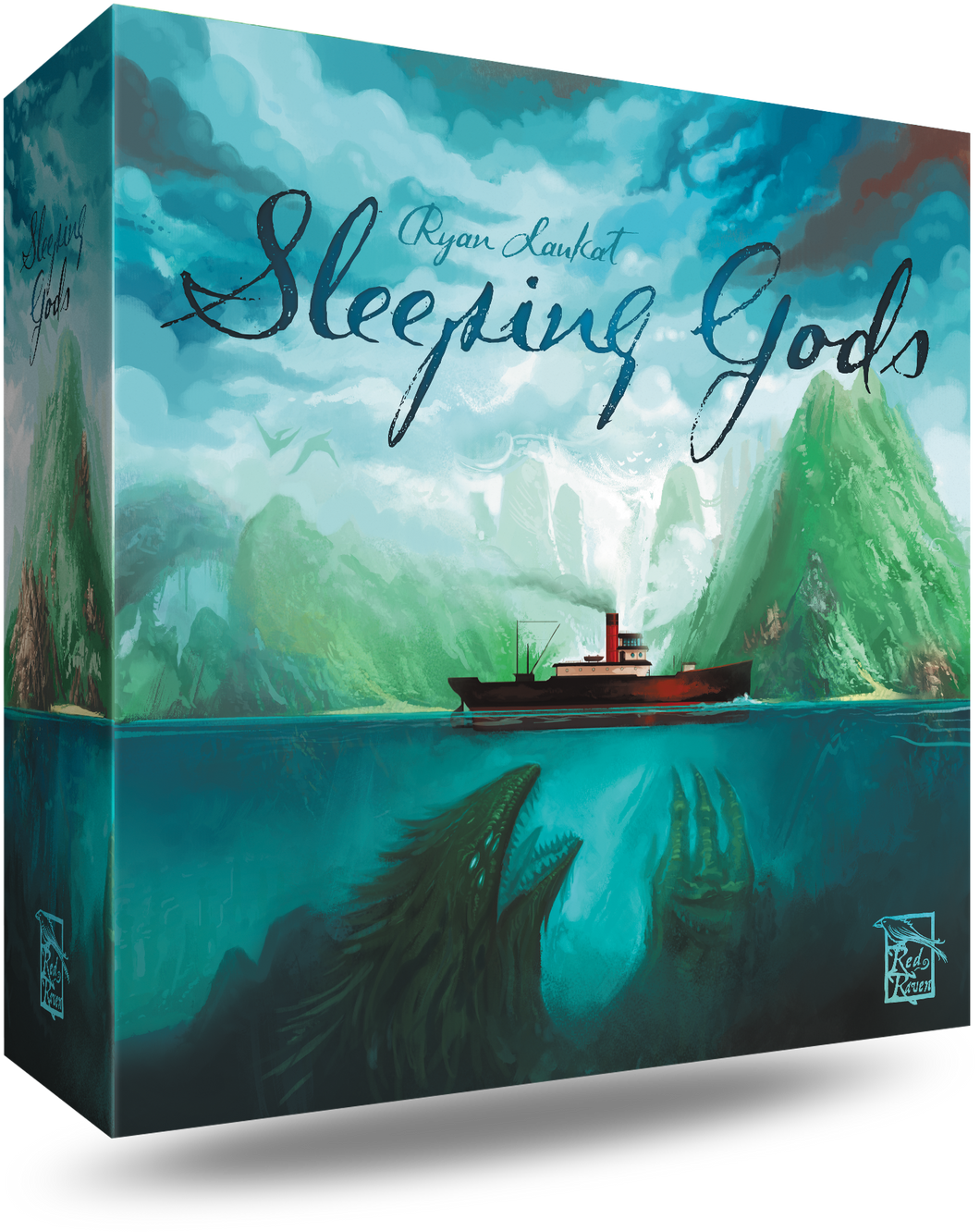
Sleeping Gods is most appealing when a question on the horizon is enough to pull you through another evening. Ryan Laukat’s cooperative adventure puts a ship, a crew, and an unfamiliar world in front of you, then asks which discoveries deserve your limited time. Its strongest selling point is the connection between curiosity and responsibility: following a lead also means accepting what the expedition will need along the way.
I would choose it for people who want exploration to be the campaign’s center of gravity. I would be more cautious with a group that wants a clear mission brief, a quick combat game, or a story that moves forward whenever somebody reads the next paragraph. There is a substantial game to manage between the discoveries.
The original game at a glance
- Players: 1–4, cooperatively.
- Premise: Captain Sofi Odessa and the Manticore’s crew seek a way home from a strange sea.
- Format: an atlas-and-storybook campaign with saving between sessions.
- Commitment: the publisher estimates roughly 10–20 hours for a campaign. Plan several evenings, including learning and packing away.
- Start with: the original base game. Expansions can wait.
What you actually do on a turn
The active player takes a ship action, resolves an event, and chooses two main actions. Those include traveling, exploring, visiting a market, or using a port. The captain token then passes to the next player. Exploration connects locations in the atlas to entries in the storybook.
That sequence matters more than the promise of a huge world. Your ordinary job is deciding what the expedition can afford next. A destination may be interesting without being the sensible place to go immediately. The game can make that delay feel like anticipation; it can also feel like administration when the group is impatient for the next revelation.
Here is a hypothetical planning problem, not a quoted encounter: the crew has a promising lead beyond the next crossing, but several people are in poor condition. Do you press on while the lead is fresh in everyone’s mind, or spend time recovering? The interesting discussion is not which option sounds more adventurous. It is which risk you are willing to carry into an unknown situation.
The atlas is the attraction, but direction still matters
There is a particular pleasure in treating the edge of a map as an invitation. A printed location is easier to speculate about than an abstract instruction to find another quest. The physical atlas gives the party a shared object to point at, argue over, and remember.
I think that is the best reason to choose this design over a sequence of tightly prescribed missions. You are buying the opportunity to make an expedition feel like your group’s route through a place. The practical danger is mistaking freedom for an absence of decisions. An evening can lose momentum if every option remains equally attractive and nobody wants to close a door.
My suggestion would be to keep a short expedition notebook: one lead to pursue next, one unresolved question, and one reason a location mattered. Avoid a transcript. “We promised to return because…” is more useful next week than a page of events with no priorities attached.

The crew makes cooperation more than a conversation
Challenges use crew skills and a fate draw, with cards and abilities able to influence the result. Participating can add fatigue, and command is needed for several kinds of assistance. Health and fatigue therefore affect which options remain comfortable.
The useful consequence is that “we agree this is important” is different from “we can help without hurting another part of the plan.” A cooperative game needs some resistance to consensus, or the experienced player can simply announce the solution. Here, ask the person making the decision what kind of support they want before optimizing their turn for them.
The ownership of attention also deserves a conversation. The person who enjoys reading does not automatically need to read every passage; the person quickest at calculations does not need to direct every encounter. Rotate jobs if the group wants that, and let someone decline a performance role. A shared journey should not become one person’s novel with assistants managing the pieces.
Diceless combat still has uncertainty
Attacks use fate draws and accuracy rather than dice. Damage goes onto enemy grids, where placement affects exposed icons; enemies that survive can counterattack. This turns combat into more than subtracting health totals.
I would describe that as a planning attraction, not a guarantee that every outcome is controllable. “Diceless” can sound soothing to someone who dislikes bad rolls, but the more useful question is whether they enjoy working with uncertain results. If the group wants every combat resolved almost instantly so it can return to reading, this system deserves inspection before buying.
A helpful first teach would show a single attack and its consequence. Then ask what would change if another crew member attacked first. The answer demonstrates why coordination matters more effectively than a long list of abilities detached from an actual enemy.
A campaign you can stop still needs a return plan
The game supports saving and allows changes in who participates. That is valuable flexibility, but it does not erase the need to restore context. A returning player still needs to understand the current expedition and what the group hoped to accomplish.
I would reserve the last part of an evening for the prescribed save procedure rather than playing until everyone is already putting on coats. Keep discovered story information and your own notes organized, and use the game’s records rather than assuming photographs capture everything.
The first session should test whether the routine is enjoyable, not whether the box can produce a dramatic climax immediately. If recovering, planning, and choosing routes already feel like interruptions, do not assume buying more content will fix the mismatch.
Who I would recommend it to
A good fit: a solo player or cooperative group that likes discovering places, comparing leads, and returning to an unfolding journey. It is especially attractive when the group enjoys making its own agenda and can accept that some interesting paths will remain unexplored in a particular campaign.
A weaker fit: players seeking a compact one-evening purchase, a character-led dialogue simulator, or a tactical contest with almost no reading. Also think carefully if setup space is scarce. The atlas, crew, ship, and cards need to remain readable; enthusiasm is not a substitute for a usable table.
My verdict: the original Sleeping Gods is worth investigating for the journey rather than for the amount of content advertised. Its appeal is a discovery you chose to pursue, made more meaningful by what the expedition gave up to reach it. Buy it if maintaining that expedition sounds like part of the pleasure. Borrow or try it first if you mainly want the story to hurry past the management.
Buy the right Sleeping Gods product
As an Amazon Associate, B3 earns from qualifying purchases.
View the original Sleeping Gods base game on Amazon.
Match the title and pictured box. Tides of Ruin expands the original game; it is not a replacement base box. Sleeping Gods: Distant Skies and Primeval Peril are separate products in the family. Check their own descriptions rather than assuming this review covers them. Premium component upgrades are not necessary to begin; the standard game does not require metal coins.
Rules and related reading
Use the official game page for the rulebook, saving materials, and product details, and the official searchable rules reference for procedures. This is a rules-informed buying assessment; it does not claim a completed campaign or invent a record of hands-on sessions.
Compare it with the options in our fantasy board-game guide, or browse individual reviews and the board-game hub.