Magic Accessories Guide: Sleeves, Commander Deck Boxes, Binders & Storage
← All Magic: The Gathering guides

A useful Magic setup begins with the cards you actually take to a game: a protected deck, a box that fits it, and a clear way to track information. A binder and bulk storage serve different jobs. Buy for those jobs rather than trying to assemble every accessory before playing.
For one Commander deck, start with a consistent set of standard-size sleeves, a box with enough real capacity, and life and counter trackers. For a 60-card deck with a sideboard, plan space for both plus tokens. Add collecting storage when you have a collection to organize.
Start with one of three setups
| Use | Core setup | What can wait |
|---|---|---|
| One Commander deck | Matching sleeves, a suitable 100-card-capacity box, trackers and tokens | A large multi-deck carrier and premium display storage |
| A 60-card deck and sideboard | Matching sleeves, a box fitting at least the full deck and sideboard, tokens | Multiple spare deck boxes without another deck to hold |
| A selected collection | Sleeves as needed, a suitable binder, a checklist and labeled duplicate storage | A huge binder project with no defined scope |
Choose standard-size sleeves

Amazon affiliate link · As an Amazon Associate, B3 earns from qualifying purchases.
Compare standard-size deck sleeves →Magic uses standard-size cards, commonly described as approximately 63 by 88 millimeters. Look for sleeves explicitly intended for that card size. “Japanese size” sleeves are smaller and should not be selected just because the artwork or price looks attractive.
For a deck, use the same sleeve type and back design consistently. Replace damaged or noticeably different sleeves instead of allowing individual cards to become distinguishable from the back. Keep a few matching spares with the deck so a split sleeve does not interrupt the evening.
A 100-count pack can cover a typical Commander deck, but check the actual contents and your need for spares or separate tokens. For ordinary 60-card formats, remember that a sideboard is additional storage and sleeving work even when it is not in the main deck during a game.
Inner sleeves are an optional second layer

Double sleeving uses a compatible inner sleeve inside an outer sleeve. It adds bulk and can change shuffle feel. Choose it because the extra protection is useful for your cards and handling, not because every beginner deck requires it.
Check compatibility and orientation according to the sleeve maker’s instructions. Do not force a tight combination or assume every “perfect fit” product works identically with every outer sleeve. Test the intended combination before sleeving a whole deck.
If you double sleeve, revisit the box capacity. A box fitting 100 single-sleeved cards may not fit the same deck with a thicker combination. Capacity labels are meaningful only alongside the manufacturer’s stated sleeve assumptions.
Deck boxes: capacity first, appearance second
Amazon affiliate link · As an Amazon Associate, B3 earns from qualifying purchases.
Compare Commander-capacity deck boxes →Count the actual cards you want to carry: deck, commander where relevant, sideboard, tokens, and reference pieces. Leave room to remove them safely rather than packing them so tightly that you bend cards while retrieving the deck.
Ultra PRO’s Celestial Mountain 100+ box is one example whose manufacturer specifically describes capacity for 100 standard-size cards double sleeved in its Deck Protector system. That statement should not be generalized to every box labeled “100+” or every possible sleeve combination.
For a first box, prioritize closure, practical capacity, and easy access. A separate compartment for dice can help, but it also makes the box larger. A multi-deck case becomes useful when you regularly carry several finished decks, not merely because you may own more someday.
Binders and boxes solve different collection problems


Amazon affiliate link · As an Amazon Associate, B3 earns from qualifying purchases.
Compare collecting binders →Amazon affiliate link · As an Amazon Associate, B3 earns from qualifying purchases.
Compare card storage and dividers →A binder suits cards you want to browse, display, or show for trades. Check pocket size, side-loading or top-loading design, closure, and whether sleeved cards fit comfortably. Avoid overfilling pockets or pressing bulky pages under a strained cover.
For repeated play, a deck box is usually more convenient than pulling the list out of a binder each session. Record where cards live so a favorite single is not simultaneously promised to a trade binder and several decks.
Bulk storage should be labeled by a method you can maintain: set, color, card type, or a small number of project categories. Separating known trade duplicates from unsorted cards saves more time than repeatedly buying larger containers for the same mixed pile.
Playmats, counters, and life tracking
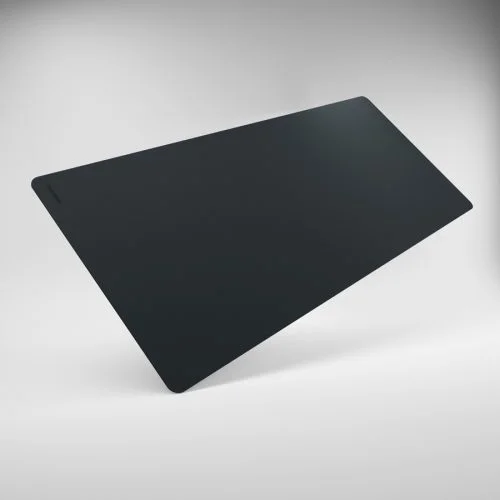
Amazon affiliate link · As an Amazon Associate, B3 earns from qualifying purchases.
Compare Magic playmats →A playmat provides a consistent surface and can make picking up sleeved cards easier. Choose a size that fits the tables where you play, and allow space for the deck, graveyard, exile, and any command zone. Clean and dry the mat as its manufacturer directs before storing it with cards.
Use distinct counters for different meanings. A die marking +1/+1 counters should not be confused with a die recording damage, commander tax, or a temporary bonus. In Commander, track damage from each individual commander separately from life total.
An app can help with multiplayer tracking, but make the display readable to everyone. If a phone battery or screen arrangement is inconvenient, simple dice and paper may be more reliable for that table.
A sensible order for upgrades
- Protect the deck you actually play with matching sleeves.
- Choose a box that fits the real sleeve setup and extras.
- Make life totals, counters, and tokens easy to understand.
- Add a binder for a defined display or trading collection.
- Add larger storage only when the existing organization has a clear limit.
A compact, organized kit can be complete. Spend the remaining budget on games and purposeful deck improvements rather than accessories without a role.
Compare accessories
As an Amazon Associate I earn from qualifying purchases. These links open search results. Verify exact size, count, material, capacity, and seller; the illustrative manufacturer example above is not a guarantee that every returned listing has the same specification.
- Compare standard-size deck sleeves
- Compare Commander-capacity deck boxes
- Compare collecting binders
- Compare Magic playmats
- Compare card storage and dividers
Official sources & further reading
Rules and product details checked against Wizards of the Coast resources. Examples and learning recommendations are B3’s own.
- Illustrative deck-box capacity and official product image
- Standard inner sleeves
- Standard sleeve sizing example
- Commander deck and tracking context