Legends of the Force Booster Buying Guide: Jedi, Sith, and Choosing the Right Box
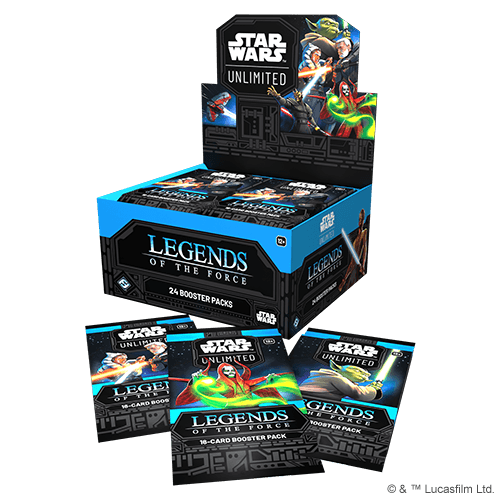
Legends of the Force is an easy set to want and a harder set to buy purposefully. Jedi, Sith, and lightsabers sell themselves. The useful question is whether you want to learn the Force engine, build a particular character's deck, or collect a premium version of a favorite card. One booster product does not answer all three equally well.
I would choose standard packs for exploring the set as a pool, a Spotlight Deck for a predictable first list, and a specific single for a character or upgrade I already knew I wanted. Carbonite is an optional way to enjoy treatments, not the entry fee for playing the mystical side of SWU.
In this buying guide
- What you get: compare the actual packages
- The Force is an engine you need to support
- Hidden buys an attack window, not complete safety
- Qui-Gon and Maul are different starting experiences
- Buy a Force package as a package
- Standard packs and Carbonite serve different collectors
- The limited session I would plan
- Price the experience, then set a stopping point
- Find the correct product
- Keep exploring
What you get: compare the actual packages
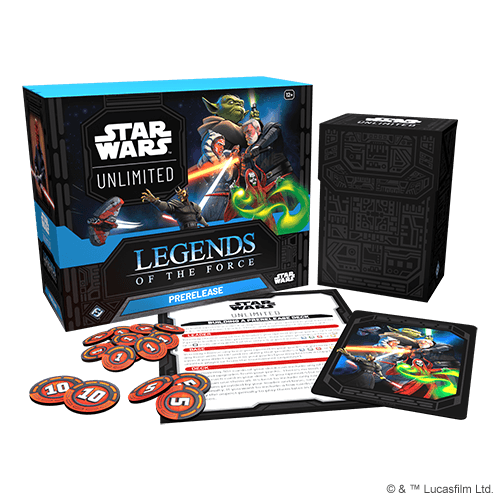
A standard display contains 24 packs. At 16 cards per pack, that is 384 cards, including leader and base/token slots; it is not 384 distinct main-deck cards. A prerelease box provides six packs and supporting materials. A retail prerelease box does not automatically include entry to a store event.
This set uses the earlier pack structure: nine commons, three uncommons, one rare or legendary, one leader, one base/token, and one foil card, with applicable variant replacements. Neither a legendary nor a particular card is guaranteed in each pack.
The fixed Qui-Gon Jinn or Darth Maul Spotlight Deck is a different product. Buy it for the supplied list; buy boosters for randomized cards. There is also a separate 12-pack Carbonite display. Compare editions and quantities before comparing a price labeled simply “box.”
The Force is an engine you need to support
This set introduces the Force token and cards that gain or spend it. Its appeal is the sequence: establish access to the token, spend it on an effect that matters, then find a route to gain it again. A pile of payoffs without reliable access is less useful than a modest package that functions consistently.
When looking at an opened pool, I would separate token access from token spending before choosing the most famous character. Count how many practical early plays support the engine, and ask whether those cards still do something useful when you draw them in the wrong order. That is a better reason to buy an additional copy than a card simply featuring a lightsaber.
Hidden buys an attack window, not complete safety
Hidden prevents a unit from being attacked during the phase it was played unless it has Sentinel; it does not grant general immunity to damage or removal. That matters when evaluating whether a fragile piece is likely to survive long enough to contribute to your engine.
For a simple planning exercise, compare a protected setup unit with a sturdier ordinary unit. Which one leaves you a useful next action if the opponent has direct removal? Which one helps if you have no Force payoff yet? I would want an upgrade to improve more than the most optimistic version of the hand.
Qui-Gon and Maul are different starting experiences
The fixed Spotlight products let you explore Qui-Gon's replay-and-adapt plan or Maul's damage-focused decisions without assembling a random list. They are sold individually. Two people starting together need two playable decks, not one Spotlight package plus the hope that its accompanying cards become another deck.
I would read the exact leader guide before choosing between them. A character preference is a fine tiebreaker, but one player may enjoy returning and replaying allies while another prefers setting up combat through damage. Choosing the experience increases the chance the deck will still be used after the first night.
Buy a Force package as a package
Suppose you have identified a six-card experiment: three affordable enablers and three payoffs. Price all six with shipping before comparing a display. The box may give you a broader collection, but the six exact cards let you test the idea. Do not compare an uncertain box with only the price of its most expensive missing card.
For a casual collection, I would also compare an inexpensive pool of commons and uncommons with sealed product. The important distinction is certainty. A curated pool can support a known teaching exercise; unopened packs support discovery. Both can be enjoyable without pretending they are interchangeable.
Standard packs and Carbonite serve different collectors
Legends uses the earlier standard-pack structure with a foil slot; the later A Lawless Time changes do not retroactively alter these packs. It also has its own Carbonite Edition. If a specific Prestige treatment is the objective, verify that the card belongs to this set and price that exact version as a single.
I would avoid treating a famous character as a guaranteed valuable pull. The character may appear in several card identities, rarities, and treatments. Decide whether you care about the playable text, the art, or a particular finish before ordering.
The limited session I would plan
For a group exploring the set, explain the Force token and Hidden first, then let the actual pool determine decks. Check both arenas and early development instead of forcing every player into the same engine. A set's headline mechanic can matter without every deck needing the same density of it.
After the games, compare moments when players spent the token too early with moments they finished a phase without using a valuable opportunity. That produces a useful next-session focus. If those decisions were fun, another limited session has a clear purpose; if not, buying more packs will not necessarily change the experience.
Price the experience, then set a stopping point
Use delivered cost rather than the headline price. In a hypothetical comparison, a $96 display is $4 per pack; six loose packs at $5 each cost $30. The display has the lower unit price but requires $66 more spending. If you only arranged a six-pack experience, the larger order has to justify its extra quantity.
For a group, write down the format, number of players, required packs, token supplies, sleeves, and who keeps the cards before ordering. A normal draft uses three packs per person; sealed uses six. A 24-pack display therefore supplies eight draft entries or four sealed pools, before prize support or spare packs. Confirm the current procedure with your organizer.
For a deck upgrade, price the exact missing copies with shipping. Set your opening budget so the ordinary contents and the games are enough to justify it. Do not count on selling a chase card to make the purchase affordable.
Find the correct product
As an Amazon Associate, B3 earns from qualifying purchases.
View the Legends of the Force standard booster display on Amazon.
Confirm the selected edition, language, sealed condition, quantity, seller, and delivered price. This is a product-identity check, not a live stock or price promise.
Keep exploring
Learn the game · compare your first purchase · browse all SWU guides · Legends of the Force Qui-Gon Jinn Spotlight Deck Guide: Bounce and Replay · Legends of the Force Darth Maul Spotlight Deck Guide: Damage with a Purpose · understand Carbonite packs and their changing contents.
Product and rules check: October 22, 2026. Official sources: set products; legends of the force; behind unlimited designing legends of the force; a fated duel; limited play; current rules, errata, and suspensions. B3’s buying recommendations and planning examples are editorial analysis; prices used above are hypothetical.