How to Make a Horror Game Night Feel Creepy Without Making It Complicated

A creepy game night needs a clear invitation, an understandable game, and room for the atmosphere to develop. It does not need a room so dark that nobody can read their cards or a playlist competing with every conversation.
I would choose the game first and build a few details around what players actually do. Horror works differently when you are solving a shared problem, exploring an unknown place, or wondering whether someone at the table is working against you.
Pick one kind of fear
For a first gathering, choose between monster-movie fun, eerie investigation, and social suspicion. Describe that tone when inviting guests. A person expecting campy ghost hunting may not want graphic tragedy or direct accusations.
The Night Cage makes candlelight and disappearing paths a cooperative spatial problem. Don’t Go In There offers competitive room choices, risky loot, ghosts, and curses. Blood on the Clocktower turns a larger gathering into social deduction, with a prepared Storyteller managing roles and hidden information.
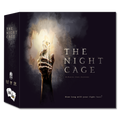
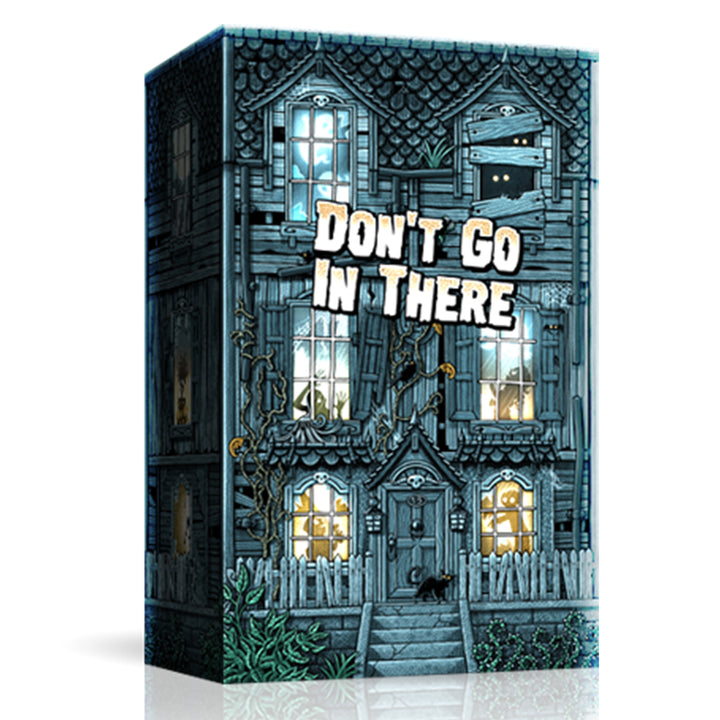
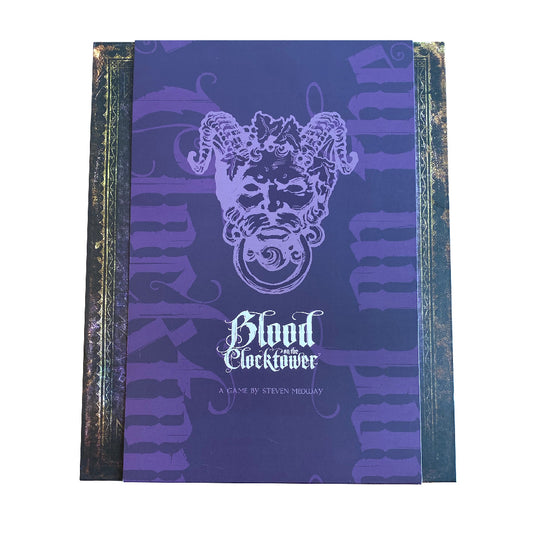
For The Night Cage, learn how movement changes illuminated routes. For Don’t Go In There, explain the curse-scoring objective before players chase impressive loot. For Clocktower, agree on a willing Storyteller and start with Trouble Brewing. Its need for group discussion and hosting makes it an event to plan, rather than a casual substitute for a small cooperative game.
These are different social experiences, not interchangeable boxes with spooky art. Check player count and practical requirements before choosing the one that looks most atmospheric.
Learn the game before hosting the mood
Read the rules and prepare the starting layout in advance. A horror invitation loses momentum when the opening becomes twenty minutes of sorting tokens nobody recognizes.
Teach the goal, the turn, and the loss conditions in good light. If an app is required, install and test it beforehand, keeping its screen visible enough for shared information. Confirm what the chosen scenario requires rather than discovering a missing expansion during setup.
Keep a rules reference nearby. Mystery should come from the game's situation, not the group's inability to find a procedure.
Use three atmospheric details
Choose one visual detail, one sound choice, and one opening line. That is enough to suggest an evening without becoming a production project.
For an invented haunted-town evening, the visual detail could be a small handwritten notice asking residents to remain indoors. The sound could be low, instrumental ambience. The opening line could explain that the town's emergency supplies are running out while something moves outside.
Those details should support the chosen game rather than create fake additional rules. Tell players what is decoration and what they need to act on. A thematic handout should not accidentally send everyone searching for a clue that does not exist.
Keep the table functional
Use enough light to distinguish icons and read text. Keep drinks away from components and avoid placing decorative objects where cards or boards need to move.
For atmosphere without constant distraction, let quiet be part of the night. A soundtrack can become wallpaper or make conversation tiring. Turn it down when explaining a rule, and stop it if players keep asking one another to repeat themselves.
Comfort matters because people need attention left for the fictional danger. Uncomfortable seating, unreadable cards, and an overlong session create irritation rather than dread.
Help cooperation remain shared
In a cooperative game, ask what each player wants to attempt before offering a solution. One experienced person directing every move may improve efficiency while removing the rest of the group's participation.
For a betrayal game, explain the possibility of opposing goals before play. Players can enjoy a surprise within a scenario while still knowing the kind of interaction they accepted. Do not spring direct conflict on someone who thought the entire night would be openly cooperative.
Let rules questions remain welcome in either format. Asking how a card works should not automatically become evidence of guilt.
End with the story people created
After the game, spend a few minutes on the moment everyone remembers: the rescue that nearly failed, the misleading clue, or the desperate final action. That conversation often does more for the atmosphere than another hour of props.
Offer another round only if the group has the energy. A single complete game with a satisfying ending can be an excellent Halloween night. Clear rules, a fitting tone, and three deliberate details are enough to make the room feel different.