Blood on the Clocktower Buying Guide: Is Your Group Ready?

Blood on the Clocktower is a purchase for a group and a host, not just a shelf. Its social deduction relies on people talking, withholding information, inventing claims, and revising theories. A Storyteller manages the hidden state and helps the game function.
I would investigate it for friends who already enjoy that kind of interaction and can gather regularly. The most important buying question is not whether the components look impressive. It is whether you have willing participants and someone who wants to learn the Storyteller's job.
Death does not remove you from the conversation
Good players generally seek the Demon, while the evil team tries to survive and misdirect the town. Information arrives through character abilities and social claims. Drunkenness or poisoning can make apparent information unreliable.
One distinctive feature is continued participation after death. Dead players still talk and share the team's outcome; they usually lose their ability and nomination rights but retain one remaining vote. That keeps a death from automatically becoming an instruction to sit silently for the rest of the night.
For a group frustrated by early elimination in other deduction games, this is a meaningful attraction. It does not eliminate disappointment, but it gives people a continuing role in the discussion and final decisions.
The Storyteller is an active responsibility
The host tracks roles, night actions, and the relevant interactions. They also explain rules and answer questions privately. A neutral host who communicates clearly matters because uncertainty is already part of the design.
This role can be enjoyable for someone who likes facilitating a group's experience. It is a poor assumption that the person who bought the box automatically wants to manage every session. Agree on a host before buying and consider whether others would eventually like to learn.
Begin with Trouble Brewing, the introductory script, rather than a custom collection of exciting roles. A script determines which characters may be present and therefore which explanations are possible. New players need a manageable set of possibilities before they can enjoy interpreting them.
Misinformation needs a trustworthy framework
Players can enjoy unreliable claims if they trust the rules and host. The uncertainty should arise from roles and decisions, not arbitrary changes to procedures.
Explain the possibility of false information before anyone treats a result as conclusive. Encourage players to ask how their own role works, including a role they are pretending to have. Rules questions should not be treated as evidence that somebody is cheating.
A useful distinction is between attacking a claim and attacking a person. “That account contradicts what happened last night” keeps the discussion inside the game. Personal insults make the next invitation harder to accept.
The room and group size matter
Players need opportunities to hear the public discussion and have private conversations. A room with music drowning out speech or nowhere to move can make the social structure awkward.
Count the regular participants honestly and consult the rules for the corresponding setup. Smaller games have specific supported arrangements; they should not be treated as identical to a large town with fewer chairs.
Also consider whether every guest wants to bluff or be questioned. Enjoying ordinary party games does not guarantee enjoying suspicion. Describe the invitation in advance and have another activity available if the group is not in that mood.
Judge the cost against likely sessions
A substantial physical set makes most sense when you expect repeated use. Joining an organized game or trying an introductory session can tell you more than watching an entertaining highlight reel.
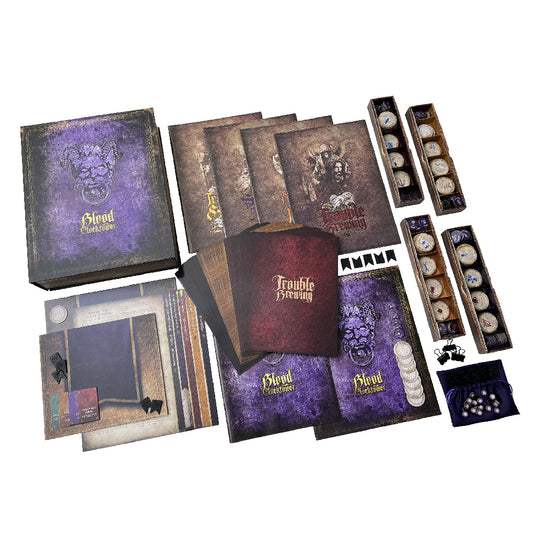
When comparing listings, establish what rules, scripts, and components are included. Additional content does not replace a willing host or a dependable group. Buy the core experience you will use before collecting every possible role.
My recommendation
Choose Blood on the Clocktower if sustained discussion, uncertain information, and role-based deception sound like the evening your friends want. Its continued participation after death and active host distinguish it from a simple hidden-team guessing game.
Wait if gathering players is already difficult or nobody wants to tell the story. The best accessory is a group eager to return and a host who enjoys making their suspicions playable.
Find the complete game
As an Amazon Associate, B3 earns from qualifying purchases.
Amazon results can include accessories and replacement materials. Check that a listing is for the complete physical game. Compare its contents with the official core game before buying.
For a smaller commitment to hidden teams and bluffing, read our Avalon guide. Browse more options in the board-game hub.