Horror RPGs Beyond D&D: How to Choose Your Group’s First System
D&D can support horror, but changing the monster's appearance does not necessarily change the players' expectations. A party accustomed to winning through combat and gaining stronger abilities may approach a frightening situation as another challenge to defeat.
I would choose a different horror RPG when I want the rules to support investigation, vulnerability, or tragedy more directly. These four games offer different experiences; choose the kind of evening before choosing the cover.
Call of Cthulhu: investigating something larger than you
Read B3’s Call of Cthulhu guide →

Amazon affiliate link · As an Amazon Associate, B3 earns from qualifying purchases.
Call of Cthulhu Starter Set Chaosium →Players portray investigators whose skills help them follow evidence, question people, and confront the Cthulhu Mythos. Its percentile-based system and Sanity rules support a different relationship to danger from heroic fantasy.
Choose it when researching the threat is an important part of the invitation. An original missing-person case could lead from ordinary records to evidence of something impossible, with understanding changing how the investigators respond.
I would start with the free Seventh Edition quick-start or a suitable starter adventure. Read the scenario before promising it is gentle: investigation can still involve violence and disturbing material. The point is not that every character must die, but that charging the threat may be a poor plan.
Mothership: survival where the workplace is space

Amazon affiliate link · As an Amazon Associate, B3 earns from qualifying purchases.
Search Amazon for Mothership RPG Core Set →Mothership's science-fiction horror places characters around ships, stations, dangerous jobs, and things that should not be there. Its d100 system includes Stress and Panic, so escalating pressure has mechanical weight.
Choose it for friends drawn to abandoned facilities, damaged equipment, and the question of whether the crew can get out. I would prepare a small location with a clear reason to enter and several imperfect escape options.
Use First Edition material deliberately. Older material may need conversion, and a scenario is not necessarily a complete rules purchase. Check whether you are choosing the Player's Survival Guide, a fuller set, or an adventure.
Dread: deciding whether to touch the tower

Amazon affiliate link · As an Amazon Associate, B3 earns from qualifying purchases.
Search Amazon for Dread roleplaying game Epidiah Ravachol →Dread print and PDF purchase options →
Dread uses a tumbling-block tower in place of conventional dice. A risky action can demand a pull; refusal means accepting failure, while a collapse removes a character from the story.
Choose it when the group wants a physical object to carry suspense across the evening. The tower makes risk visible even before anyone describes the next threat.
Check comfort and accessibility first. Dexterity is involved, and the playing surface matters. Character questionnaires also deserve preparation: the tower supplies uncertainty, but the host supplies a situation and reasons for characters to care.
Ten Candles: creating meaning before the end
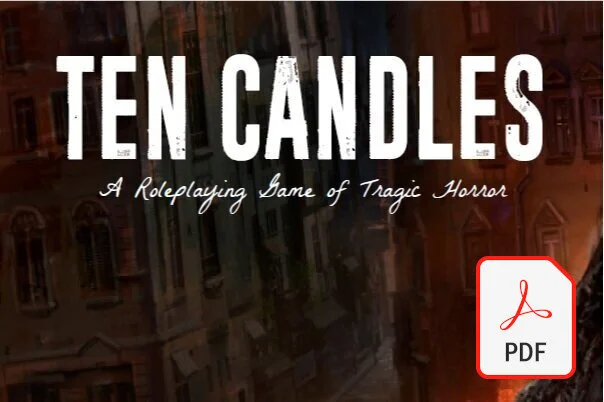
Amazon affiliate link · As an Amazon Associate, B3 earns from qualifying purchases.
Search Amazon for Ten Candles Stephen Dewey →Ten Candles is tragic horror. The expectation is that the characters will not survive the final darkness. Ten candles provide a physical countdown as the story unfolds.
Choose it when everybody wants that premise. The important question becomes what the characters do with their remaining time, rather than whether a clever build can defeat the ending.
Do not conceal the tragedy to surprise heroic-fantasy players. The agreement is part of what makes meaningful choices possible. Follow the game's procedures instead of treating it as a conventional adventure with candle decorations.
Ask three questions before buying
First, do people want to uncover a mystery, escape danger, feel physical suspense, or explore an inevitable ending? Several games can contain those elements, but their priorities differ.
Second, how much rules learning will the host actually do? A short character sheet does not eliminate the need to understand the system and scenario. Choose an introductory session you can prepare properly.
Third, what material should stay absent or off screen? Establish an easy way to pause or change a scene. That conversation helps you choose the premise, not merely cope with it afterward.
Keep the first session narrow
Use a contained situation, a clear opening problem, and characters with reasons to cooperate. Avoid introducing an entire setting history before anybody has made a decision.
I would pick Call of Cthulhu for a clue-led case, Mothership for a desperate space job, Dread for a suspenseful standalone evening, and Ten Candles for agreed tragedy. You do not need to abandon D&D permanently. Trying another game can simply give your group a new way to make one frightening night matter.