Build Your First Pokémon TCG Deck: A 60-Card Plan You Can Test and Improve
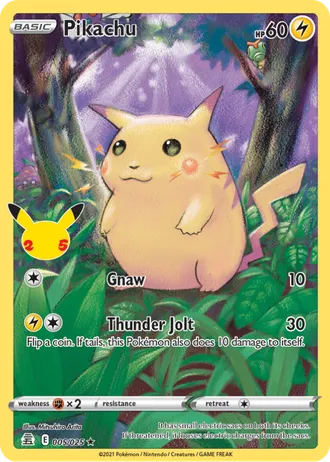
Building your first Pokémon deck is easier when you start with one repeatable plan. Choose what you want your main Pokémon to do, then use the other cards to help that plan happen. A pile of individually impressive Pokémon can still leave you unable to set up, find Energy, or prepare a second attacker.
Our recommended starting point: play several games with a complete deck before changing it. Keep a written list and replace a small group of cards for a stated reason. If you are still learning turns, start with our first-game guide.
The rules your list must satisfy
A normal constructed deck contains exactly 60 cards and at least one Basic Pokémon. Except for Basic Energy, you normally cannot include more than four cards with the same name. Different artwork or attacks do not create separate four-copy allowances. Follow any additional restriction printed on a card, too: the ordinary limit is not permission to ignore a special rule.
Read the exact name and the “Evolves from” line when choosing an evolution chain. Matching a Pokémon species in a general sense is insufficient if the required card name differs. The official rulebook explains names, evolution, and the basic deck requirements. Limited formats and simplified learning products can use other deck sizes; this guide is for the ordinary 60-card physical game.
Write the plan in one sentence
Try this: “I want to develop one main attacker while preparing another on the Bench, then keep attacking as the first is replaced.” That is deliberately more useful than “I want to use my favorite Water Pokémon.” It tells you what your supporting cards need to achieve.
For the Pokémon you choose, read its actual attack costs and effects. Write down what has to be in play, in hand, attached, or discarded before the plan works. Do not buy the final attacker first and assume the remaining pieces will appear in booster packs.
A worked 60-card planning exercise
The following is an original practice framework, not a tournament list or a ratio every deck should copy. Use it to give each slot a job before selecting exact cards.
| Group | Example allocation | Question each card must answer |
|---|---|---|
| Pokémon | 18 cards: a 4–3–2 main evolution line, a 3–2 backup line, and 4 Basic support Pokémon | Does this help the main attack plan or provide a useful fallback? |
| Trainers | 30 cards: 10 search, 10 draw or hand support, 4 movement, 4 recovery, 2 flexible choices | What specific problem does this solve? |
| Energy | 12 Basic Energy matching the chosen plan | Can the deck pay its actual attack costs when needed? |
The total is 18 + 30 + 12 = 60. These are functional groups, not individual card names: all thirty Trainer slots still need legal cards with effects that perform those jobs. Some effects serve more than one job. Check every name and count after filling the framework.
A 4–3–2 evolution line means four copies of the Basic, three of the matching Stage 1, and two of the matching Stage 2. It occupies nine slots. This exercise assumes ordinary evolution, not a shortcut effect. If your main attacker is already Basic, or your strategy needs a special engine, rebuild the allocation instead of forcing it into this example.
Test the opening before upgrading
Shuffle, draw a legal opening, and practice setup. Over several practice openings, record whether you find a useful Basic, a route toward your main attacker, and the resources for the next turn. These practice hands are diagnostic; they do not predict tournament performance.
Then play real games and keep a short log. “Could not find Stage 1,” “had Energy but no attacker,” and “lost the only prepared Pokémon” point toward different changes. An extra Energy card does not solve a missing evolution; another attacker does not automatically solve poor access to cards.
Change a few cards and measure the result
Choose one recurring problem, replace two or three slots, and keep the deck at sixty. State what improvement you expect. Play more games before making the next change. If you replace half the deck after every loss, you cannot tell which change helped.
Pokémon’s deckbuilding introduction shows how a strategy shapes card counts. Its historical example is useful for studying roles, but you should not assume every card in an older published list remains legal today.
Check the format before buying the missing pieces
For Standard events, check regulation marks, permitted reprints, and the current rules through Play! Pokémon resources. Release age and shiny artwork are not legality tests. Ask the organizer which format is being played before purchasing a list.
Buy the cards that finish the plan, then protect the deck with a simple sleeve and deck-box setup. If you would rather begin with a complete product, our buying guide explains that route. A reliable first deck is one you understand, can set up, and can improve for a reason.