D&D 5e Sourcebook Review: Monsters of the Multiverse
As an Amazon Associate I earn from qualifying purchases.
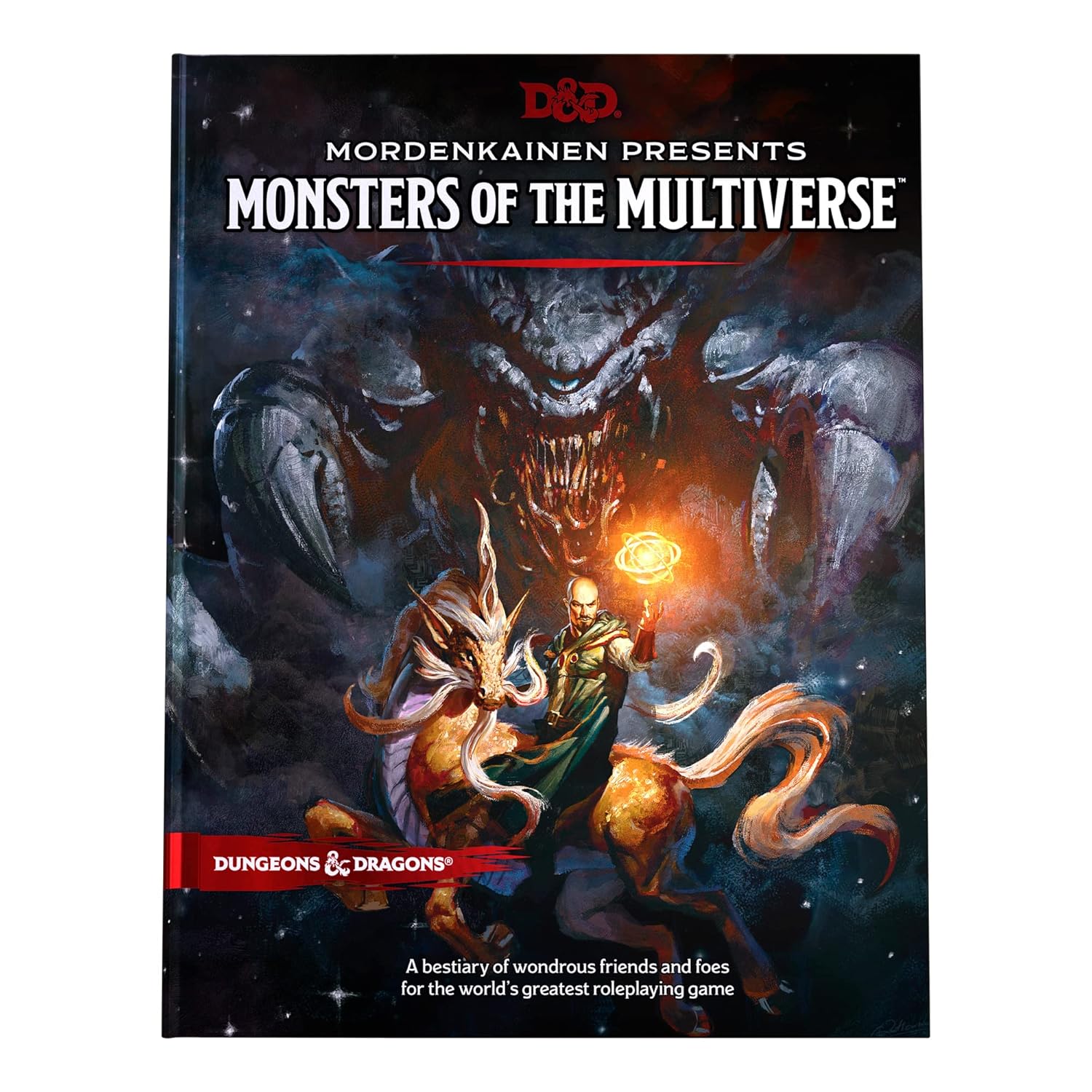
Monsters of the Multiverse is a compilation and revision, not a guide to traveling through the planes. Its contents are straightforward: thirty-three playable races followed by a large alphabetical bestiary. Its chief strength is convenience. Its chief loss is the extended lore that made Volo’s Guide to Monsters and Mordenkainen’s Tome of Foes distinctive.
The player section collects a broad menu
Aasimar, bugbears, centaurs, changelings, duergar, eladrin, fairies, firbolgs, genasi, gith, goblins, kenku, kobolds, satyrs, shadar-kai, tabaxi, tortles, and other options appear in one place. This is particularly helpful for a 2014-rules player whose preferred character choices previously required several sources.
The entries use flexible ability-score increases and revise many racial traits. Several limited-use abilities scale with proficiency bonus, and spellcasting traits often give a choice of spellcasting ability. These changes reduce some of the rigid connections between ancestry and class that existed in the original rules.
Some identities change significantly. Kobolds and hobgoblins, for example, are not merely older entries with cleaner formatting. That makes this a genuine mechanical revision rather than a reprint of identical content. Players should choose a specific version with the DM instead of combining whichever features they like from multiple printings.
Setting-neutral design is both freeing and thinner
The shorter descriptions are meant to fit many worlds. That gives a home setting more room to define a people’s traditions and history. It also makes the book less satisfying as something to read for context.
The distinction is especially visible beside the older books. Tome of Foes builds its gith, elves, and dwarves into long histories and conflicts. Volo’s develops particular monster societies and lairs. Multiverse mainly tells you what an option does, with much less explanation of its place in a world. Neither approach is universally better, but they serve different interests.
The bestiary is the bulk of the purchase
The monster section collects revised creatures from Volo’s and Tome of Foes, spanning specialized humanoids, fiends, undead, aberrations, unusual giants, and other threats. Expanded drow, duergar, and gith can populate factions. Star spawn and powerful undead provide stranger antagonists. Demon lords and archdevils supply high-end threats.
That breadth makes the book useful as an expansion to a core Monster Manual. It does not replace every ordinary creature you need to run D&D, and it is not an adventure collection. Its job is to bring a large supplemental roster into one consistent reference.
The advantage is most obvious for someone who does not own the source books. Owners of both older bestiaries already have much of the roster in an earlier form. Their purchasing decision is about the revisions and convenience, not hundreds of wholly new creature ideas.
Spellcasting monsters change noticeably
Many revised spellcasters rely on clearer combat actions and shorter spell selections rather than long lists managed through a full set of spell slots. This reduces the amount a DM needs to inspect while running a fight and makes the intended offense easier to identify.
I see real value in that simplification. A monster entry is a tool the DM must use alongside everything else happening at the table. However, the older full spell lists offered flexibility beyond the creature’s expected combat routine. The newer approach can make a caster feel more like an action package and less like a person using the same spell system as the player wizard.
There is also a rules distinction between an action with a magical effect and actually casting a spell. Similar flavor does not mean every player ability interacts with both in the same way. Read the specific action instead of assuming that an effect described as magical is automatically a spell.
What this book leaves out
The long Monster Lore chapters and the Blood War, elven, dwarven, and gith histories are not reproduced. Neither are complete campaigns or a detailed planar gazetteer. The title describes the range of creatures, not a comprehensive exploration of the multiverse.
For a revised-rules campaign, the 2025 Monster Manual is the more appropriate foundation. Multiverse remains a supplemental source for options and creatures absent from that core book, with newer overlapping versions taking priority under the relevant rules guidance.
B3’s verdict
Buy Monsters of the Multiverse for a consolidated set of revised player options and supplemental creatures. Keep Volo’s and Tome of Foes if their longer lore matters to you. This is a strong table reference and a much weaker replacement for the experience of reading those older sourcebooks. Its value is greatest when you want mechanics gathered in one place and do not already own most of them.