Monster Manual 2025 Review: Is It Worth the Upgrade?
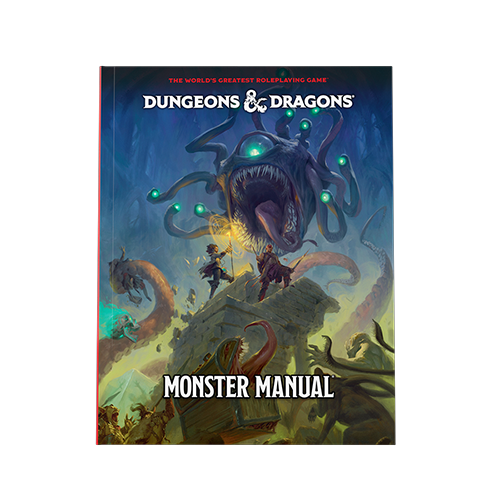
The 2025 Monster Manual earns its upgrade argument through revised stat blocks and a broader current reference. Its value is strongest for a DM building encounters with the revised D&D rules. For a table comfortable with the 2014 book, the useful question is whether the new creatures and presentation solve problems you actually have.
This is a review of the book's contents and design changes, not a claim of having run every creature. A stat block can suggest a better encounter, but its performance still depends on the party, terrain, objectives, and the DM's decisions.
More than an expanded creature list
The book contains over 500 monsters, including 87 new stat blocks. Additions such as the Arch-hag, Blob of Annihilation, and Primeval Owlbear broaden the kinds of threats available rather than merely adding another variation of a basic bandit.
The older creatures have also been revised or given appropriate replacements. That matters because buying the book is not just acquiring a supplement of new options. You are choosing a revised reference for familiar encounters too.
A DM who uses a handful of favorite monsters should compare those entries first. Their changed actions and defenses may be more important to the next session than the total number on the cover.
The layout targets information you need in combat
Initiative appears explicitly in the stat block, and ability scores, modifiers, and saving throws sit together in a table. Those changes address a practical annoyance: finding the right number while several players are waiting.
Some attacks are consolidated. The ancient gold dragon's Rend, for example, replaces separate attack descriptions with a more compact entry. Saving-throw effects also put the required save and outcomes where they are easier to scan.
I consider this a meaningful design improvement on paper. Repeated text creates reading work without necessarily adding a tactical decision. A shorter entry helps when it preserves what the DM needs to know. It still deserves a preparation read; compact wording is not the same as an encounter that can run itself.
Legendary creatures need fresh preparation
The revised presentation changes how legendary actions and lair benefits are expressed. Do not assume a dragon behaves exactly like the older version because its name is familiar. Read its movement options, defenses, special actions, and any lair-related bonuses before choosing the battlefield.
For an original encounter, imagine a dragon guarding an evacuation route rather than waiting in an empty chamber. The party might need to distract it, protect fleeing villagers, or open a second route. Those objectives make movement and timing meaningful beyond trading damage.
The manual supplies the creature's capabilities. You still supply the reason for the confrontation and the circumstances that let those capabilities matter.
Older adventures need a reference check
Fifty-nine older stat blocks have name changes or replacements. Appendix B provides a conversion table, which is useful when an older adventure names something you cannot immediately find in the new book.
Use that table before improvising an equivalent from memory. Then review the replacement's abilities against the adventure's terrain and expected party level. A compatible reference does not mean every scene will feel identical after the substitution.
Keep one monster version in your encounter notes. Mixing remembered older features with the revised block can accidentally strengthen or weaken the enemy.
Challenge rating still needs context
A monster's rating is a starting point for planning. Narrow passages, flight, ranged attacks, saving-throw weaknesses, and extra enemies can change the difficulty dramatically. A creature able to exploit the party's weakest defense may be more dangerous than its headline numbers suggest.
Before running a major encounter, write down its likely opening action, how it uses the terrain, and what causes it to retreat or negotiate. Check whether the party has meaningful responses. That brief preparation is more valuable than treating a printed rating as a guarantee.
Is the upgrade worth it?
I would buy it for a new campaign using the revised core rules, for regular encounter building, or for specific revised monsters I expect to run. The presentation improvements and expanded roster make it a useful working reference.
I would wait if the older manual already serves the campaign and the new entries have no immediate role. Review a familiar creature and one new creature first. If they give you a clearer or more interesting next session, you have a stronger reason to upgrade than a larger monster count alone.
Find the book or game
As an Amazon Associate, B3 earns from qualifying purchases.