6 Story-Driven Board Games for RPG Fans

An RPG fan can love the idea of a campaign board game and still dislike the first session. The reason is often simple: they came for a particular part of role-playing that the box does not provide.
An RPG offers several pleasures at once: inhabiting a character, choosing a route, solving tactical problems, negotiating with people, and changing a world through unexpected ideas. Board games usually concentrate on a smaller selection. That concentration can be excellent, especially when nobody wants to prepare a session, but it needs an honest introduction.
These six recommendations are arranged around what an RPG group wants to keep. I also include one strategic alternative whose appeal is real but whose narrative limits matter.
Freelancers: A Crossroads Game — keep character creation and a complete adventure

Read the full Freelancers: A Crossroads Game review and buying guide →
Freelancers is the choice when RPG fans want to make characters, roll dice, and see a quest reach an ending in one evening. Its companion app handles the storytelling, so nobody needs to prepare a traditional game-master role.
What it preserves: a party with individual personalities, decisions to argue over, and an adventure everyone can discover together. Its irreverent fantasy tone favors a lively gathering over a solemn campaign.
What to accept: prepared app-led choices do not offer the unrestricted responses of a human GM. Test the device and audio, check the supported group size, and reserve a full evening. Choose this for self-contained adventures with changing attendance; the rest of this list offers longer character journeys and tactical alternatives.
Sherlock Holmes Consulting Detective: keep the investigation and the shared case notes
Read the full Sherlock Holmes Consulting Detective review and buying guide →

This is the alternative for an RPG group that would happily spend a session comparing testimony and deciding which lead to follow. It replaces the improvising GM with prepared case material: the group reads, discusses, and chooses where to investigate.
What carries over: building a theory together. A map, a directory, and a shared page of suspects can support the same satisfying moment as a mystery campaign: someone notices that two apparently separate details belong together.
What does not: a personal character build or an NPC who can answer a question the writers never anticipated. The investigation is structured, and the case does not become an open-ended RPG because your group discusses it in character.
How I would start: choose one case and rotate reading duties. Divide notes into evidence, assumptions, and questions. Treat the final explanation as a chance to compare reasoning, rather than allowing a scoring target to rush the conversation. Check that nobody has already played the chosen case; The Thames Murders overlaps with the earlier Ystari collection.
Roll Player Adventures: keep the character journey and lasting choices
Read the full Roll Player Adventures review and buying guide →
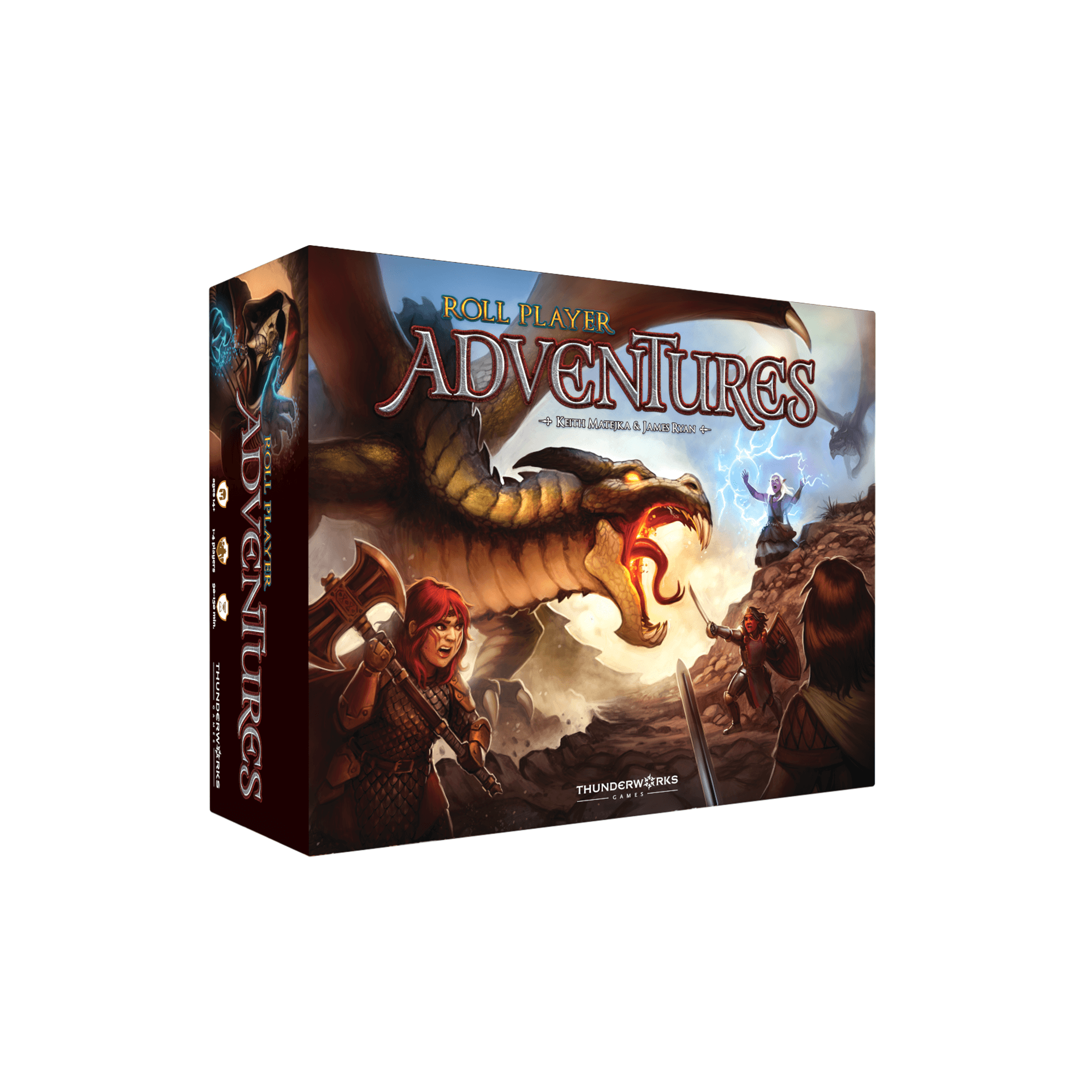
Roll Player Adventures offers a cooperative storybook campaign in which decisions leave consequences across the journey. It suits a group that wants a prepared narrative and developing characters without asking one member to run the world as a game master.
What carries over: a party making choices together, a character who changes through play, and reasons to care about what a decision means later. Dice manipulation supplies a concrete puzzle during checks rather than leaving everything to an unmodified roll.
What does not: a branching storybook cannot respond to every improvised action a tabletop RPG permits. The group must enjoy the supported choices and the dice puzzle as well as the fiction.
How I would start: use the included pregenerated characters and learn the actual rhythm before considering any optional character import. The Roll Player character-building game is a separate product, not a prerequisite. Keep a shared record of choices so the next session begins with purpose rather than a memory test.
Descent: Legends of the Dark: keep the tactical party, let an app guide the journey
Read the full Descent: Legends of the Dark review and buying guide →

Descent combines physical encounters with a required companion app. It can appeal to RPG groups that like a shared tactical adventure and want the system to handle narrative presentation and parts of the administration.
What carries over: distinct characters working together through prepared challenges. The physical table still provides a shared space for discussion and decisions.
What does not: a GM's improvisational judgment. The app presents a designed experience rather than responding freely to every clever proposal.
Important buying limit: Fantasy Flight discontinued the line in April 2026 and canceled Act III. The available Acts I and II remain playable through the app; do not purchase expecting future completion of the planned trilogy. Check the device requirement and judge the content that actually exists.
Wrath of Ashardalon: keep the cooperative dungeon problem
Read our full Wrath of Ashardalon gameplay and buying guide →

Dungeons & Dragons: Wrath of Ashardalon gives an RPG group a dungeon expedition with the opposition handled by rules. Heroes explore modular tiles, use their powers, and resolve the monsters and encounters that follow. The party needs a plan, but nobody has to prepare and run the dungeon as a separate game master.
What carries over: coordinating a small adventuring party under pressure. Positioning, preserving limited powers, and deciding when to explore create practical conversations about who can help whom.
What does not: open-ended roleplaying adjudicated by a DM. The scenario and cards define the available actions. Choose it for a more immediate tactical expedition, rather than expecting the freedom of a D&D campaign.
How I would start: use the introductory adventure and recommended powers. Explain the Hero, Exploration, and Villain phases before anyone moves, and make the scenario’s objective visible. The Adventure System board game is a complete purchase; it does not require D&D rulebooks.
Familiar Tales: keep the growing party and shared responsibility
Read our full Familiar Tales guide for card tests, child care, campaign progression, solo play, and the required app.

Familiar Tales gives a group a concrete reason to care about its journey: wizard’s familiars must protect and raise a displaced princess. The adventure combines a location book, evolving skill decks, and an app that presents the story.
What carries over: a party whose decisions concern someone beyond itself. Choosing how to progress matters differently when caring for the child is part of the premise. I would favor it when the group wants fantasy adventure and a shared responsibility rather than a competition for individual glory.
What does not: an improvising GM. The app and prepared material govern what the game can resolve, and customizing a skill deck is not the same as inventing any action you like.
How I would start: run the app on the actual device before the first evening, check that everyone can hear it, and agree who will handle its prompts. Let each player explain their familiar’s intended contribution before the table decides the plan.
A strategic alternative: Lords of Waterdeep

For an RPG fan who enjoys choosing which expedition to support more than playing out each battle, Lords of Waterdeep shifts attention to patrons and resources. Place agents in the city, recruit adventurers, and complete quests while rivals compete for useful buildings.
This is a worker-placement strategy game, outside the six narrative choices above. It does not provide branching dialogue or a personal hero campaign. Choose it for the pleasure of managing the institution behind the adventure, and teach the base game before adding Scoundrels of Skullport.
Ask the group what it would miss
Before choosing, ask: “If there were no GM and we could only use the actions the game supports, what part of our usual sessions would we miss most?” The answer narrows this list quickly.
If it is conversation with invented NPCs, no box fully replaces that. If it is tactical encounters, prepared character choices, exploration, or political debate, one of these focused systems may serve the group very well. The right campaign board game gives a familiar pleasure a manageable form and makes its limits clear enough that everyone can enjoy what it does.
Product-line update: reporting on Descent’s discontinuation and Act III cancellation, April 2026.
Choose the correct box
As an Amazon Associate I earn from qualifying purchases.
- Freelancers: A Crossroads Game — Amazon title search
- Sherlock Holmes Consulting Detective The Thames Murders and Other Cases — Amazon search
- Roll Player Adventures base game — Amazon search
- Descent: Legends of the Dark — Amazon search
- Dungeons & Dragons: Wrath of Ashardalon board game — Amazon product listing
- Familiar Tales board game — Amazon search
- Lords of Waterdeep — Amazon search
Box check: choose The Thames Murders & Other Cases, Roll Player Adventures base game, and Descent: Legends of the Dark base box to match these recommendations. Familiar Tales requires its companion app; check it works on your device before buying. Wrath of Ashardalon is the standalone Adventure System board game, not a D&D roleplaying supplement.
Browse our individual game reviews or return to the board-game hub.