Roll Player Adventures Review — The Journey Begins after Character Creation
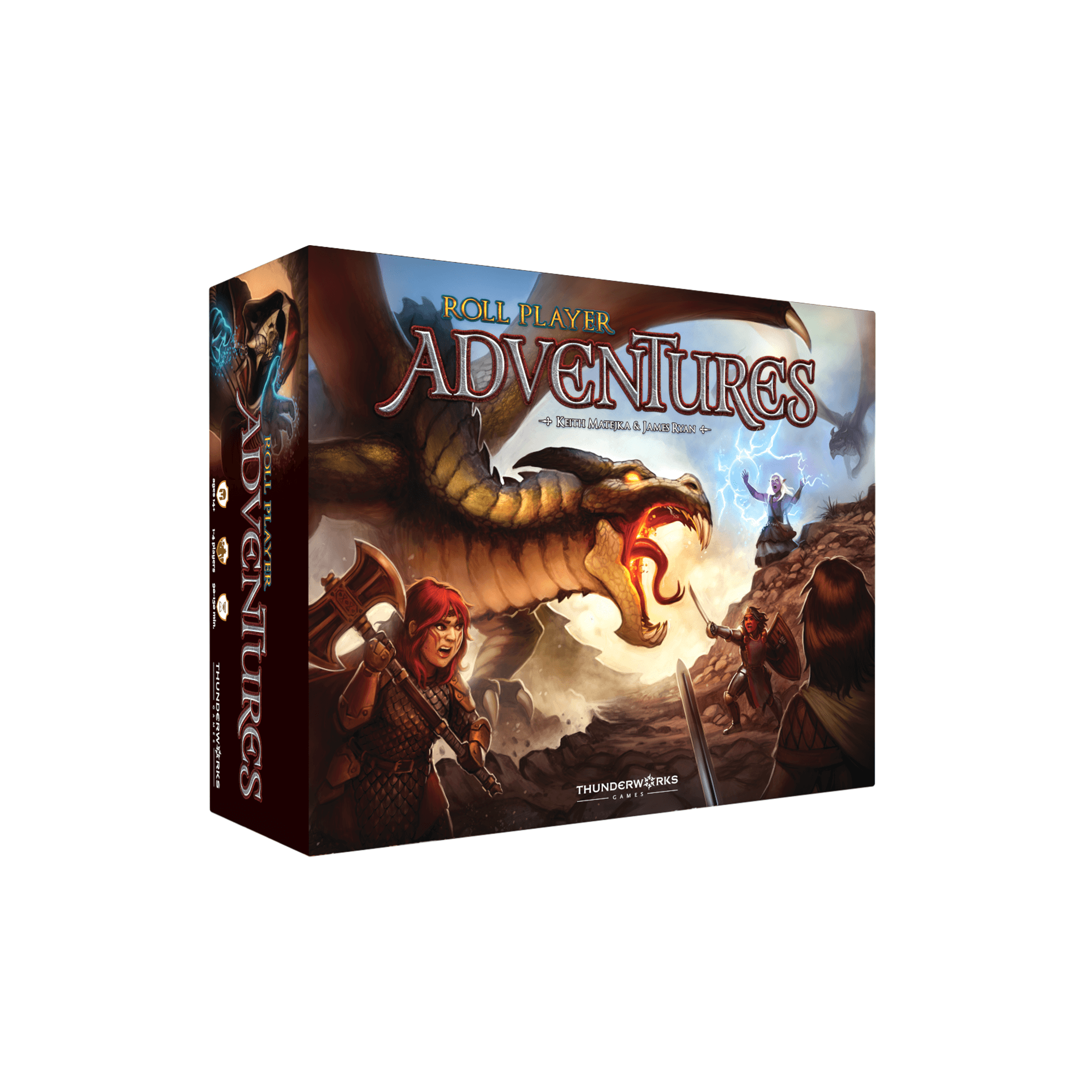
B3’s verdict
Roll Player Adventures is worth considering when the group wants a continuing fantasy story and a cooperative puzzle inside its encounters. B3 would choose it for players who enjoy characters gaining a shared history, while still wanting a concrete system to solve when a challenge arrives.
The standalone campaign supports one to four players across eleven core adventures and a repeatable side quest. You can use pregenerated characters or import one from Roll Player. Owning the separate Roll Player game is therefore an option, not a starting requirement.
What makes the decisions interesting
Combat and skill checks use dice manipulation and placement. The appealing question is how your party’s tools can turn the current roll into the required result. The dice give you a problem, while cards and abilities give you ways to work on it.
The tradeoff is that character identity and encounter mechanics are connected through a designed puzzle. A player expecting unrestricted improvisation may find the prepared choices limiting. A group that likes discussing a shared solution may welcome the clear framework.
The story asks a question; the dice provide a puzzle
The group reads an encounter, chooses an approach, and resolves the resulting challenge. Checks and combat require dice with particular colors and values in specified places. Cards let you manipulate those dice, making the central task more deliberate than simply rolling high and accepting the result.
Character abilities, cards, and shared resources therefore matter when a roll falls short. You examine what can be changed, what can be rerolled, and which cost is worth paying. The narrative supplies the reason to attempt something, while the dice system determines what you must assemble to carry it through.
A near miss can be a solvable hand
Imagine a check requiring a value you do not currently have. One card might adjust a die, while another changes which part of the requirement is easiest to satisfy. Spending both could secure success but leave fewer tools for the next encounter. This is an illustrative situation rather than an adventure solution.
That tradeoff is the game's tactical texture. Success is not simply a reward for selecting the correct dialogue option, and a failed initial roll is not always the end of the attempt. Read the available card effects together and distinguish an exact requirement from a general wish for better numbers.
Campaign decisions need a shared record
Choices feed a branching campaign through storybooks and the party journal. Maintain those records carefully, because later instructions can refer to what the party has already done. A missed entry is more troublesome than a misplaced spare token when the story depends on it.
Let players explain their preferred approach before voting or deciding. A party can solve the dice efficiently and still leave somebody disengaged if one reader controls every narrative choice. The group should share ownership of the story as well as responsibility for passing checks.
Do you need Roll Player first?
No. You can use the supplied pregenerated characters; importing a hero from Roll Player is an option for existing owners. Creating that connection can be enjoyable, but it is not a prerequisite for understanding the adventure.
For a first session, demonstrate a complete check and one card manipulation before describing every campaign system. Allow room for reading and discussion, and learn how to save between adventures. This suits a recurring group that likes authored choices and cooperative dice puzzles. It will feel more constrained than a freeform RPG, and its tactical challenges repeatedly pause the prose. Check the printing's rules and errata, particularly when following advice written for an earlier version.
The cost of choosing this experience
Keep campaign records carefully and share both reading and decision-making. Let the player whose character matters to a scene speak before the group calculates every possible reward. The story gains weight when a choice reflects a character as well as the party’s efficiency.
B3 recommends the base game for a returning group prepared for a substantial campaign. Check printing-specific rules, especially the publisher’s notes on resting changes. Expansions add particular campaigns or backstory material; learn what the original box provides before deciding that more content is needed.
Official game information and rules →
Find the game
As an Amazon Associate, B3 earns from qualifying purchases.
Compare Roll Player Adventures listings on Amazon — title search; check edition, language, contents, and seller.