How Books and Board Games Build Believable Worlds

A believable world does not need a thousand years of history. It needs things that continue to make sense when someone asks a second question. Who maintains the bridge? Why does the border exist? What happens to the baker when the army buys all the flour?
Books and board games answer those questions differently. A novel can show a person living through a system. A game can make you deal with that system yourself. I think the strongest worldbuilding connects the two: an understandable rule, a human consequence, and room for someone to challenge the arrangement.
Here is a practical way to build that connection, using an original city rather than a catalogue of fictional lore.
Begin with something people need
Call the city Bellwater. It stands above a tidal river, and its freshwater pumps must be operated at particular hours. The water itself is not magical. What matters is that access requires coordination.
That one fact already creates work. Someone maintains the pumps, records the schedule, settles disputes, and delivers water uphill. Wealthy households can store more than poor ones. A delayed repair has unequal consequences. You have a place with pressures before you name a dynasty.
In a novel, you could introduce Bellwater through a courier missing a scheduled collection. In a game, you could express it through limited pump access and delivery routes. The setting becomes believable because it affects ordinary actions.
Turn a fact into competing interests
Give three groups reasonable but incompatible priorities.
The pump keepers want equipment protected and predictable working hours. The hillside residents want reliable deliveries even when tides are unfavorable. The merchant council wants priority for ships whose cargo will spoil without water.
None needs to be wholly virtuous. Pump keepers can defend safety while protecting a closed guild. Merchants can keep the city employed while shifting costs onto households. Residents can make a just demand while underestimating maintenance limits.
For a story, those interests create characters who can argue persuasively. For a game, they create objectives that cannot all be satisfied by one obvious move. Believability comes from the fact that people are responding to the same constraint from different positions.
Make the rule visible through a decision
Suppose one pump fails on the morning a relief ship arrives. Repairs require a part held by a workshop across the river. Sending the remaining pump's crew to retrieve it reduces today's supply. Giving water to the ship protects refugees but delays domestic deliveries. Hiring outside labor is faster but violates the guild's agreement.
A novel can follow the person asked to authorize that breach. A game can ask a player to allocate workers or choose an action. In both, the water system has become dramatic because understanding it changes what a decision means.
This is where games such as Carcassonne, This War of Mine: The Board Game, and Onitama offer different lessons. A shared tile landscape makes competing claims visible; civilian survival connects shortages to human consequences; Onitama’s circulating movement cards show how using an option changes what the opponent can do later. You do not need to imitate those games to learn from the kind of attention they demand.

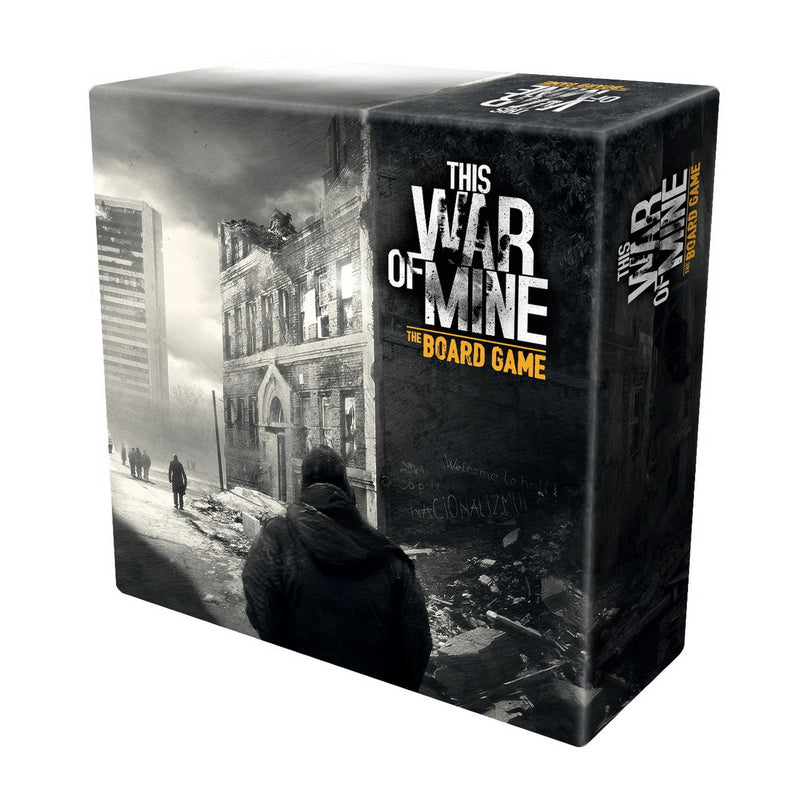

Why the survival example fits: This War of Mine focuses on civilians trying to endure a war-torn city. Food, shelter, and difficult choices connect a place to the people living in it. That makes it a useful design reference for Bellwater’s shortages, but its distressing subject makes it a deliberate adult choice rather than a light family recommendation.
Add history only where it explains the present
Now give Bellwater an old flood. During it, the guild saved the pumps and received permanent authority over water distribution. The council sees that arrangement as outdated. The keepers see it as a promise paid for with lives.
That history earns its place because it changes the present argument. An old flood date by itself is trivia. A surviving privilege, disputed obligation, or neglected memorial gives someone a reason to act.
I would use the same test in a novel and an RPG: if this historical detail vanished, would anyone behave differently? If the answer is no, keep it in your private notes until it acquires a job.
Allow the system to have exceptions
A world feels manufactured when every resident believes the same thing and every institution perfectly follows its stated rule. Bellwater needs a keeper who quietly delivers water after hours, a merchant who funds public storage, and a hillside family that sells its allocation.
These exceptions do not destroy the system. They show people negotiating their lives inside it. They also provide useful entry points for protagonists or players. An unofficial arrangement may solve a local problem and expose a wider contradiction.
The important distinction is between an exception with a cause and an exception invented to force a desired outcome. If the workshop refuses to release the repair part, explain its unpaid bill or fear of guild retaliation. Do not have it refuse simply because the next chapter needs a fight.
Test the world by changing one condition
Run three small thought experiments.
- A dry month: who can store water, who must buy it daily, and who gains authority by promising relief?
- A new pump design: who welcomes the improvement, whose skill loses value, and who can afford the conversion?
- A falsified schedule: who discovers the error first, who is blamed, and what evidence could establish responsibility?
For a novel, choose one experiment and write a scene from the least powerful person's perspective. For a game, turn it into a changed constraint and ask whether players must revise their plan. If everything proceeds exactly as before, the setting may still be decoration.
Give the reader or player enough to reason with
Mystery does not require withholding every rule. People need some dependable understanding of the world to appreciate a surprising exception. Show that pump access is scheduled before making a forged appointment important. Establish the guild's authority before revealing who can overrule it.
A useful sequence is: ordinary practice, disruption, response, consequence. It teaches the setting while something is happening. An explanation becomes welcome when it answers a question the audience already has.
The test I would use before adding more lore
Can I identify what someone needs, what prevents easy access, who benefits from the arrangement, and how a choice might alter it? Can I show that through one scene or one turn? Does the consequence reach someone beyond the person making the decision?
If Bellwater can answer those questions, it can feel real with a short description. A far larger setting that cannot answer them may still feel empty. Books supply the intimate view; games supply the pressure of action. Together, they show that a believable world is a place where details do work.
Books and games mentioned
As an Amazon Associate I earn from qualifying purchases.
- Carcassonne base game — Amazon search
- This War of Mine The Board Game — Amazon search
- Onitama — Amazon search
Onitama buying link opens an Amazon search: check the edition, language, and included contents before buying.
Browse our board-game guides or find your next game.