10 Books That Will Inspire Your Next Tabletop RPG Session
Amazon links are affiliate links. As an Amazon Associate I earn from qualifying purchases. Search results and availability vary.
A novel becomes useful RPG inspiration when you can name what you are borrowing. “The atmosphere” is a start, but it is not preparation. A playable session needs a situation, people with competing wants, and room for the players to surprise you.
These ten books offer different tools. I would choose one according to the kind of session you want next, then borrow a single technique. The adventure prompts below are original examples, not scenes taken from the books. The discussion stays away from major plot resolutions.
1. The Hobbit — make travel reveal character

Search Amazon for The Hobbit J R R Tolkien
Tolkien gives the journey a personality: comfort, hunger, hospitality, pride, and fear influence how the adventure feels. The useful lesson is that traveling should change more than the scenery.
Session seed: the only inn before a dangerous pass is hosting a feast, but joining it obliges guests to help settle an old dispute. The party can accept warmth and become involved, or preserve its independence and sleep outside. Avoid: reproducing a chain of encounters that must occur in a fixed order. Your travelers need their own reasons to continue.
Read the full The Hobbit review →
2. The Lies of Locke Lamora — build a heist around relationships

Search Amazon for The Lies of Locke Lamora Scott Lynch
Scott Lynch’s crime fiction makes schemes interesting through social knowledge and the people required to execute them. A heist is more engaging when the target has routines, allies, and blind spots rather than a single high difficulty number.
Session seed: a collector displays a forged relic publicly and keeps the genuine one in a servant’s room because the servant is the only person they trust. Give the players three ways to discover that relationship. Avoid: requiring one ingenious plan you already wrote. Prepare the security and the motives; let the group invent the method.
Read the full The Lies of Locke Lamora review →
3. Mistborn: The Final Empire — make power leave evidence

Search Amazon for Mistborn The Final Empire Brandon Sanderson
Brandon Sanderson links supernatural ability with recognizable constraints and a social order. That combination is useful for investigations: extraordinary acts can still produce understandable traces.
Session seed: doors across a district have been opened without damaged locks. The culprit’s ability requires a particular material, so each site contains a small physical clue. The party can investigate suppliers, bait another attempt, or protect the next target. Avoid: importing a whole magic system before checking whether it improves your existing rules.
Read the full Mistborn: The Final Empire review →
4. Piranesi — let exploration revise a belief

Search Amazon for Piranesi Susanna Clarke
Susanna Clarke makes a strange environment compelling through attention to place and uncertainty about its meaning. The lesson is not simply “use impossible architecture.” Discovery should change the characters’ model of the world.
Session seed: an apparently abandoned observatory records the party’s movements before they arrive. Let them find an accurate entry, an impossible entry, and an entry someone has altered. Avoid: being so mysterious that players cannot form a hypothesis or choose an action. Establish practical facts even when the larger explanation remains uncertain.
Read the full Piranesi review →
5. The Fifth Season — make disaster expose institutions

Search Amazon for The Fifth Season N K Jemisin
N. K. Jemisin treats survival and power as connected problems. A catastrophe does not fall evenly on everyone; existing systems influence who receives protection and who is sacrificed.
Session seed: an evacuation convoy has fewer seats than applicants. A council claims its selection system is neutral, but essential workers, debtors, and political opponents are being treated differently. Avoid: using suffering only as background decoration. Ask the table about the desired intensity, and give vulnerable people motives and agency beyond being rescued.
Read the full The Fifth Season review →
6. Dune — make one resource matter in several ways

Search Amazon for Dune Frank Herbert
Frank Herbert’s novel is valuable preparation for faction play because ecology, authority, belief, and material interests interact. Scarcity is more convincing when a resource has several competing uses.
Session seed: a mineral powers healing devices and the city’s defenses. A shortage forces three groups to propose incompatible allocations. The party’s patron has concealed a private stockpile. Avoid: making every faction equally informed or equally powerful. Uneven knowledge creates the negotiation.
7. The Haunting of Hill House — let a place attack certainty

Search Amazon for The Haunting of Hill House Shirley Jackson
Shirley Jackson’s horror gains force from the relationship between an unsettling environment and the people trying to interpret it. A frightening location should do more than contain monsters.
Session seed: a manor rearranges signs of ownership: portraits, room keys, and letters gradually suggest that one visitor has always lived there. Offer clues the group can compare, rather than privately declaring that a character’s memories are false. Avoid: taking control of a player character’s emotions. Describe the pressure and let the player choose the response.
Read the full The Haunting of Hill House review →
8. The Black Company — make the contract morally unstable

Search Amazon for The Black Company Glen Cook
Glen Cook is useful when you want adventure through the eyes of people doing a job inside a much larger conflict. An employer can be comprehensible, useful, and deeply troubling at once.
Session seed: hired escorts discover that the refugees they are protecting include a commander sought by the villages they will pass. The contract never mentioned it. Avoid: assuming every mercenary campaign must become nihilistic. Loyalty within the group can supply warmth even when the wider war is ugly.
Read the full The Black Company review →
9. A Wizard of Earthsea — let knowledge create responsibility

Search Amazon for A Wizard of Earthsea Ursula K Le Guin
Ursula K. Le Guin gives power consequences that extend beyond spectacle. For RPG purposes, the richest borrowing is the idea that discovering how to do something does not settle whether one should.
Session seed: an apprentice has learned how to silence storms over a harbor. The neighboring coast begins suffering worse weather. The party must investigate the relationship before the town celebrates a permanent solution. Avoid: turning moral complexity into a lecture with one approved answer. Give each response a real cost.
Read the full A Wizard of Earthsea review →
10. The Long Way to a Small, Angry Planet — give the crew ordinary needs
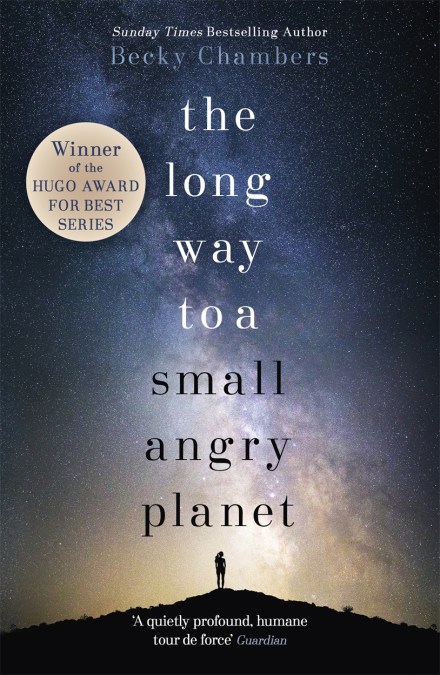
Search Amazon for The Long Way to a Small Angry Planet Becky Chambers
Becky Chambers offers a useful counterweight to plots built entirely around emergencies. Relationships become convincing through work, accommodations, friction, and small acts of care.
Session seed: a ship’s refit forces the crew to share spaces normally kept separate. A supply error makes one person’s food requirements difficult to meet just as a profitable passenger arrives. Avoid: assuming a quiet session is an empty session. A disagreement can matter because of the relationship, even when nobody draws a weapon.
Read the full The Long Way to a Small, Angry Planet review →
Turn the borrowing into a session
Write four sentences before preparing stat blocks: Someone wants ___. Someone else prevents it because ___. The situation changes at ___. The players can intervene through ___. Add a location with two entrances, three clues obtainable through different approaches, and one consequence for leaving the situation alone.
For example, combine the heist technique with the crew technique: a ship needs a stolen navigation instrument, but its engineer refuses to work with the only fence who has it. Now obtaining equipment and preserving a relationship occupy the same session. You have borrowed a structural idea, not copied a protagonist.
Choose the prompt your group would enjoy acting on. A book can be excellent while suggesting the wrong kind of evening for your table. The useful recommendation is the one that turns into decisions your players want to make.