Fantasy Novels as Board Game Design Prompts: Five Ideas Worth Exploring
A fantasy novel can suggest a board game without becoming a literal adaptation. I would start by identifying a pressure in the fiction and asking what repeated decision could make players feel that pressure.
A heist novel does not require a deck of quotations. It may require information that becomes less valuable as time passes. A court novel may suggest a system in which helping somebody creates an obligation. Those are design ideas you can test with paper and tokens before commissioning art or writing a rulebook.
The five sketches below are original exercises inspired by broad concerns in these novels. They are not published games, licensed adaptations, or claims about the authors' intentions. Each includes a small prototype, a central decision, and a reason the first version might fail.
The Lies of Locke Lamora: a plan becomes expensive to change

Amazon affiliate link · As an Amazon Associate, B3 earns from qualifying purchases.
Compare The Lies of Locke Lamora Scott Lynch on Amazon →Scott Lynch's novel suggests a useful tension between preparation and improvisation. The design question is how to let planning matter while ensuring the plan encounters something its makers did not know.
Paper prototype: draw three locations with two access routes each. Give each player four preparation tokens and a shared objective to retrieve one sealed ledger. A preparation token can establish a contact, acquire a disguise, inspect a route, or reserve transport. Reveal one complication after preparation: the ledger has moved, a contact is watched, or transport leaves early.
During execution, players can spend remaining tokens to adapt. Reusing a prepared route is cheaper than abandoning it, but abandoning it remains possible. Let the group finish if it retrieves the ledger and reaches an exit before a six-step alert track fills.
The decision to test: how much preparation should you spend making one route reliable versus keeping flexibility?
Likely failure: a complication that makes all preparation irrelevant. Revise it so preparation still reveals a partial advantage. A twist should change the plan's value, not erase the players' earlier participation.
Read the full The Lies of Locke Lamora review →
The Goblin Emperor: help creates obligations

Amazon affiliate link · As an Amazon Associate, B3 earns from qualifying purchases.
Compare The Goblin Emperor Katherine Addison on Amazon →Katherine Addison's novel offers a prompt about institutional power, courtesy, and the consequences of support. The design question is whether players can pursue influence through assistance rather than direct destruction.
Paper prototype: create four offices and three public projects. Each project needs two offices' support. Players begin with influence in one office and two favor tokens. On a turn, offer a favor to obtain support, advance a project, or repay an obligation. Completing a project grants public standing to everyone who contributed, with a smaller extra reward for its sponsor.
An unpaid favor remains visible. If its holder calls it in, you must supply support or lose standing. Cap the number of obligations a player can issue so the table does not drown in bookkeeping.
The decision to test: when is gaining support worth giving someone a future claim on your actions?
Likely failure: favors become an automatic exchange with no consequence. Introduce one incompatible pair of projects so repaying an obligation can interfere with your preferred outcome. Keep the conflict understandable.
Read the full The Goblin Emperor review →
The Night Circus: wonder requires somebody's work

Amazon affiliate link · As an Amazon Associate, B3 earns from qualifying purchases.
Compare The Night Circus Erin Morgenstern on Amazon →Erin Morgenstern's novel suggests spectacle, concealed effort, and competing creative ambitions. The design question is how to make a shared exhibition beautiful while players pursue distinct goals.
Paper prototype: draw five exhibition spaces. Give the group a shared supply of ten materials and each player one hidden preference: symmetry, variety, adjacency, or empty space. On a turn, place a simple attraction tile, move one tile, or contribute a material to maintain an existing attraction. At the end of each round, one unsupported attraction closes.
The group loses if fewer than three attractions remain open after four rounds. If it survives, players compare how well the exhibition meets their preferences. Begin with open preferences while learning, then test hidden ones.
The decision to test: do you maintain someone else's attraction because the whole exhibition needs it, even when it does not help your personal arrangement?
Likely failure: one player solves the shared layout for everyone. Restrict direct rearrangement of another player's tile or give each player a small piece of private information. Observe whether that produces discussion or merely frustration.
Read the full The Night Circus review →
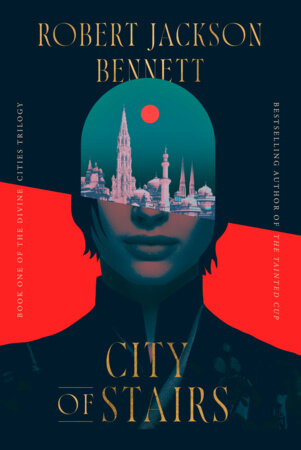
City of Stairs: changing the present changes the meaning of the past
Amazon affiliate link · As an Amazon Associate, B3 earns from qualifying purchases.
Compare City of Stairs Robert Jackson Bennett on Amazon →Robert Jackson Bennett's novel provides a prompt about institutions, suppressed history, and power. The design question is how public interpretation can alter control without requiring pages of exposition.
Paper prototype: create three districts, each with an institution and a disputed record. Give each record two possible interpretations, each benefiting a different office. Players take actions to uncover evidence, publish an interpretation, or invest in a district. Publishing changes which office can authorize future work there.
Evidence remains public once uncovered. A published account can be challenged only with a specified missing piece, not by a die roll. Include one record whose interpretation gives an immediate reward but creates a maintenance obligation next round.
The decision to test: do you disclose a fact that strengthens a rival because it also unlocks something the city needs?
Likely failure: interpretation feels arbitrary. Write the evidence and its consequences clearly enough that players can anticipate an outcome before committing. Political uncertainty should come from incentives, not unclear rules.
Read the full City of Stairs review →
The Broken Earth trilogy: survival depends on a capacity people also fear

Amazon affiliate link · As an Amazon Associate, B3 earns from qualifying purchases.
Compare The Broken Earth Trilogy N K Jemisin on Amazon →N. K. Jemisin's trilogy suggests a difficult relationship between essential power, social control, and survival. I would handle that inspiration carefully rather than turn oppression into decorative flavor.
Paper prototype: make a cooperative settlement with food, shelter, and stability tracks. Give each player one capacity that can avert a different crisis. Using a capacity costs exhaustion; the group can reduce that cost by spending time on training or care. Reveal a crisis each round, with two possible responses: use a specialist's capacity or consume a larger shared resource.
The prototype's aim is to test dependence and unequal burden, not reproduce the novels' institutions. Do not reward the table for forcing one person to absorb every cost. Give exhausted players meaningful alternatives and make recovery part of the shared strategy.
The decision to test: does the group invest in the people it depends on before the emergency arrives?
Likely failure: the “best” solution repeatedly sacrifices the same player. Change the incentives and discuss the theme honestly. A difficult subject needs design attention, not an assurance that grimness makes the game profound.
Read the full The Broken Earth Trilogy review →
Test one loop before building a world
Run each prototype for twenty minutes with plain paper. Watch three things: what players discuss, which decision they want to make again, and what they stop caring about. Ask them to describe the central tension without your help.
If they can explain the pressure and point to a choice that expressed it, the idea has a foundation. If they mostly discuss exceptions or forget the premise, simplify the loop before adding content.
A novel supplies a rich starting question. A board game needs a repeatable decision that lets players investigate it. The productive bridge is that decision, not the number of recognizable names you can fit on the cards.
Books and games mentioned
As an Amazon Associate I earn from qualifying purchases.
- The Lies of Locke Lamora Scott Lynch — Amazon search
- The Goblin Emperor Katherine Addison — Amazon search
- The Night Circus Erin Morgenstern — Amazon search
- City of Stairs Robert Jackson Bennett — Amazon search
- The Broken Earth Trilogy N K Jemisin — Amazon search