What Makes a Great Gateway Board Game?
A gateway board game gives a newcomer a decision they can understand before asking them to understand the entire design. The first turn should feel like participation, not a demonstration performed by the most experienced person.
I would choose a gateway game by the people coming and the evening available. Simple rules help, but the stronger test is whether the game quickly shows a player why their choice matters.
The goal should be easy to picture
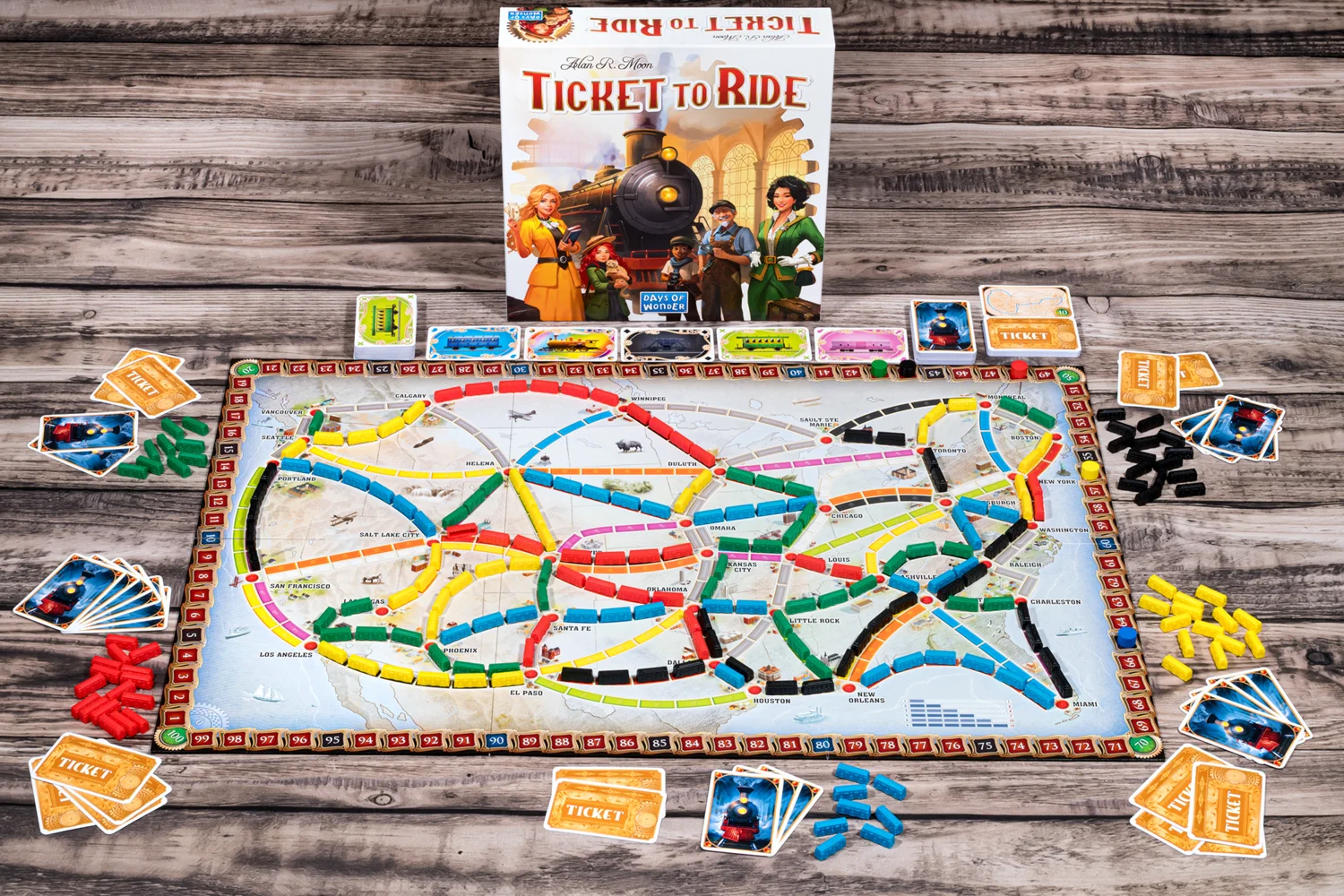
In Ticket to Ride, routes on a map connect destinations. In Splendor, chips help buy cards, and cards make later purchases easier. In Codenames, a clue points a team toward particular words.
Those descriptions offer different activities that somebody can imagine before hearing every exception. Use that to make the invitation specific: “Do you want to build routes, develop a small buying engine, or discuss clues with a team?”
Calling all three beginner games does not make them interchangeable. A person who dislikes word association may still enjoy collecting resources.
Teach the first meaningful choice
A new player does not need a complete strategic lecture before acting. They need the goal, the available actions, and enough information to choose among them.
For an original teaching example, offer two plausible options: take a useful resource now or make a purchase that changes future turns. Explain the immediate consequence of each. Then let the player choose without taking the turn for them.
Give advice when requested, but avoid attaching a warning to every decision. If the lesson is that an experienced person must approve every action, you have taught dependence rather than the game.
Mistakes should leave room to learn
A first turn that effectively ruins the next hour is a difficult introduction. I would favor games where an imperfect early decision still leaves interesting options.
That does not mean removing consequences or secretly letting people win. It means choosing a design whose length and structure allow learning to become useful before the evening ends.
If a rule was taught incorrectly, repair the error plainly. A newcomer should not have to discover that your confident explanation was incomplete by being penalized for following it.
Consider what happens between turns
Some people enjoy planning quietly. Others stay involved by discussing a shared problem or watching a board change. Long waits can make a simple game feel complicated because the player forgets what they were trying to do.
Watch the interaction, not just the advertised play time. A turn-based purchasing game and a team clue game distribute attention differently. Choose for that difference.
For a large gathering, several smaller tables can be better than stretching one game to a count where people spend most of the night waiting.
Theme should help explain the rules
A map can make connection intuitive. A collection of goods can make exchange understandable. Pictures or words can give a group a shared thing to discuss.
I would use theme to connect the action to its purpose, then stop explaining. A lengthy background speech delays the part where players find out whether they enjoy the game.
A favorite franchise may attract attention, but it can also add terms and exceptions. Familiarity with a story is not the same as familiarity with its board-game system.
The teacher affects the result
Prepare the game before guests arrive, know how it ends, and teach in the order players will need information. Avoid making them listen while you search through components and revise your explanation.
During play, ask what they are considering instead of immediately announcing the strongest move. A specific question can reveal confusion without making the player feel examined.
My practical selection test
Can I explain the goal in one sentence? Can a newcomer make a reasonable first turn after a short introduction? Will they have another meaningful choice after a mistake? Does the interaction fit the people in the room?
If those answers are yes, the game has a useful chance of becoming a doorway. The point is to leave someone interested in another game night, not impressed by how many rules you can teach at once.
Find the book or game
As an Amazon Associate, B3 earns from qualifying purchases.