Root Buying Guide: Cute Animals, Complicated Woodland Politics
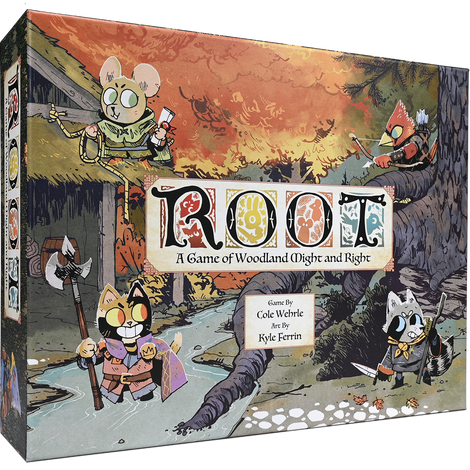

Root’s animals make an inviting first impression. Its politics make a much more demanding second one. This is an asymmetric struggle for a woodland: players share a map while using factions that build, fight, and score in substantially different ways.
The buying question is whether your group wants to learn how opponents work as well as how their own faction works. If the answer is yes, Root offers a compelling reason to keep returning. If everyone wants a quick explanation followed by an immediately fair-feeling contest, the charming artwork can set the wrong expectation.
Four factions, four different problems
The Marquise de Cat begins from the logic of an occupying power. Buildings, wood, and the ability to keep an operation functioning matter. The Cats want a woodland that supports their production. Looking at their pieces only as soldiers misses why territory is valuable to them.
The Eyrie Dynasties pursue expansion through an increasingly demanding Decree. Their commitments give them strength and also create the possibility of turmoil when those obligations cannot be fulfilled. Their problem is not simply choosing a good action now; it is building a sequence they can still execute later.
The Woodland Alliance grows sympathy and rebellion. A small-looking presence can carry consequences that are easy for a newcomer to underestimate. Conventional army size is a poor measure of how much trouble this faction can cause.
The Vagabond operates through an individual adventurer and items rather than a normal woodland army. Movement, relationships, and the use of those items create a different rhythm again. Playing alongside the Vagabond means evaluating a threat that does not resemble the other three.
What makes the competition interesting
Root asks players to interpret power. One faction may look large on the map while another is building a scoring opportunity that is less visually obvious. The shared woodland creates contact, but the reasons each player wants a clearing can differ.
That makes conversation and threat assessment part of the experience. You are not only optimizing a private engine. You are deciding whether someone else’s apparent problem is real, whether their next turn is dangerous, and whether addressing that danger leaves you exposed.
I would choose Root for a group that enjoys that kind of argument. “Why are you attacking me?” becomes an actual strategic question with several possible answers. It is less appealing for players who find direct interference unpleasant or who want their plan to remain intact until the final score.
The learning cost is shared
An asymmetric game cannot be taught effectively by explaining one faction and assuming the rest are variations. At a minimum, everyone needs to know how each faction makes progress and what warning signs deserve attention.
For a first game, I would explain the common map and conflict rules, then give each faction a short description of its scoring priorities and distinctive constraints. Let players examine their boards before starting. Use the learning game to name consequences rather than to celebrate catching someone with a rule they could not reasonably understand.
A patient first session is an investment. The recurring appeal comes from recognizing how the same woodland changes when players pursue different agendas. A rushed introduction can bury that appeal under confusion.
Player count matters more than the box art
The base game supports two to four players, but that does not mean every count offers the same social and political texture. Consider your regular group and the combinations you intend to play. A purchase for mostly two-player evenings deserves more investigation than “the box says two.”
For a group of four willing to learn together, the competing faction identities are a substantial part of the attraction. If your group changes constantly, expect to repeat the teaching work. That is a real cost even when experienced players find the rules familiar.
Start with a workable table, then consider expansions
An expansion adds more than variety. Additional factions introduce more interactions to understand. Buy the base game because its existing contest fits your group, then identify a specific reason to expand: a desired player count, a new faction, or a different style of challenge.
My verdict is that Root is a strong choice for repeat groups who enjoy direct conflict, uneven tools, and learning to read a shared political situation. It asks for attention and rewards familiarity. The cute animals are the invitation; the changing balance of woodland power is the reason to stay.
Find the book or game
As an Amazon Associate, B3 earns from qualifying purchases.