Howl's Moving Castle: A Reader’s Guide Beyond the Film
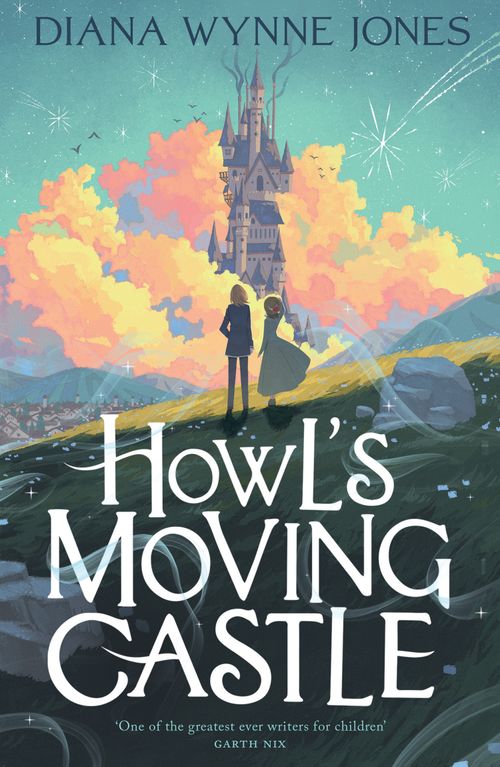
Howl’s Moving Castle begins with Sophie Hatter believing that she already knows the shape of her future. She is the eldest of three sisters, and the fairy-tale rules she accepts tell her that an eldest daughter is unlikely to have an interesting adventure. Diana Wynne Jones makes that assumption the first thing worth questioning.
The famous castle provides the spectacle, but Sophie’s expectations provide the emotional engine. This is a particularly inviting novel if you like fantasy that treats familiar story patterns with intelligence and a sly sense of humor.
Sophie’s problem starts before the curse
Sophie works in her family’s hat shop in Market Chipping. Her sisters receive other apprenticeships, while she regards remaining in the shop as the natural result of her place in the family. The opening establishes her skill and care for others alongside her willingness to dismiss her own possibilities.
Then the Witch of the Waste turns her into an old woman. Sophie leaves and enters the roaming home of the feared wizard Howl. Inside are Howl’s apprentice Michael and the fire demon Calcifer, with whom she makes a bargain connected to breaking her curse.
That setup gives the story several kinds of uncertainty at once. Sophie does not know how to restore herself, how much of Howl’s reputation to believe, or how the relationships inside this unusual household work.
The opening’s humor has a purpose
Jones introduces fairy-tale assumptions as though everyone knows them, then shows people who do not fit those assumptions neatly. A stepmother need not behave like the familiar villain. Sisters have ambitions that do not remain politely inside their assigned roles.
I like that as a foundation for fantasy because it lets the story question destiny without beginning with a solemn announcement about fate. The humor teaches the reader how to pay attention: notice the gap between the expected pattern and the person standing in front of you.
Sophie’s resignation is especially useful. She is not without ability. She is limiting what those abilities could mean. That is a more specific problem than simply needing a wizard to reveal that an ordinary person was special all along.
A magical household is still a household
The castle brings powerful personalities into close proximity. A bargain with a fire demon and a relationship with a notorious wizard are extraordinary circumstances, but living among other people also creates ordinary pressures: trust, irritation, work, and conflicting priorities.
That combination gives a reader something tangible to hold while the magic grows complicated. The question is not only what a spell does. It is what somebody wants, what they refuse to explain, and what another person assumes about them.
For me, domestic detail is a strength in fantasy. It can make an impossible place feel inhabited without stopping to describe its entire history. A room matters when people disagree about how to live in it.
Give the novel room beside the film
If the film brought you here, familiar names and the broad premise can provide a comfortable starting point. They should not become a checklist demanding that every character, scene, or emphasis match what you remember.
A novel gives you access to the assumptions and misunderstandings shaping Sophie’s experience. Read for what the prose does with those, rather than trying to reconstruct an image from the screen.
I would also avoid a detailed adaptation-comparison article before the first read. It is easy for a discussion of differences to reveal the solutions to mysteries the book is still setting up. You can compare versions more fruitfully after the novel has had a chance to tell its own story.
Who should choose it?
This is a strong fit for readers who enjoy fairy-tale logic, magical bargains, and humor that grows from character. Sophie gives the premise a clear emotional question: what becomes possible when a person’s accepted story about herself stops being reliable?
If you primarily want a military epic or a magic system explained through formal rules, I would choose something else. Here, personality and uncertainty are substantial parts of the attraction.
For a gift, check that you are buying Diana Wynne Jones’s novel in the recipient’s preferred format and language. An attractive collector’s edition is optional; the story does not require an elaborate purchase.
My recommendation is to choose the book for Sophie. The castle is a wonderful reason to open it, but a capable young woman learning to distrust the limits she has accepted is the reason the opening gives the fantasy something to stand on.
Find the right edition
As an Amazon Associate, B3 earns from qualifying purchases.
Useful links: Read the authorized opening excerpt