This War of Mine Review — Civilian Survival Makes Every Resource a Moral Question
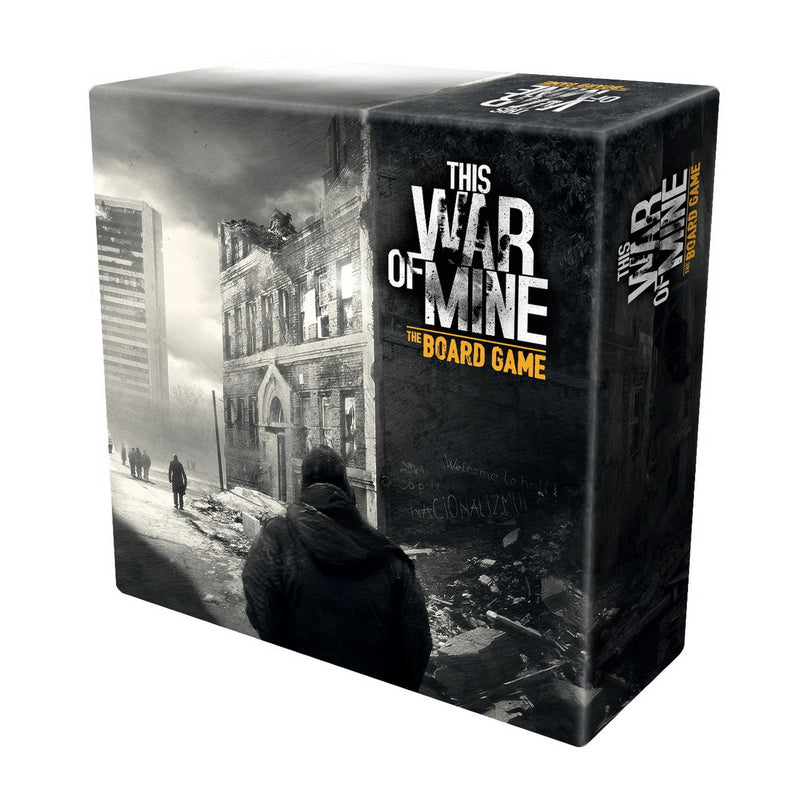
B3’s verdict
This War of Mine is a deliberate choice for a serious evening. Its civilian perspective makes survival decisions difficult in a way that triumphant adventure games often avoid. B3 would recommend investigating it only when the whole group wants that emotional register, rather than treating the war theme as decorative atmosphere.
The cooperative adaptation asks players to manage civilians in a besieged city. Maintaining shelter and finding resources sit alongside scavenging journeys and story encounters. Written scripts give individual situations consequences beyond the immediate resource calculation.
What makes the decisions interesting
The interesting friction is that a useful action need not feel like a good action. You may understand why the survivors need something while being uncomfortable with how they might obtain it. That tension gives the fiction weight, but it also means a strategically sound decision can leave the table subdued.
The cost is both emotional and practical. This is an elaborate survival game with substantial story material. Agree on the intended tone before setup, and leave room to stop. A player who does not want to discuss civilian suffering should not need to justify declining the evening.
Survival is divided across a day and night
You manage civilians in a damaged shelter, assigning work, addressing basic needs, and deciding who will leave to scavenge when night comes. The same people needed for repairs or searching also need rest, food, and protection. Materials are useful only if you can obtain them without making the next part of the day impossible.
At night, deciding who stays behind is as meaningful as deciding who ventures out. Scavengers can bring necessary supplies, but an undefended shelter and exhausted survivors create different risks. You are trying to maintain a fragile routine, not send a party of increasingly powerful heroes through a combat campaign.
An improvement can wait; a person may not
Imagine having enough materials to improve the shelter while food is running low. The improvement could make future days easier, but it does not feed someone tonight. Sending your healthiest survivor out might solve that shortage while exposing the person the shelter most depends on. This hypothetical situation illustrates the pressure without revealing a scripted event.
The interesting decisions connect several time horizons. An immediately compassionate choice can make later survival harder; a narrowly efficient choice can feel unacceptable. The game gains much of its character from asking the group to discuss those costs instead of reducing every outcome to victory points.
The scripts change the meaning of supplies
The Book of Scripts provides encounters and consequences that cannot be predicted simply by calculating material values. Reading and resolving those entries is a substantial part of play. Expect interruptions to an apparently sensible plan, rather than a resource engine that becomes steadily safer as it grows.
Read instructions precisely and keep notes where the rules request them. Avoid browsing other entries while finding the one you need. The experience depends on not knowing which apparent opportunity conceals a danger, and a detailed walkthrough can remove more than a single surprise.
Agree on the experience before beginning
The subject is civilian suffering during war. The difficult material is not decorative flavor around a light puzzle. A group should be comfortable with hunger, illness, desperation, and morally upsetting encounters before committing. Taking a break or choosing another game is a reasonable response if the evening becomes exhausting.
The survivors are shared responsibilities rather than privately owned character builds. Give everyone room to influence decisions and avoid turning the shelter into one player's optimization exercise. Choose it for serious discussion and uncertain survival; it is a poor fit for a relaxing session or a group wanting frequent, empowering victories. Check whether a listing is the original board game or a different edition and expansion before buying.
The cost of choosing this experience
I would share responsibility for reading and planning, then discuss why the group chose a course of action. Avoid presenting every setback as proof somebody played badly. Uncertainty and a shortage of good options are part of the design’s subject, not merely obstacles to achieving a cheerful ending.
Check which edition and contents a listing supplies. The original game, expansions, and Second Edition offers should be evaluated separately; this article discusses the original civilian-survival premise. B3’s verdict is strongest for groups seeking demanding reflection through a survival system. For a celebratory gathering or a comforting adventure, choose another kind of evening.
Official game information and rules →
Find the game
As an Amazon Associate, B3 earns from qualifying purchases.
Compare This War of Mine listings on Amazon — title search; check edition, language, contents, and seller.