The Turn of the Screw Review — When the Account Becomes the Haunting
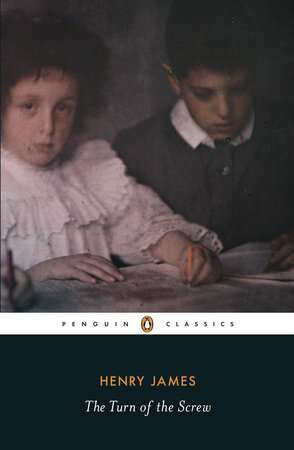
The Turn of the Screw makes confidence itself unsettling. A young governess arrives at the country estate of Bly to care for two children, Miles and Flora. She becomes convinced that a threatening presence surrounds them, but readers encounter the danger through an account whose judgments demand scrutiny. Henry James gives the reader two tasks at once: follow what she reports and decide how far her explanation can carry the evidence.
Choose it for a compact Gothic story that invites disagreement afterward. Its appeal depends less on graphic spectacle than on the pressure of interpretation. That does not make it emotionally gentle: threatened children, death, isolation and distress are central to the atmosphere.
The narrator gives you access and sets its limits
The governess is the route into Bly, so her attention determines what becomes important. A look, a silence or an encounter can acquire enormous significance once she fits it into her understanding of the house. The reader has to distinguish a reported observation from the conclusion attached to it, even when those two things arrive inside the same persuasive sentence.
This is the strongest reason to read the book slowly. Suspense comes from wondering what an event means as well as wondering what will happen next. A confident account can be frightening because it seems to identify a danger, or because confidence itself may be part of the difficulty. The story allows those possibilities to put pressure on one another.
Responsibility can strengthen a troubling interpretation
The governess's role gives her an urgent reason to act: she is responsible for children who depend on adults. That makes uncertainty difficult to tolerate. Waiting for better evidence can look like neglect, while intervention can appear necessary before the situation has become clear.
Read for the way a protective purpose changes what someone is willing to infer. Good intentions do not answer every question about judgment. For a discussion group, this is more useful than beginning with a vote on whether the ghosts are real. Ask which observations support a particular interpretation, what remains uncertain, and how the narrator's responsibilities affect her response.
Bly turns ordinary social distance into atmosphere
The country-house setting narrows the field of attention. Small changes in behavior become noticeable when the same few people occupy the reader's world. The children are not simply pieces in a supernatural puzzle; their dependence and the limits of adult understanding give the uncertainty its emotional cost.
This is a different pleasure from a haunting built around a new frightening room in every chapter. James returns attention to people, language and the act of assigning meaning. Readers who enjoy that sustained scrutiny may find the restriction effective. Those who want frequent external action can find it frustrating even while admiring the premise.
A short classic can still be a demanding read
The prose is the main practical consideration. Long sentences, qualifications and indirect expression can make a relatively brief work take more concentration than its length suggests. Sample the opening for its voice rather than assuming that a novella will automatically be a quick evening's entertainment.
A useful approach is to read one exchange at a time and summarize its immediate claim before deciding whether to trust it. You do not need to solve every ambiguity on first encounter. Save an edition's introduction until afterward if you want to preserve discovery; critical essays often discuss later developments.
B3's verdict: who should choose it?
Choose The Turn of the Screw for Gothic atmosphere, a troubling account and a story that gives a book club something specific to argue about. Try The Woman in Black first if you want a more straightforward route into a traditional ghost story. Choose The Haunting of Hill House if psychological intimacy in a haunted place interests you but James's older syntax is a barrier.
Expect interpretive work rather than a final explanation that makes every earlier uncertainty disappear. The pleasure is testing an account with other readers while recognizing why the question matters to the people inside it.
Choose the edition and find the book
The pictured Penguin Classics paperback includes an introduction and notes by David Bromwich. Check the selected format and ISBN before ordering. James's original novella, annotated editions, story collections, simplified readers and screen adaptations are different purchases.
As an Amazon Associate, B3 earns from qualifying purchases.
View The Turn of the Screw — Penguin Classics paperback on Amazon
Read next on B3
Browse individual book guides by reading mood.
Edition and premise reference: Penguin Random House.