The Library of the Unwritten Review — Unfinished Stories Refuse to Stay Shelved
The premise and reading appeal
Claire manages the Unwritten Wing of a library in Hell, where unfinished stories can produce characters determined to leave their books. A retrieval mission involving an escaped Hero develops into a conflict over a dangerous text. A. J. Hackwith turns library work into a fantasy adventure about the possibilities stories contain.
The bookish premise has room for conflict
The central idea works because an unwritten story is both an object to preserve and a possibility that has not been settled. A character with desires complicates the librarian’s wish to restore order. That gives the adventure a question beyond recovering a missing item: who has authority over something that might become more than its original plan? The ensemble and supernatural bureaucracy make the premise approachable, while the wider dispute gives the characters reasons to move beyond the library’s shelves.
Claire's competence does not settle the moral question
A librarian has good reasons to protect a collection and retrieve something that has escaped it. A character who wants a life beyond an unfinished book complicates the assumption that returning an item is an uncomplicated act of care. Claire's professional confidence gives the novel a useful starting order that the adventure can challenge.
The distinction makes the bookish premise more than decorative. Preservation, control, and abandonment can look similar depending on whose future is at stake. A story's incompleteness is both a practical problem and a source of possibilities its keeper cannot entirely predict.
The group makes competing histories personal
Brevity, Leto, and the escaped Hero bring different relationships to creation and authority. Traveling together puts those differences into conversations and decisions rather than leaving them as abstract features of the setting. A companion can appear to occupy a familiar role while being constrained by a history the others do not understand.
The ensemble is therefore an important part of the reading appeal. Readers seeking a solitary scholar's quiet investigation should expect a more mobile and socially driven adventure, with arguments and developing trust sharing space with the supernatural plot.
The expanding cosmology is deliberately extravagant
Heaven, Hell, and other supernatural destinations provide opportunities for pursuit, bureaucracy, and conflicting claims over powerful texts. The novel enjoys extending its premise rather than keeping all its action inside one beautifully appointed room.
That expansion can also feel busy. A reader drawn chiefly by the library may want more time among the shelves and less time managing the wider dispute. The best reason to continue is the connection between the external mission and the group's changing accounts of themselves. The book becomes more distinctive when a dangerous text and a difficult personal story pose related questions about who is permitted to determine an ending.
Book details and sample: publisher or author information.
B3’s verdict: who should choose it?
Choose it for imaginative book-centered fantasy, a reluctant group and questions about creation and belonging. Do not choose it solely for the promise of a quiet magical library: pursuit, danger and conflict with supernatural powers are substantial parts of the story. Readers preferring subtle magic may find the premise deliberately extravagant. This is the first Hell’s Library novel, not a collection of all three; The Archive of the Forgotten follows it.
A spoiler-free discussion starting point
What responsibility does a creator have toward an abandoned possibility? If a fictional character can make choices, does returning them to their original story count as protection or imprisonment?
Choose the edition and find the book
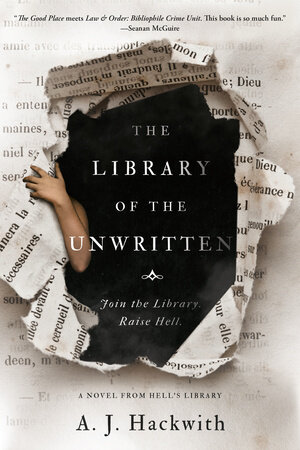
The cover identifies the book discussed here. Check the author, selected format, language and edition when comparing offers. The Amazon link opens a product page for the ISBN identified here. Confirm the selected format, edition, and seller before ordering; availability can change.
As an Amazon Associate, B3 earns from qualifying purchases.
Find The Library of the Unwritten by A. J. Hackwith on Amazon
Reading lists featuring this book
Browse B3’s individual book reviews.
Edition and premise reference: publisher or author book page.