The Crew: Mission Deep Sea Review — A Shared Goal Makes Every Trick Different
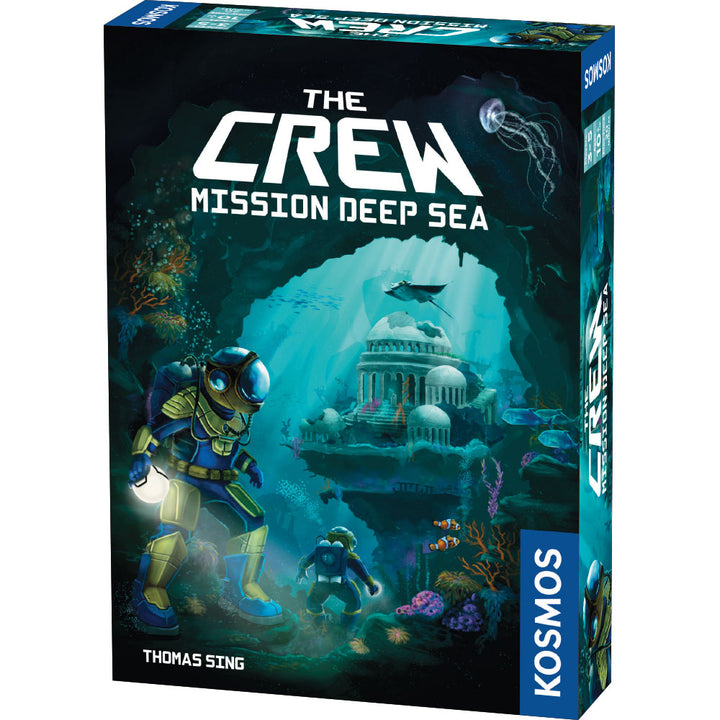
B3’s verdict
The Crew: Mission Deep Sea is an appealing cooperative choice when the group likes card play more than extensive setup. B3 would choose it for players willing to communicate through their decisions instead of explaining their entire hands. A short mission can contain a surprisingly concentrated shared problem.
The game uses trick-taking with mission tasks determining what the players must accomplish together. Players follow suit when required, while restrictions limit the information they can exchange. Success depends on every assigned task being fulfilled, not on one person collecting the most tricks.
What makes the decisions interesting
The interesting decision is which card leaves the right opportunities for somebody else. Winning a trick can be unhelpful when the mission needs another player to receive a particular card. The same basic card structure acquires a different meaning as the tasks change.
The tradeoff is a need to learn the grammar of trick-taking and respect communication limits. A player new to following suit may need a teaching hand before the first real mission. Explaining the answer aloud removes an essential part of the puzzle.
Win the right cards with the right player
Players follow trick-taking rules, including following the led suit when able. The winner of each trick collects its cards and controls the next lead. Mission tasks require particular outcomes, so winning the most tricks is not the objective. Sometimes the useful play is to lose carefully.
The group knows its tasks but cannot freely discuss every hand. Limited communication lets a player mark a permitted card with specific information. That signal is a resource to time well, not permission to explain the complete solution aloud.
The next lead can be worth more than this trick
Imagine needing a particular teammate to collect a later card. Winning the present trick may let you lead the suit that helps them, while carelessly taking a different trick could trap the lead with the wrong player. This hypothetical example shows why counting card strength alone is insufficient.
Watch which suits players can still follow and which tasks are unfinished. A low card may be valuable because it keeps you from accidentally taking something assigned elsewhere. A high card may be a burden when nobody can overtake it at the necessary moment.
Silence is an information rule
Players should not coach by tone, meaningful hesitation, or remarks that substitute for prohibited hand information. The satisfaction comes from interpreting legal signals and play. If a new player makes a mistake, explain the rule after the relevant hand rather than demand information the game forbids.
Failure is usually an opportunity to reset and improve the shared understanding. Discuss the sequence that caused the problem without turning the next attempt into one person's dictated script. Everyone should retain ownership of the cards they choose.
Teach the card game before the mission puzzle
If somebody is new to trick-taking, play a demonstration that covers following suit, trump, and who leads next. Then introduce a simple task. Combining both explanations at full complexity can make the first mission feel opaque.
Mission Deep Sea is standalone and uses varied task requirements. The Quest for Planet Nine is a different Crew box; owning it is unnecessary. Follow the special two-player procedure if playing as a pair rather than assume the standard multiplayer setup transfers unchanged. Choose it for concentrated cooperation in short attempts, not for free discussion or a sprawling underwater narrative.
The cost of choosing this experience
I would begin with early missions and treat a failed attempt as information. Discuss what the card sequence revealed after the hand, then try again without coaching someone through every play. That preserves both learning and ownership of a decision.
Mission Deep Sea is standalone and distinct from The Quest for Planet Nine. Check the rules for your group size, including the special two-player variant. B3 recommends it for a small returning group that enjoys concise cooperative challenges and inference. Pass for a noisy gathering where frequent interruptions make attentive card play difficult.
Official game information and rules →
Find the game
As an Amazon Associate, B3 earns from qualifying purchases.
Compare The Crew: Mission Deep Sea listings on Amazon — title search; check edition, language, contents, and seller.