Sushi Go! Review — A Passing Hand Makes a Small Drafting Decision Matter
B3’s verdict
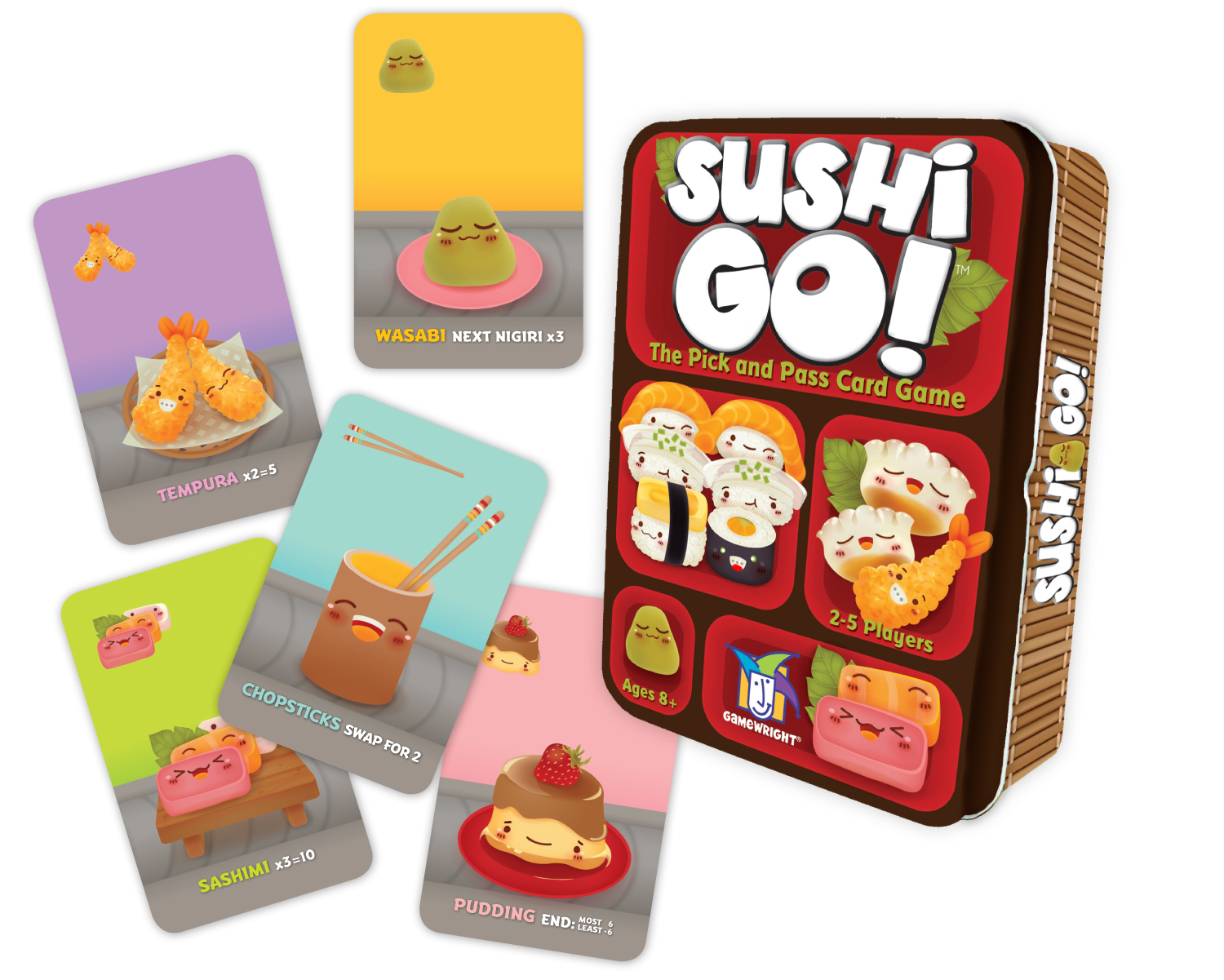
Sushi Go! is an inviting choice when a group wants a short introduction to card drafting. B3 would choose it for players who enjoy collecting combinations while watching opportunities pass around the table. The small format helps make a learning game a manageable commitment.
Players select a card from a hand, reveal their choices, and pass the remaining cards. Different dishes reward sets or combinations in different ways. The original game supports two to five players and packages the drafting idea into a compact deck.
What makes the decisions interesting
The interesting decision is whether to take an immediate reward or invest in a set that needs more cards later. You may have seen the needed card in another hand, but somebody else can select it before it returns. Watching other players’ collections becomes useful information.
The tradeoff is that uncertainty remains even when the scoring is clear. A promising collection may not finish. Players who want to plan an entire game from the opening hand may prefer another kind of puzzle.
Pick one dish and pass the uncertainty onward
Players simultaneously select a card from their hands, reveal their choices, and pass the remaining hands. You build a visible collection while the options circulate. The basic action is quick; the decision is which combination deserves commitment before other players remove its missing pieces.
Different dishes score differently. Some reward pairs or sets, some accumulate value, and others compete through a majority. Wasabi changes the value of a later nigiri, while puddings are kept for the end of the game. You do not need to memorize every possibility before beginning, but you do need the scoring reference visible.
A partial set is a promise
Imagine taking a sashimi as the start of a set. On the next pick, you could continue toward that payoff or take points that are useful immediately. The earlier sashimi does not force the second choice. Ask what is still likely to return and how many picks remain. This is an illustrative drafting situation.
The visible dishes tell you something about demand. If several players are pursuing the same type, the hand you hope to see again may return without its best card. Remembering what you passed is useful, but the game remains accessible without calculating every card in circulation.
Simultaneous choices keep the table involved
Everybody selects at once, so players do not wait through a long chain of separate actions. That makes it useful as a short introduction to drafting. Give new players time for the first few choices; speed should follow understanding rather than become a test of confidence.
The interaction is primarily through taking cards other people might want. A denial pick can be sensible, but taking a dish that does nothing for your own score may cost more than it prevents. Look for choices that help you while changing a competitor's options.
Short does not mean every hand is equal
The deal and neighboring players affect what reaches you. Enjoying the game means adapting to those opportunities rather than expecting to execute a fixed recipe. An incomplete set can be disappointing, but a brief game gives the group another chance to try a different approach.
Teach one example of each scoring family and explain puddings before the first round ends. The original Sushi Go! is a compact fixed-menu game for two to five. Sushi Go Party! is a separate larger product with a configurable menu and a broader player range; expansions or accessories are not interchangeable with this small base package.
Choose the original when portability and a short teach matter. Choose a different format if players want negotiation, elaborate engines, or complete control over their available cards.
The cost of choosing this experience
I would explain each dish in the deck, then walk through one simultaneous pick and pass. Keep the scoring reference available and check that everybody understands which collections persist to final scoring. The cute illustrations should support the teach rather than replace it.
B3 recommends original Sushi Go! for a compact, quick drafting game. Sushi Go Party! offers a larger, configurable product with different contents and player capacity; it is not the same tin. Choose according to the group you expect to host and learn one menu before adding more variety.
Official game information and rules →
Find the game
As an Amazon Associate, B3 earns from qualifying purchases.
Compare Sushi Go! listings on Amazon — title search; check edition, language, contents, and seller.