Sushi Go Party! Guide — Build a Menu, Read the Draft, and Choose Your Sets
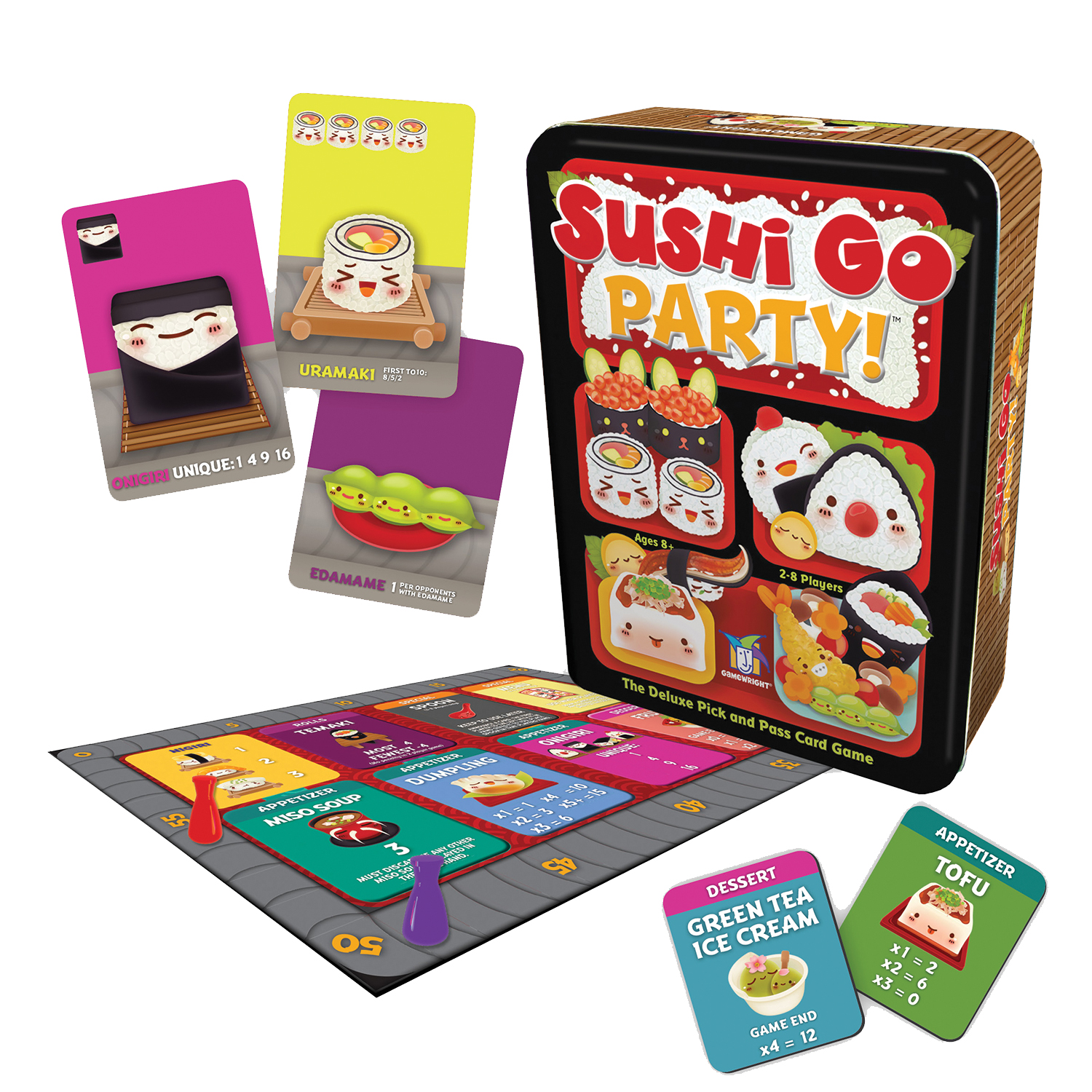
A larger menu changes what a good draft looks like
Sushi Go Party! keeps the simultaneous pick-and-pass rhythm of Sushi Go!, then lets you choose the dishes used in a game. The result is more than extra illustrations: changing the menu changes which collections are valuable, which risks are sensible, and how much explaining a first round needs.
B3 recommends it for a group that enjoys quick card choices and wants variety across repeated evenings. The larger package is less pocketable than the original, and an unfamiliar menu can slow a supposedly effortless party game. Choose a recommended beginner selection first.
What happens on a pick
Everyone selects a card, reveals it, and passes the remaining hand. The cards you keep form your scoring combinations, while the cards you pass become other players' opportunities. Public collections help you judge competition, but you cannot assume a useful card will survive a full trip around the table.
The menu and reference information should remain visible. Explain how each selected dish scores, including endgame desserts, before anybody commits to a set. A player cannot make an informed choice if an unusual scoring condition is introduced only after the hand ends.
A partial set is an investment with a deadline
Imagine committing to a dish that rewards several matching cards, then seeing a guaranteed smaller score in the next hand. Continuing the set might be worthwhile if the missing pieces are still circulating. If several neighbors are collecting the same dish, taking the certain score may be wiser. This is an illustrative example, not a fixed recipe for a particular menu.
Count the picks remaining as well as the cards you hope to receive. A speculative early choice has time to develop; the same choice near the end may simply be incomplete. Do not keep investing only because the first card is already in front of you.
More players, more changing hands
The broader supported player range makes Party! useful for a holiday gathering. More participants also mean more selections happen before a hand returns. Read the edition's setup for the exact count, including how many cards and which menu options are appropriate.
Simultaneous decisions reduce waiting, but people still need time to read new dishes. Use one clear reminder rather than rush a newcomer into random picks. After a game, changing only part of the menu makes it easier to see what the new cards actually add.
Who should choose this box?
Choose Party! when a configurable draft and a larger group matter more than extreme portability. Choose original Sushi Go! when the compact fixed menu and smallest teach are the main priorities. Both are standalone starting points; one is not an expansion required by the other.
The limitation is control: deals and neighboring choices shape what becomes available. The appeal is adapting quickly, noticing an opportunity, and comparing the combinations everybody managed to assemble. It is a short social drafting game, not an elaborate engine or a negotiation game.
Product and rules reference: publisher or edition information. Examples illustrate choices and do not describe a claimed play session.
Find the game
As an Amazon Associate, B3 earns from qualifying purchases.
Compare Sushi Go Party! listings on Amazon — check the edition, language, contents, and seller.