Splendor Guide — Turn Gem Tokens into Permanent Buying Power
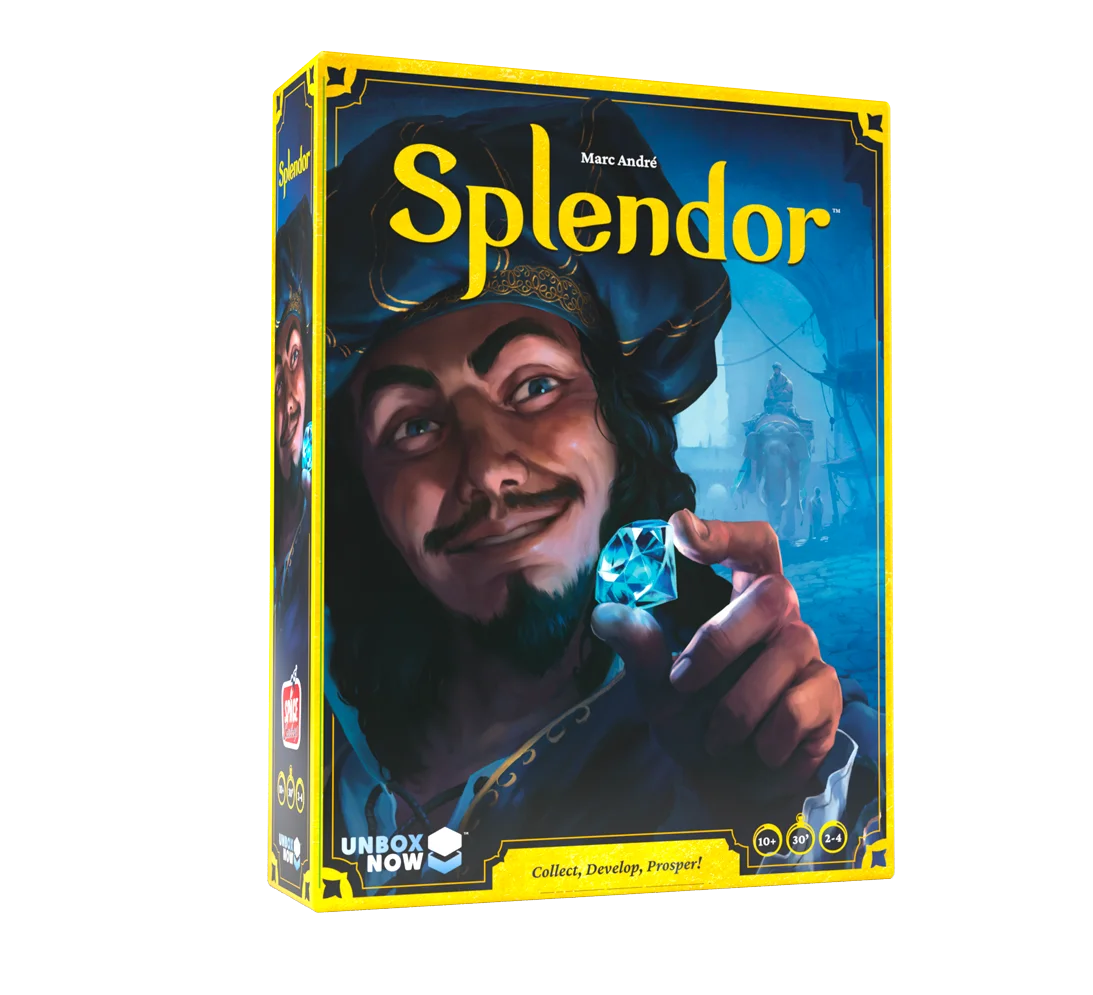
Buy an engine before the race ends
Splendor turns a small action menu into a contest over purchasing power. Collect gem tokens, use them to acquire development cards, and let those cards discount later purchases. The pleasure is seeing a card that once looked expensive become affordable through earlier choices.
B3 recommends the base game for people who enjoy a visible resource race with little reading during play. It is easy to understand the aim of a turn, but harder to judge when to stop building and start taking the points that actually win.
The main choices on a turn
You collect tokens under the rules, buy a card from the shared display or your reserve, or reserve a card for later. Purchased cards supply permanent gem bonuses and sometimes prestige points. Noble tiles reward meeting displayed combinations of bonuses.
A bonus is reusable buying power, not a token you spend once. That difference is the core teach. Demonstrate a purchase where cards cover part of the price and tokens cover the rest, then show that the cards remain available for future discounts.
The attractive cheap card can be a delay
Imagine taking one more low-level card because it is now free. It improves your engine, but an opponent may be close to triggering the end while you postpone a scoring purchase. The free card still costs a turn. This hypothetical example shows why efficiency per purchase is not the same as efficiency across the whole game.
Watch what your engine can buy next and how many actions it will need. A large collection of discounts is not automatically a winning position if somebody else has used a smaller engine to reach the target sooner.
Reserving changes another player's plan
Reserving can secure a card you need or remove a tempting option from the public display. Its value depends on whether you can afford the later purchase and what the reserved slot prevents you from doing next. Denial is useful only when its cost makes sense for your own race.
The display also makes intentions partly visible. Notice the colors rivals collect and the noble requirements they approach. You do not need to calculate every opponent turn, but ignoring them turns a competitive race into several disconnected solitaire projects.
Player count changes the pace
At two, it is easier to follow one rival's needs and make targeted choices. With more players, more cards can disappear before your next turn and a plan needs more flexibility. Follow the token and noble setup for the chosen count.
Teach the token limit, reserve procedure, and end-of-game timing as well as purchasing. Players should know when a last investment may no longer pay off. The original Splendor base game is separate from Splendor Duel, which redesigns the two-player contest. Expansion packages are additional content, not the minimum starting purchase.
Choose Splendor for concise turns, a clear shared display, and a satisfying shift from scarcity to buying power. Choose more cautiously if a light theme, indirect interaction, or a race to points feels too abstract for the intended evening.
Product and rules reference: publisher or edition information. Examples illustrate choices and do not describe a claimed play session.
Find the game
As an Amazon Associate, B3 earns from qualifying purchases.
Compare Splendor listings on Amazon — check the edition, language, contents, and seller.