’Salem's Lot Review — A Community Becomes the Scale of the Threat
The premise and reading appeal
Ben Mears returns to a town connected to his childhood and finds a vampire threat spreading through it. The appeal is the community as much as the monster: many ordinary lives create a place with something to lose.
Choose it when you want a larger small-town story and recognizable supernatural danger. Give it room to establish people and relationships. If you want a brief, tightly confined haunted-house novel, this is a different commitment.
The town is more than a backdrop for one confrontation
The appeal is the widening circle of danger. A town gives the supernatural threat places to move through, habits to exploit, and relationships that can change what people notice. That makes everyday familiarity a source of suspense: recognizing a person or place does not necessarily mean recognizing what has happened there.
The town is the unit of suspense
Ben Mears gives the novel an accessible point of return, but King repeatedly widens the view beyond him. The inhabitants' jobs, private cruelties, relationships, and routines establish a town with connections the reader can follow. Those connections later become routes along which danger can move.
This explains why the book spends so much time on people who are not members of an obvious monster-hunting party. The ordinary life is part of the mechanism. A disappearance means more when you understand who might notice it, who might dismiss it, and which household will be exposed next.
Recognition is necessary but insufficient
The vampire premise is familiar, and the novel does not depend on keeping the reader ignorant of its general category. Its more interesting problem is persuading people to act on an explanation that sounds absurd within their ordinary lives. Seeing a pattern and securing useful cooperation are different achievements.
King also makes familiar relationships a source of vulnerability. A threat that arrives in the shape of somebody known can bypass the defenses that work against a stranger. The horror consequently belongs to trust and community as well as to an isolated house looming over the town.
Allow for an expansive first movement
Readers who want immediate, uninterrupted pursuit may find the early investment in local lives slow. The payoff depends on having a community to lose, rather than merely a succession of anonymous victims. The novel becomes more claustrophobic as the social map changes.
It is a strong choice if you enjoy a traditional supernatural threat presented through the textures of ordinary American life. It is less suitable if you want every character to receive equal development or every private story to reach a separate, tidy conclusion. The town's scale is both its strength and its limit: a collective catastrophe cannot give every resident the narrative space of a lead character.
Book details and sample: publisher or author information.
B3’s verdict: who should choose it?
Pick this when you want a broad community story and an accumulating sense of a place being lost. A reader seeking a compact chamber piece may prefer a shorter book. The cast and town-level attention are commitments, not incidental material to rush past on the way to the central monster.
A spoiler-free discussion starting point
Which ordinary connections help people respond, and which keep them from seeing a change? Track how the community circulates information before deciding that one character has the whole picture.
Choose the edition and find the book
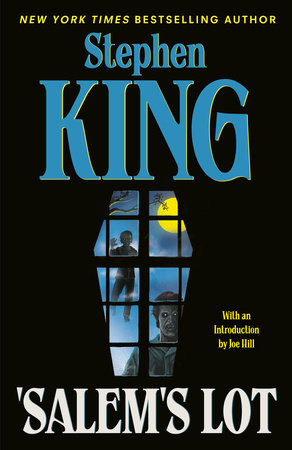
The cover identifies the book discussed here. Check the author, selected format, language and edition when comparing offers. The Amazon link opens a product page for the ISBN identified here. Confirm the selected format, edition, and seller before ordering; availability can change.
As an Amazon Associate, B3 earns from qualifying purchases.
Find ’Salem's Lot by Stephen King on Amazon