Quacks Buying Guide: How Much Luck Do You Want?
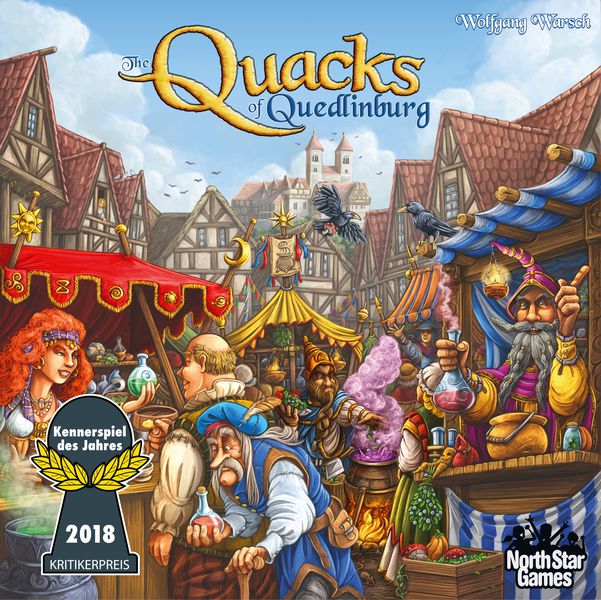

Quacks makes a sensible plan and a foolish gamble share the same hand reaching into a bag. You draw ingredients into a potion, collecting potential rewards while deciding whether another token is worth the risk of an explosion. Wolfgang Warsch's design gives uncertainty a clear decision: continue or stop.
I would choose it for players who enjoy that choice even when the result goes badly. It is a weaker fit for someone whose main pleasure is calculating a plan and knowing a careful decision will reliably succeed.
The bag changes as you play
Ingredients have different effects, and purchases alter what later draws can provide. That gives the game a development arc: the starting bag becomes a collection you have shaped.
The choice is therefore more interesting than repeatedly rolling the same die. You can invest in useful ingredients while still being unable to control the order they appear. Planning influences possibility; it does not remove randomness.
For an invented decision, imagine your potion is already promising but one more draw could reach a better reward. You know dangerous ingredients remain in the bag, though not where they are. Stopping preserves one kind of result; continuing accepts the possibility of losing something for a larger return.
That moment is the game you are buying. The potion-making art makes it cheerful, but the underlying appetite is risk.
Ingredient effects need a clear teach
The effects in use change what particular colors or values can do. Show the selected ingredient references before asking beginners to choose purchases. A player should understand what they are adding to the bag.
Avoid turning the first session into an overview of every possible ingredient setup. Use a recommended introduction and let the group learn the central draw-and-stop decision first.
Explain the consequences of an explosion before anyone makes an irreversible gamble. The excitement comes from accepting a known risk, not discovering a penalty the teacher omitted.
Luck is enjoyable when people own the choice
Some players enjoy celebrating an unlikely success and laughing at a dramatic failure. Others feel that a bad draw invalidates earlier work. Neither reaction is a moral problem, but they predict different evenings.
Do not pressure a cautious player to continue for the spectators' entertainment. Advice during a teach can be helpful; repeated demands to take another token make someone else's disappointment part of a choice they did not freely make.
Likewise, do not pretend every loss proves poor strategy. Good decisions can have bad outcomes in a push-your-luck game. The point is enjoying decisions under uncertainty, not rewriting the result afterward as inevitable.
It is more individual than negotiation-heavy
Players build and draw from their own bags while comparing progress and competing for the game's rewards. The session can produce shared reactions without requiring constant bargaining or attacks on another person's engine.
Choose it when that balance sounds appealing: personal choices with enough visible risk for everyone to care. Choose another game if the group mainly wants diplomacy, hidden loyalties, or a deeply controlled tactical contest.
A lively presentation does not mean it teaches itself. Set aside time for the round structure, purchases, and scoring so the first game has a satisfying finish.
Check the current edition name
CMYK's newer edition uses the shorter name Quacks. Standard contains the core game with updated art; Deluxe adds upgraded tiles and bags. All-In also includes The Witches and The Alchemists and supports a fifth player. Older listings commonly use The Quacks of Quedlinburg.
Choose the actual player count and content first. Upgraded pieces can improve the tactile experience, but they cannot resolve a mismatch about randomness. For a first purchase, a complete standard game is often enough to find out whether the central decision works.
My recommendation
Buy Quacks if the group enjoys deciding when to stop and can appreciate both the successful risk and the spectacular failure. Bag development gives repeated rounds a useful sense of growth.
Wait if everyone wants outcomes to be tightly controlled by skill. Watch a complete round demonstration, including an explosion and the aftermath. If that looks like the kind of story your friends would enjoy retelling, the game has made its strongest case.
Find the book or game
As an Amazon Associate, B3 earns from qualifying purchases.