Mexican Gothic Review — An Outsider’s Investigation Meets a House That Controls the Terms
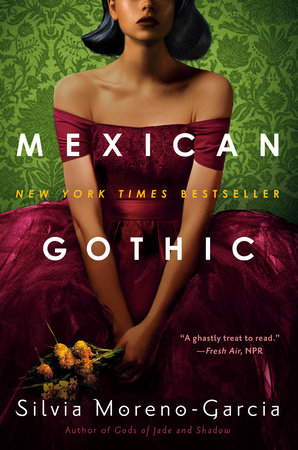
The premise and reading appeal
Noemí Taboada travels to High Place in 1950s Mexico after a troubling letter from her cousin. An isolated English family, controlling behavior, and disturbing dreams make the visit increasingly difficult to dismiss.
Choose it for a gothic investigation with a forceful outsider confronting a household's rules. The glamorous opening does not mean the horror remains gentle. The book's bodily disturbance is part of the invitation as well as its decaying mansion.
Social power makes the setting harder to investigate
Noemí’s arrival gives readers a questioning presence inside a household that has its own account of what should be accepted. The contrast makes manners, access, and medical explanations potentially significant rather than decorative period detail. The attraction is an investigation that must also negotiate who is allowed to ask questions.
Noemí's social confidence is a form of intelligence
Noemí's clothes, conversational skill, and enjoyment of society can initially look mismatched with a remote Gothic estate. They are also resources. She knows how people use appearances, how to test a boundary without announcing a confrontation, and when politeness is being used to make a demand harder to refuse.
High Place makes those abilities necessary while limiting their usefulness. A guest can object to a rule, but objection is weaker when the household controls access to information, transport, and a sick relative. Her investigation is therefore about leverage as much as curiosity.
The English manor in Mexico is an argument
The Doyles' house is not interchangeable with any picturesque ruin. Its imported social world connects the family's self-image with a history of extraction and exclusion. Their claims about breeding, inheritance, and authority give familiar Gothic anxieties about bloodlines an explicitly political edge.
Reading the setting this way does not require ignoring its physical atmosphere. The oppressive interiors and unsettling bodily experiences make power something Noemí must endure, not merely recognize as a theme. The house's insistence on defining what is normal makes resistance increasingly difficult to separate from survival.
The reading experience changes as the mystery advances
The opening allows time for investigation, hostile conversation, and uncertainty. Later developments make the bodily horror more direct. Someone expecting only an elegant, restrained ghost story should know that the book's destination is more visceral than its glamorous cover or early social encounters may suggest.
The distinction helps set expectations without disclosing the central explanation. Choose it when you want Gothic atmosphere to develop into a concrete confrontation with the forces maintaining a household's power. Be more cautious if your ideal haunting remains permanently ambiguous. A useful discussion can follow the methods used to dismiss Noemí: which responses answer her evidence, and which attempt to make her lose confidence in her right to ask?
Book details and sample: publisher or author information.
B3’s verdict: who should choose it?
Choose it for lush Gothic atmosphere and bodily unease alongside the mystery. It is not the same reading mood as a brisk, clue-led detective story or a gentle historical romance. A distinctive setting can be inviting while the novel’s physical horror remains deliberately uncomfortable.
A spoiler-free discussion starting point
Who gets to decide which explanations are respectable? Compare what Noemí can observe directly with the versions of events the household asks her to accept.
Choose the edition and find the book
The cover identifies the book discussed here. Check the author, selected format, language and edition when comparing offers. The Amazon link opens a product page for the ISBN identified here. Confirm the selected format, edition, and seller before ordering; availability can change.
As an Amazon Associate, B3 earns from qualifying purchases.
Find Mexican Gothic by Silvia Moreno-Garcia on Amazon