Mage Knight: Ultimate Edition Review — Power Is a Puzzle You Build from Your Hand
B3’s verdict
Mage Knight: Ultimate Edition suits players who want to earn a feeling of power by solving difficult combinations. B3 would choose it for a deliberate strategy session, particularly when the pleasure is thinking through a hand of cards. Its fantasy journey should not be mistaken for a relaxed read-aloud adventure.
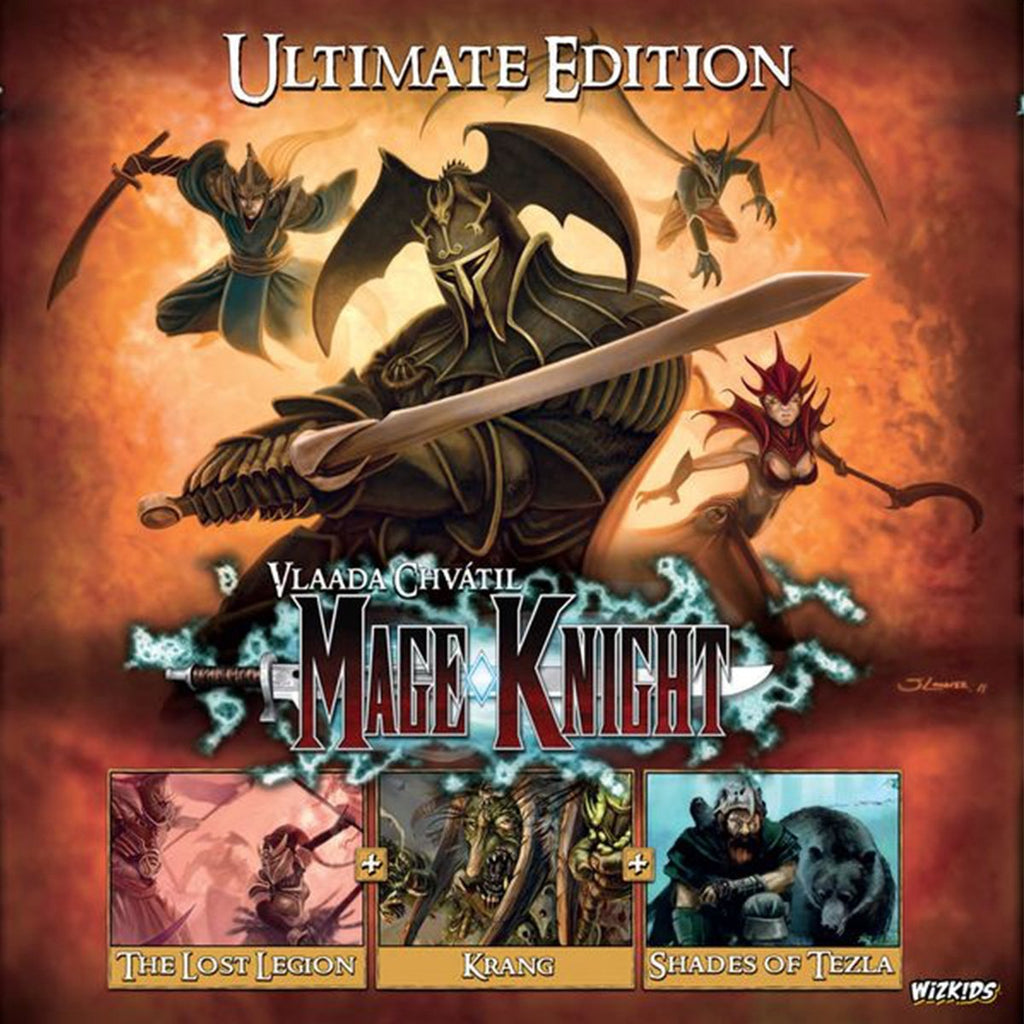
The game combines deck building, exploration, combat, and character development. Cards provide ways to move and overcome challenges, while your growing capabilities change what you can attempt. Ultimate Edition packages the base game with The Lost Legion, Krang, and Shades of Tezla.
What makes the decisions interesting
The interesting decision is how to assemble a workable turn from resources that almost fit. A route may be attractive but expensive; a battle may promise growth while consuming tools you wanted for the journey. The satisfaction comes from seeing those constraints connect, not merely from revealing another spectacular enemy.
The cost is rules density and thinking time. Adding players does not remove the need for each person to understand a demanding hand-management puzzle. I would be cautious about buying the large box for a casual group whose main request is a fast cooperative fantasy story.
A turn is a hand-built expedition
Your cards provide movement, combat, influence, and other effects. Many can be used in weaker alternative ways, while mana strengthens particular abilities. The turn is an exercise in assembling enough of the right resources to reach a place and accomplish something there. Terrain costs make the route itself part of that calculation.
Exploration opens map tiles, but an attractive site is not automatically an opportunity you can afford now. Consider the hand remaining after you reach it. Arriving at a defended location without the right combat resources can be less useful than stopping somewhere that prepares the next turn.
Why a stronger card can be the wrong play
Imagine spending a powerful effect merely to generate enough movement to reach a challenge. You arrive, but have sacrificed the ability that would have solved it efficiently. Another route or another turn may preserve a much better combination. This hypothetical example shows why evaluating cards in isolation misses the puzzle.
Mana makes those tradeoffs more interesting. Its timing and availability can turn an ordinary effect into the missing part of a plan. Yet reserving every strong effect for an ideal future hand can waste the present round. Good play uses the options actually available while leaving a plausible next step.
Combat asks you to solve several stages
Ranged or siege attacks can remove threats before later stages; blocking and ordinary attacks involve different requirements. Damage can put wounds into the deck, making later hands less efficient. Fighting is therefore not simply comparing a single attack number with an enemy's health.
Learning the stages through the walkthrough is more useful than trying to memorize every exception first. Pause before a battle and assemble the intended answer visibly. Identify what happens if a threat remains unblocked, and do not assume one impressive attack handles every requirement.
Solo appeal and multiplayer cost
Solo play gives one person time to examine an intricate hand without making others wait. Multiplayer adds competition or cooperation according to the scenario, but can create substantial downtime while somebody solves a complicated turn. Choose the scenario and count to suit the table's patience.
Ultimate Edition packages the base game with The Lost Legion, Krang, and Shades of Tezla material. That is a collection advantage, not a reason to introduce every module immediately. Begin with the learning material and add complexity once the core turn is comfortable. The strongest fit is someone who enjoys a demanding resource puzzle; the fantasy journey is delivered through those mechanisms rather than a stream of branching narrative.
The cost of choosing this experience
Begin with the walkthrough and a suitable introductory scenario. Keep expansion material out until the basic turn makes sense. Leave room for a learner to explain a possible solution, then check the rule interaction that matters rather than trying to teach every exception before play.
B3 recommends the Ultimate Edition for a patient solo player or small group that enjoys detailed strategic planning. Check the scenario’s supported count and competitive or cooperative arrangement. The included expansions provide options to grow into; owning them does not create an obligation to use everything in the first session.
Official game information and rules →
Find the game
As an Amazon Associate, B3 earns from qualifying purchases.
Compare Mage Knight: Ultimate Edition listings on Amazon — title search; check edition, language, contents, and seller.