Lost Cities Card Game Guide — Every Expedition Starts with a Debt
Starting an expedition is accepting a cost
Lost Cities: The Card Game gives two players a remarkably small action. Play a card into an expedition or discard one, then draw a replacement from an allowed source. Expeditions build upward in value, so a card played too early can make lower cards in that color unusable.
The score begins with an expedition cost. A few attractive cards do not guarantee profit. B3 recommends it for pairs who enjoy uncertainty, restraint, and the discomfort of deciding before all the useful information arrives.
Ascending values turn a hand into a sequence
You want enough cards to make a color worthwhile, but cannot wait forever for every missing low number. Playing a high card opens space in your hand while closing part of that expedition's future. Investment cards must be committed early and multiply the consequences, including a loss.
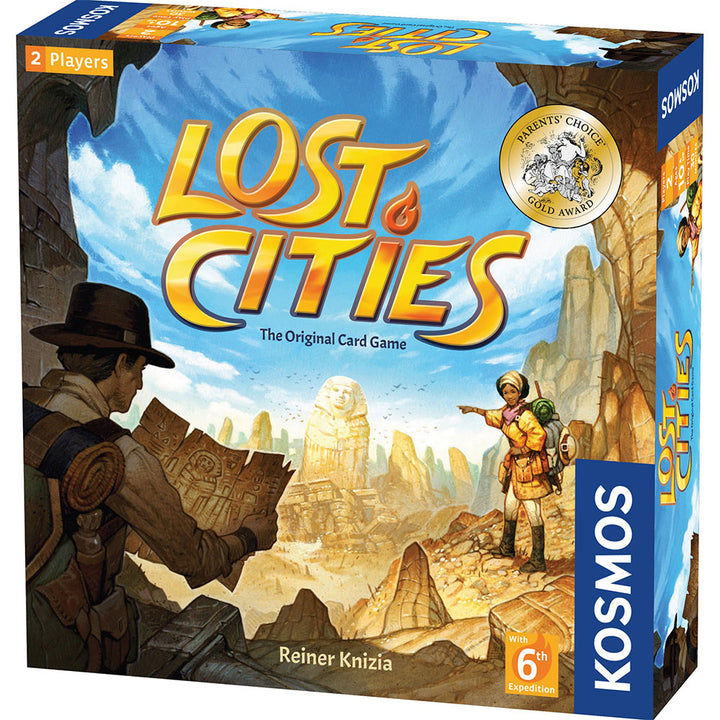
Teach a sample expedition from its initial cost through its final score. The adventure artwork can suggest that every new journey is progress; the scoring makes starting an under-supported expedition a meaningful risk.
A discard is an offer to your opponent
Imagine holding a card that no longer fits your expedition because you have already played a higher value. Discarding it solves your hand problem, but may supply exactly what your opponent needs. Keeping it occupies a slot that could hold a better option. This invented example captures the duel's constant pressure.
Watch which colors the opponent has committed to and which values they have passed. Public play gives you reasons to judge a discard, though it never reveals the whole hand. You are making a risk assessment, not solving a completely visible puzzle.
The deck is a clock
Drawing from the deck moves the round toward its ending, while taking from discard piles changes that pace. A hand full of promising future cards can still fail if there are too few draws left to play them.
As the round advances, reassess speculative plans. A late expedition needs enough immediate support; it should not be opened solely because you hoped to make it work at the beginning. Knowing when to abandon a color is part of skill.
Which Lost Cities?
This guide concerns the original two-player card game. Lost Cities: The Board Game, Rivals, and Roll & Write are different products. Some card-game packages include an optional sixth expedition; follow the rules for the version and setup you choose.
Begin with a normal game and make the scoring reference visible. A newcomer benefits from understanding the cost before making the first commitment, rather than discover after a round that several short expeditions lost points.
Choose it for a focused, portable-feeling duel with simple turns and difficult timing. The limitation is the draw: good judgment improves decisions without guaranteeing useful cards. If the pair needs every defeat to follow from fully visible mistakes, another abstract game may be a better fit.
Product and rules reference: publisher or edition information. Examples illustrate choices and do not describe a claimed play session.
Find the game
As an Amazon Associate, B3 earns from qualifying purchases.
Compare Lost Cities listings on Amazon — check the edition, language, contents, and seller.