Jaipur Guide — Trade, Sell, and Judge When Waiting Costs Too Much
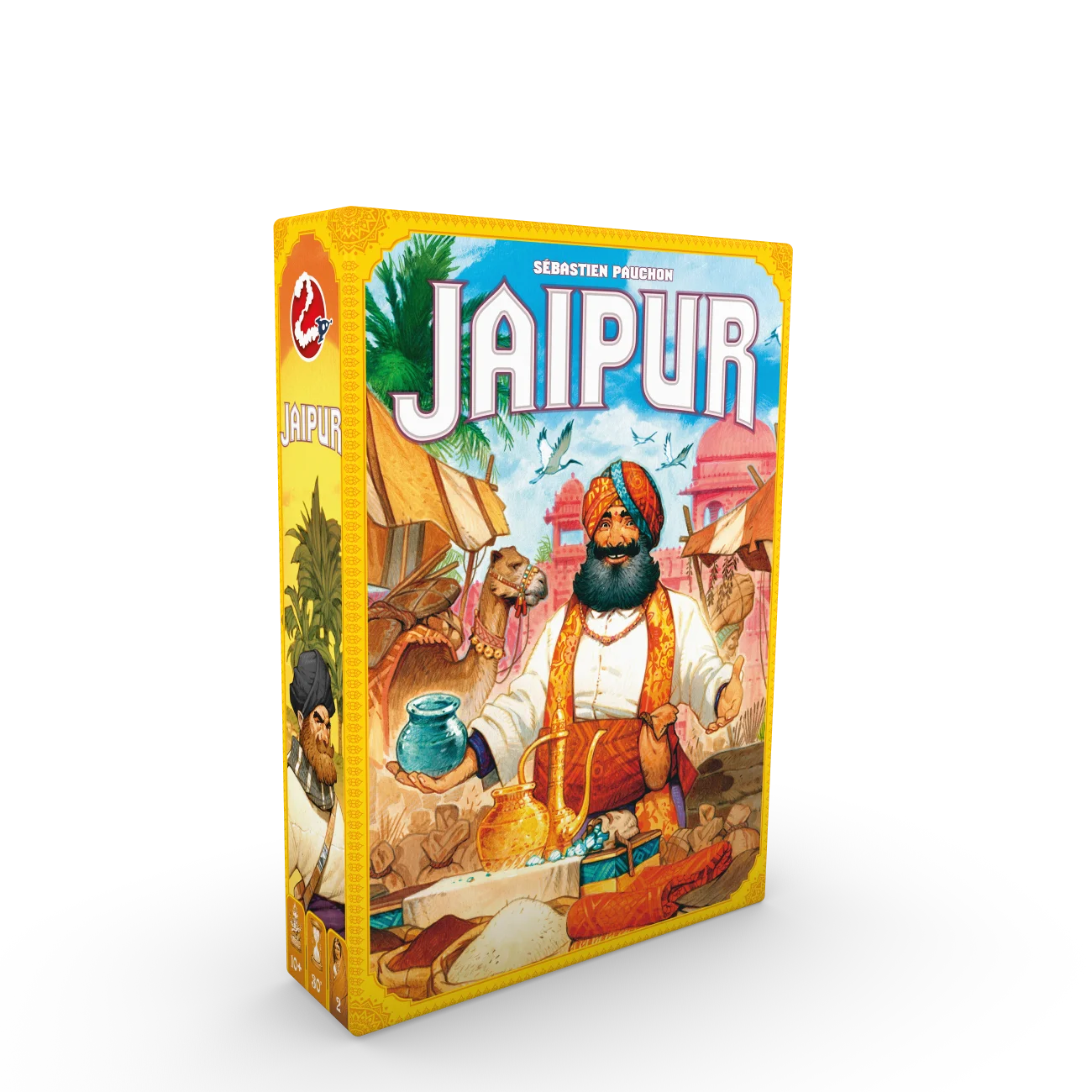
Trade for a hand, then decide when to sell it
Jaipur is a two-player market game about taking goods, managing camels, and selling at the right moment. Larger sales can earn bonuses, but the most valuable goods tokens are claimed early. Waiting improves a set while exposing its price to your opponent.
The setting makes the decisions easy to name. The interesting part is that you are not simply maximizing the number of matching cards: timing and the contents you leave in the market matter just as much.
A turn gives you goods or a sale
You take or exchange cards according to the market rules, collect available camels, or sell goods of one type. Camels form a separate herd that helps with exchanges. They can turn an awkward hand into a better one, but taking them also reveals fresh market cards for the opponent.
That reveal is a practical cost. An action that improves your resources may offer a rival exactly the high-value goods they were waiting for. Look at what becomes available after your choice, not just what enters your own possession.
The bonus may not repay the delay
Imagine holding a useful group of one good while your opponent appears interested in the same type. Waiting for another card could improve the bonus, but their next sale may remove the best tokens. Selling now secures value and frees space. This is an illustrative market decision rather than an opening prescription.
Hand limits make that tension sharper. Keeping several speculative sets can prevent you from collecting a clear opportunity. A smaller sale may be valuable because it restores flexibility, even before considering its immediate money.
Camels are a tool, not merely a side prize
A healthy herd gives you material for exchanges and can matter at the end of a round. However, collecting camels just because they are available can hand the opponent an excellent refreshed market. Ask what you want to use them for.
Both players can observe the public market and sales, but not the opponent's entire hand. That creates readable tactical competition without requiring direct negotiation or bluffing speeches. Quiet observation is enough to make the duel engaging.
Teach one exchange carefully
Show a legal exchange, a sale with its tokens and possible bonus, and the separate camel area. Explain how the round ends and how the match is decided. Those procedures keep a newcomer from saving a promising hand beyond the moment it can be used.
Choose Jaipur for a short, interactive two-player contest with tangible timing choices. It is less suitable for somebody who wants total control over the market or a long-term engine that steadily grows. Adaptation matters because a fresh deal can change what is worth pursuing.
The base game is complete for two. Check the edition's language and presentation when comparing listings, and do not confuse a digital version or accessory with the physical game. A quick rematch is often a better first evening than adding house rules to a system the pair has only just learned.
Product and rules reference: publisher or edition information. Examples illustrate choices and do not describe a claimed play session.
Find the game
As an Amazon Associate, B3 earns from qualifying purchases.
Compare Jaipur listings on Amazon — check the edition, language, contents, and seller.