Haunted-House Horror: 6 Books Where Home Is the Threat
As an Amazon Associate, B3 earns from qualifying purchases. Buying links below are Amazon searches; check the author, format and edition.
A haunted-house story breaks a familiar promise: home should be somewhere you understand and can make safe. The strongest examples make the inhabitants' reasons for staying as interesting as the threat that wants them there.
These six books offer different relationships between place and person. Some build ambiguity patiently; others use bloody spectacle. Choose by the kind of reading experience you want rather than assuming every old mansion delivers the same fear.
1. The Haunting of Hill House — Shirley Jackson

Amazon affiliate link · As an Amazon Associate, B3 earns from qualifying purchases.
Compare The Haunting of Hill House on Amazon →Dr. Montague brings a small group to Hill House to investigate its reputation. Eleanor's longing for belonging gives the visit an emotional vulnerability that matters as much as the building's unsettling behavior.
The appeal is the difficulty of separating place, perception, and need. Jackson makes ordinary conversation and small shifts in atmosphere carry weight. Choose it if you like uncertainty that continues after the last page. Someone seeking a brisk sequence of clearly identified monsters may prefer another option. The television adaptation tells its own story, so leave those character and plot expectations at the door.
Read the full The Haunting of Hill House review →
2. The Woman in Black — Susan Hill

Amazon affiliate link · As an Amazon Associate, B3 earns from qualifying purchases.
Compare The Woman in Black on Amazon →Arthur Kipps travels to Eel Marsh House for routine legal work. The isolated house and its surrounding marsh turn that professional assignment into a traditional ghost story.
Fog, sound, and separation do much of the work. This is the clearest choice for readers who want a recognizable haunting rather than a heavily experimental structure. Its shorter scope makes it easier to fit into a limited reading schedule. The restraint of its presentation should not be mistaken for emotional comfort: the material involving children gives the story a particularly painful edge.
Read the full The Woman in Black review →
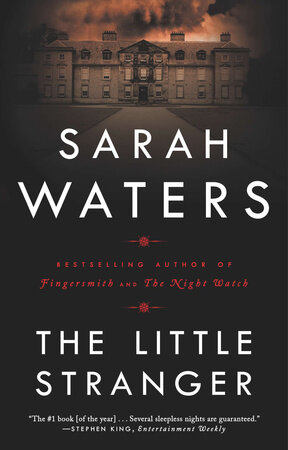
3. The Little Stranger — Sarah Waters
Amazon affiliate link · As an Amazon Associate, B3 earns from qualifying purchases.
Compare The Little Stranger on Amazon →Dr. Faraday visits Hundreds Hall as the Ayres family's position and country house decline in postwar England. The house's condition and the changing social world are inseparable from the mystery.
Choose this for patient ambiguity and class tension. The question is not merely whether a room contains a ghost, but what attachment, resentment, and a disappearing way of life do to the people observing it. Its pace requires more willingness to dwell in discomfort than the compactness of Susan Hill. It suits readers who want the narrator's perspective examined as carefully as the house.
Read the full The Little Stranger review →
4. The Silent Companions — Laura Purcell

Amazon affiliate link · As an Amazon Associate, B3 earns from qualifying purchases.
Compare The Silent Companions on Amazon →Pregnant and newly widowed, Elsie arrives at her late husband's estate and discovers a painted wooden figure with an unsettling resemblance. The apparent stillness of the object is what makes it difficult to stop watching.
This is a strong fit for creepy-object horror within a historical Gothic household. The threat has a concrete visual focus, while isolation and hostility make Elsie's position precarious. Choose it if an inert face appearing to watch you sounds more effective than an enormous monster. Bereavement and disturbing bodily material make it an adult choice despite the object's simplicity.
Read the full The Silent Companions review →
5. The September House — Carissa Orlando

Amazon affiliate link · As an Amazon Associate, B3 earns from qualifying purchases.
Compare The September House on Amazon →Margaret remains in her dream home despite recurring hauntings and blood appearing each September. The unusual hook is her determination to adapt rather than do what a reader might consider the obvious thing: leave.
That perspective supports dark humor and a more troubling question about what people learn to tolerate. Choose it for a contemporary domestic setting where the supernatural and family strain reinforce one another. The humor does not remove the violence. It works best for readers interested in the gap between a narrator's practical acceptance and the disturbing events being accepted.
Read the full The September House review →
6. How to Sell a Haunted House — Grady Hendrix

Amazon affiliate link · As an Amazon Associate, B3 earns from qualifying purchases.
Compare How to Sell a Haunted House on Amazon →Louise returns after her parents' deaths and must deal with a house, its contents, and her strained relationship with her brother Mark. A practical inheritance problem becomes a supernatural one.
Hendrix's combination of grief, family argument, and outrageous horror makes this the loudest recommendation here. The title's comic premise is real, but so is the emotional work beneath it. Choose it when you want a haunted property entwined with the unpleasant task of sorting a family's past. Readers seeking understated ambiguity may find its escalating spectacle less appealing than Jackson or Waters.
Read the full How to Sell a Haunted House review →
How to choose your next house
For psychological uncertainty, begin with Hill House. For traditional fogbound haunting, choose The Woman in Black. For class and narrator ambiguity, try The Little Stranger. For a disturbing object, pick The Silent Companions. The contemporary pair suits readers wanting domestic conflict and stronger grotesque imagery.
B3's preference is to choose the reason the inhabitants stay, not only the shape of the threat. A haunted house becomes memorable when leaving would solve one problem while exposing another.