Foundation Review — Civilization Becomes the Main Character
The premise and reading appeal
Hari Seldon’s psychohistory predicts the collapse of the Galactic Empire and a long period of darkness afterward. His Foundation is intended to preserve knowledge and shorten that aftermath. Isaac Asimov’s first Foundation volume asks what people can do with a prediction about the future of a civilization.
Ideas move the story across generations
The distinctive attraction is scale. Institutions, trade and belief can become more consequential than a single confrontation. Rather than settling into one hero’s lifetime, the book lets changing circumstances test a larger plan. That makes it rewarding for readers who enjoy a problem being reframed: an apparent military weakness may be a different kind of advantage, and an institution’s stated purpose may not exhaust its actual influence. The dialogue often functions as an argument in motion, asking the reader to anticipate the logic of a crisis.
Institutions supply the continuity
The cast changes as the book crosses generations, so attachment works differently from a novel built around one lifelong journey. The continuing presence is the Foundation itself: its changing position, the pressures around it and the uses people make of its original purpose. A scene can matter because it alters a relationship between societies even when its speaker will not remain the central figure.
This structure rewards readers willing to reset their expectations between episodes. Instead of asking when a familiar hero returns, ask what the new generation has inherited. A successful response to an earlier crisis can become an assumption that later characters fail to examine. Survival does not guarantee that an institution understands why it survived.
Crises are puzzles about the kind of power available
Asimov repeatedly makes the apparent balance of strength an unreliable guide. Military force is one possibility, but dependence, specialized knowledge and commercial relationships can change what force is able to accomplish. Much of the pleasure comes from realizing that the terms of a confrontation were narrower than the actual problem.
The tradeoff is that people sometimes speak as representatives of an argument more than as richly observed private individuals. If a resolution feels too neat, consider whether the book has persuaded you about the social mechanism or simply supplied a clever answer. That question makes a useful discussion without requiring agreement with psychohistory as a plausible science.
Prediction changes the people who believe it
Seldon's plan creates a second puzzle alongside each immediate emergency: how should someone act when they believe history has already anticipated the danger? Confidence can encourage patience, but it can also excuse complacency. Read the first volume for the friction between planning and judgment. Publication order offers a direct introduction to that friction; beginning with a prequel creates a different experience by supplying background before the original novel's gradual revelations.
B3’s verdict: who should choose it?
Choose it for conceptual science fiction and the pleasure of tracing historical consequences. Readers seeking intimate character development, contemporary pacing or a continuous action adventure may find it remote. The episodic structure is central to the experience, rather than a hurdle before a conventional protagonist takes over. This review covers Foundation itself, the starting point in publication order, rather than Prelude to Foundation, a collection of the trilogy, or the television adaptation.
A spoiler-free discussion starting point
Does believing that a crisis was predicted make someone more decisive, or less willing to examine the plan? What could a mathematical account of a population miss about the people who live within it?
Choose the edition and find the book
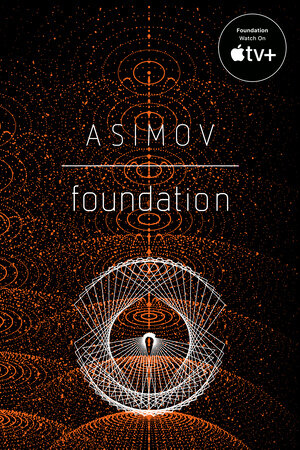
The cover identifies the book discussed here. Check the author, selected format, language and edition when comparing offers. The Amazon link opens a product page for the ISBN identified here. Confirm the selected format, edition, and seller before ordering; availability can change.
As an Amazon Associate, B3 earns from qualifying purchases.
Find Foundation by Isaac Asimov on Amazon
Reading lists featuring this book
Browse B3’s individual book reviews.
Edition and premise reference: publisher or author book page.