Dead of Winter Review — The Colony Needs You, but You Need Something Else
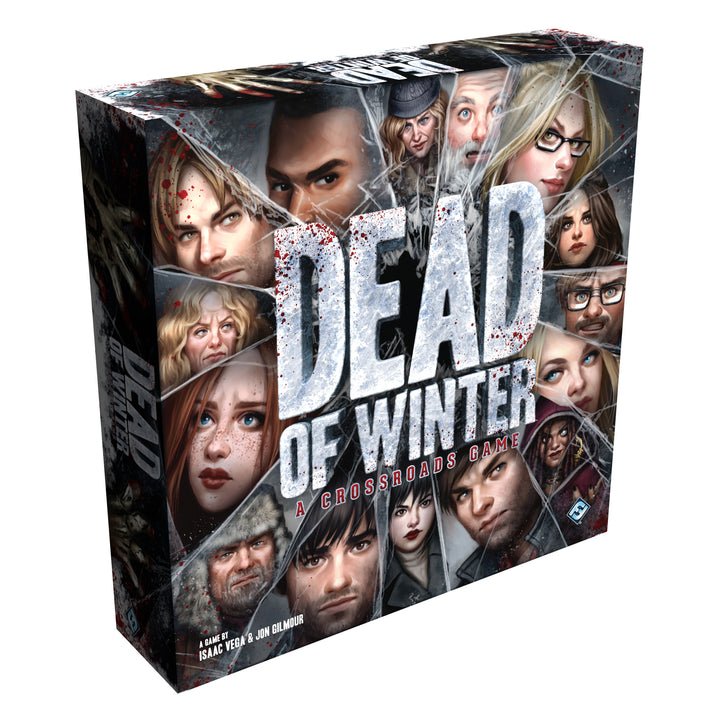
B3’s verdict
Dead of Winter is worth considering when the group wants a survival story complicated by private motives. B3 would choose it for players who enjoy needing help from people they cannot completely trust. Its zombies create pressure, but the friction between collective and individual needs gives the evening its particular character.
Players manage survivors, gather supplies, resolve crises, and protect the colony’s morale while holding secret objectives. Crossroads encounters add conditional story moments. The group needs to survive, yet an action that serves a personal goal may look suspicious to everybody else.
What makes the decisions interesting
The interesting question is what an apparently selfish move actually means. A player might be pursuing a legitimate private requirement rather than sabotaging the group. That ambiguity gives conversation a purpose beyond announcing the most efficient route to supplies.
The tradeoff is mistrust combined with substantial administration. Choose the mode appropriate to your group and explain the possibility of betrayal before play. A table expecting purely cooperative problem-solving may find the private incentives frustrating.
A round begins with a problem the colony must cover
The group faces a crisis while players use survivors and action dice to search, fight, build defenses, and meet the main objective. Food, waste, morale, and the locations outside the colony create competing demands. A productive search can still be a poor turn if it leaves a basic colony requirement unattended.
Each player also has a secret objective. Most require the colony to succeed plus an individual condition, so suspicious behavior does not automatically mean a betrayer is present. Somebody keeping a useful card may be pursuing a personal need while still wanting the group to survive.
A selfish choice can have an innocent motive
Imagine a player declining to contribute a resource everyone wants for the crisis. They may have a hidden objective, lack the claimed card, or be deliberately undermining the colony. This hypothetical example shows why accusation requires a pattern, not just one inconvenient refusal.
Ask what observable action would change the group's assessment. An agreement to cover a later responsibility is more useful than a demand that the player prove their entire hand. The group must still manage the colony while evaluating trust.
Travel and searching are not safe errands
Sending survivors outside creates opportunities and exposure. The exposure die can introduce severe consequences, so even an efficient journey carries danger. Plan with the possibility of a bad result rather than assume every required supply can be collected on schedule.
Crossroads cards add conditional story events monitored by another player. Not every drawn card triggers. Read its conditions carefully and avoid revealing an unused story simply because it sounds interesting; uncertainty about what might arise contributes to the scenario's character.
Set expectations about suspicion
Teach shared victory, individual objectives, crisis contributions, and exile before play. The table should know that helping the colony and winning personally are related but not identical. Variants can change the experience, so choose the intended social arrangement deliberately.
The original Dead of Winter and The Long Night are distinct standalone packages, with additional material having its own requirements. Start with a manageable scenario and leave time for upkeep and discussion. Choose it when the group enjoys negotiation under pressure. It is less suitable for a family wanting unambiguous cooperation or people who find every suspicious choice personally stressful.
The cost of choosing this experience
I would assign the routine jobs clearly and keep the current crisis visible. Ask players to explain the public reason for a proposal without demanding that they reveal information the rules protect. Keep accusations about the game situation rather than anybody’s real-world reliability.
Buy the original Dead of Winter base game deliberately. The Long Night is a separate standalone release; other expansions have specific requirements. B3 recommends it for a patient group comfortable with bleak survival, uncertain motives, and direct discussion. Pass if the main goal is uncomplicated teamwork or a light party experience.
Official game information and rules →
Find the game
As an Amazon Associate, B3 earns from qualifying purchases.
Compare Dead of Winter listings on Amazon — title search; check edition, language, contents, and seller.