Dark Matter by Michelle Paver: A Spoiler-Free Guide to Arctic Dread
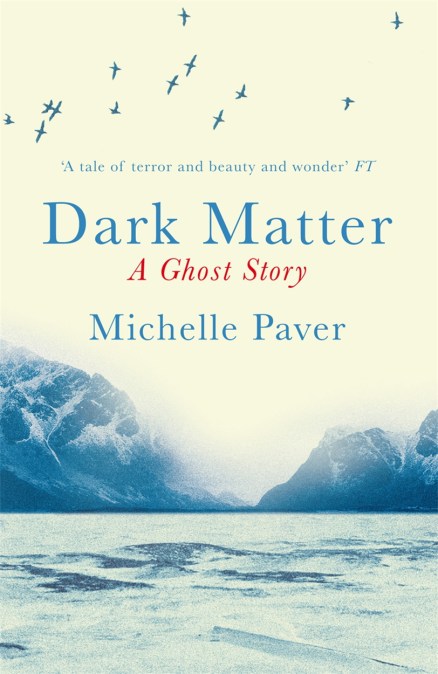
The strongest reason to consider Michelle Paver's Dark Matter is that its landscape changes what safety means. A room with a lamp can feel reassuring until going outside becomes unavoidable—and the next sunrise is months away. This is an Arctic ghost story built around the pressure of staying somewhere that offers fewer ways to leave.
Start here if your ideal horror evening involves isolation, a convincing place, and a presence you would rather not examine too closely. Approach it as a ghost story with an expedition at its center, rather than a scientific mystery promised by the title.
As an Amazon Associate, B3 earns from qualifying purchases. This spoiler-free reading guide draws on the publisher's premise and Paver's account of writing the novel; it does not claim a completed first-hand reading.
The premise: an opportunity becomes a narrowing choice
In 1937, a lonely young man named Jack joins an expedition to Spitsbergen as its wireless operator. The group establishes a camp at Gruhuken. What begins as a chance to change his life becomes more threatening as summer gives way to polar night, companions leave, and freezing seas threaten to close the route home.
That is enough plot information to make a useful buying decision. The central invitation is a person trying to judge an increasingly hostile situation while the cost of changing his mind rises. Discovering exactly what occupies the bay belongs to the novel.
Why the Arctic setting matters
Many frightening situations offer a familiar escape: wait until daylight, reach a neighbor, or return when somebody else can come with you. A polar setting can make each of those assumptions unreliable. Darkness becomes a condition to live through rather than a short interval between ordinary days.
That changes the questions worth following. What counts as a sensible precaution? When does maintaining a routine help, and when might it conceal the need to leave? How does someone distinguish a practical duty from a commitment they are afraid to abandon? You do not need an answer in advance to recognize why the setup has force.
The landscape also creates a productive tension between attraction and danger. An expedition needs a reason to travel into an unfamiliar place. If you find remote environments fascinating even before anything supernatural happens, the book's premise offers more than waiting for a ghost to appear.
The material reality behind the haunting
In her essay about the novel, Paver explains that she drew expedition details from a real 1935–36 journey and read accounts of Arctic trappers. She also returned to Spitsbergen in winter to experience polar night herself. Her stated aim was to make the expedition convincing enough for the haunting to feel possible.
This is useful context because it identifies the kind of attention the story invites. Shelter, clothing, light, and everyday work can establish a baseline against which something wrong becomes noticeable. A supernatural disturbance has more weight when the reader understands the ordinary task it interrupts.
It is also a reason to avoid reading only for revelations. Practical details are not necessarily delays before the important event; they can be what makes an event important. Pay attention to what Jack expects his surroundings to do before deciding which change matters.
Reading a journal without turning it into a puzzle worksheet
Jack's journal places the account close to the person experiencing the danger. That is an appealing form if you enjoy following a mind working through uncertainty, but it need not be approached as an exercise in catching a narrator out.
A more useful distinction is between an observation, an explanation, and a decision. Someone can record a sound carefully, explain it incorrectly, and still make a decision that seems reasonable with the information available. Keeping those categories separate lets you reconsider the evidence without treating every sentence as deception.
For a book club, ask when a character has enough evidence to act. Would you demand proof before changing an expedition's plans? Would the threshold change if waiting could make departure impossible? Those questions create discussion without requiring anyone to disclose the ending.
Who is most likely to enjoy it?
Consider it for atmospheric and isolation-focused horror. The premise suits readers interested in an ordinary person under unusual environmental pressure, especially when the environment is something they would already want to read about.
Be more cautious if you want frequent action or a large ensemble. The attraction here is the tightening situation and Jack's relationship to it. A desire for constant encounters or an extensive supernatural system may point toward a different reading mood.
Do not interpret “ghost story” as a promise that every reader will find it gentle. Loneliness, vulnerability, and prolonged fear can make a book demanding without relying on an elaborate creature catalogue. Read a sample if you are choosing for someone else's tolerance.
Buying the right Dark Matter
Check the author's name: Michelle Paver. Several unrelated books share this title. The edition shown above is Orion's paperback, ISBN 9781409121183; other editions can use different covers and ISBNs.
- Dark Matter by Michelle Paver on Amazon — compare the displayed format, edition, seller, and delivered price.
- Publisher's paperback details — useful for confirming the book and comparing editions.
The attraction is the story, so a different cover need not be a problem. An abridgment, another author's novel, or a collection containing several titles would be a materially different purchase.
B3's starting recommendation
Choose Dark Matter when the thought of a familiar refuge losing its reassuring boundaries is more appealing than a succession of shocks. Its opening situation gives fear a practical setting: a person wants a new life, accepts a difficult journey, and discovers that staying and leaving can both acquire costs.
Read for those changing costs as well as the haunting. The interesting question is not only what may be outside. It is what would finally persuade you to open the door—or stop believing it will keep you safe.
Find more distinct horror-reading moods in our October list · Browse B3's book hub
Sources: Orion's edition and premise; Michelle Paver's Ghosts in the High Arctic. Interpretation and discussion prompts are B3's; no later plot revelations are included.