Carcassonne Review — A Simple Placement Can Change the Whole Landscape
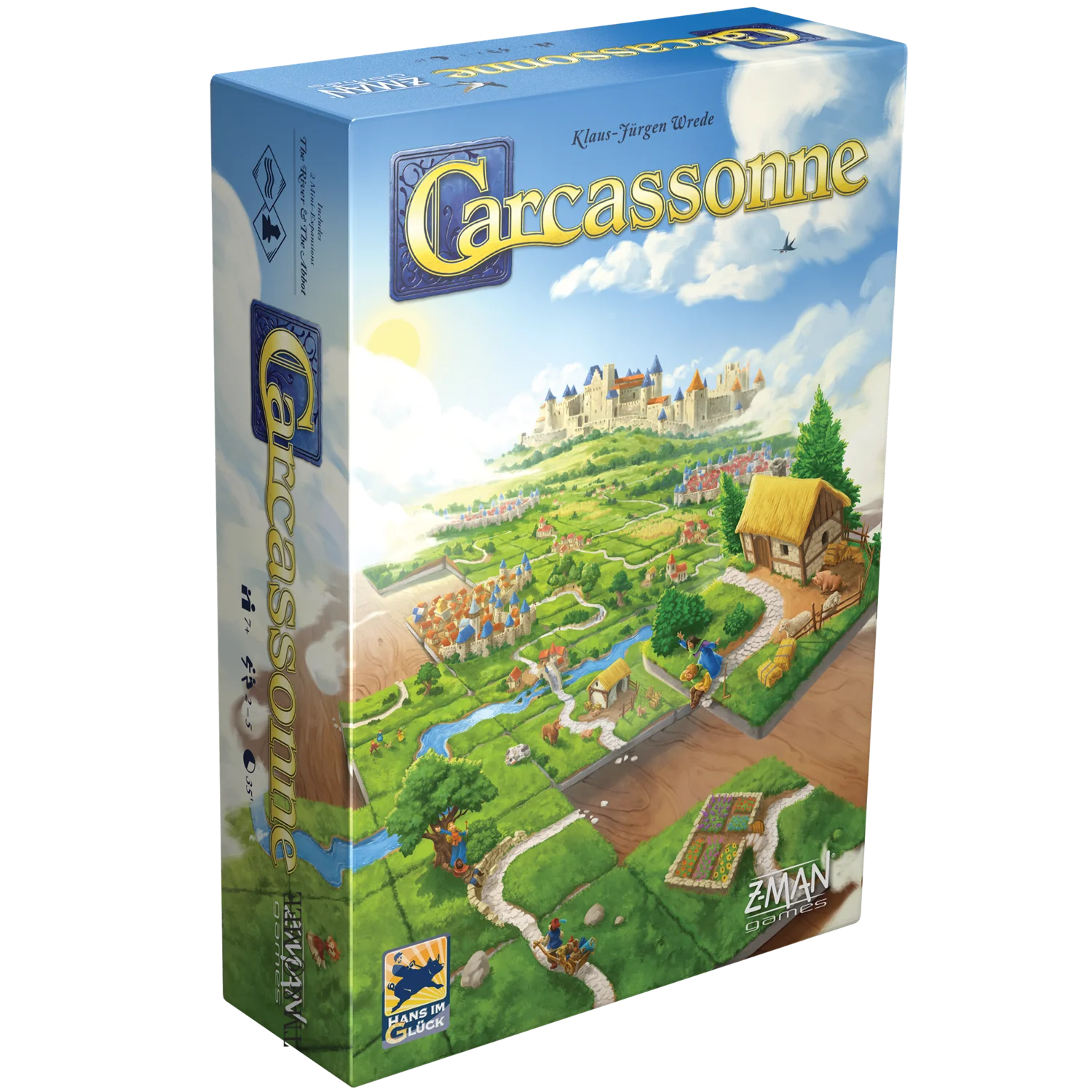
B3’s verdict
Carcassonne is an approachable strategy choice when players want to build a visible shared landscape. B3 would choose it for a table that likes short turns with consequences that grow over time. Its welcoming first explanation leaves room for increasingly sharp interaction.
Players draw and place land tiles, optionally add a meeple, and score completed features. Roads, cities, monasteries, and fields create different commitments. Meeples are limited, so claiming every attractive feature is not a sustainable plan.
What makes the decisions interesting
The interesting decision is whether a feature deserves another follower before it can pay you back. A large city may promise points while keeping a meeple occupied. A modest completion can restore useful flexibility. The tile also changes possibilities for the other people building the same landscape.
The tradeoff is that peaceful-looking construction can become competitive. Players may connect features or make another person’s project awkward to complete. Explain that interaction before presenting the game as a purely friendly joint building exercise.
Draw a tile, change a feature, decide whether to claim it
A turn begins with one landscape tile. Place it legally against the existing map so roads, cities, and fields match their neighbors. You may then commit a meeple to an eligible feature on that tile. Completed roads, cities, and monasteries score and return their meeples, while some scoring waits until the end.
The placement and claim are separate decisions. A tile can improve your position even when spending a meeple would be unwise. Your supply is limited, and a meeple trapped in an unfinished feature cannot help with another opportunity.
The small city may be the better investment
Imagine choosing between extending a promising large city and completing a modest road. The city offers more potential, but the road returns a meeple immediately and makes its points certain. If your supply is nearly empty, the smaller completion can enable several later claims. This is a hypothetical example, not a mandatory strategy.
Watch which shapes would finish a feature. Building an ambitious project around one rare-looking gap can leave valuable pieces unavailable for much of the game. Flexibility matters as well as the current score.
Interaction can happen through a connection
You cannot simply place a meeple into an already occupied feature, but separate claimed features can later connect. When that happens, majority rules determine who scores. A distant meeple can therefore become a challenge to something you thought you owned.
This gives tile placement a sharp edge without requiring direct attacks. A tile can help a rival, make their completion awkward, or prepare a shared feature. Whether you enjoy that opportunism is a more useful buying question than whether the landscape looks peaceful.
Teach the map before adding more systems
Demonstrate a legal placement, a completed feature, and the return of a meeple. Follow the included introductory guidance about farmers; their endgame scoring is easier to explain once people understand how connected fields work.
At two, attention stays closely on one opponent's projects. With more players, the map changes further before your next turn and a promising place may disappear quickly. The tile draw introduces adaptation at every count. It is not a fully controlled construction exercise.
Begin with the base game, then consider expansions if the group wants extra constraints and scoring. A Big Box is a larger package with additional material, not the minimum needed to discover whether you enjoy placing tiles. Check the language and included edition when comparing artwork or component bundles.
The cost of choosing this experience
For a first teach, demonstrate a completed road, a city, and a monastery. Follow the edition’s introductory guidance for fields and optional modules. Let newcomers understand when followers return before adding every extra component found in a larger bundle.
B3 recommends the standard base game for a group wanting accessible tile placement and room to improve. Big Box sets include extra modules; many smaller boxes are expansions requiring a base. Start with the ordinary landscape and add variety only after the group knows which parts it enjoys.
Official game information and rules →
Find the game
As an Amazon Associate, B3 earns from qualifying purchases.
Compare Carcassonne listings on Amazon — title search; check edition, language, contents, and seller.