7 Wonders Duel Guide — Draft a Civilization while Watching Two Sudden Defeats
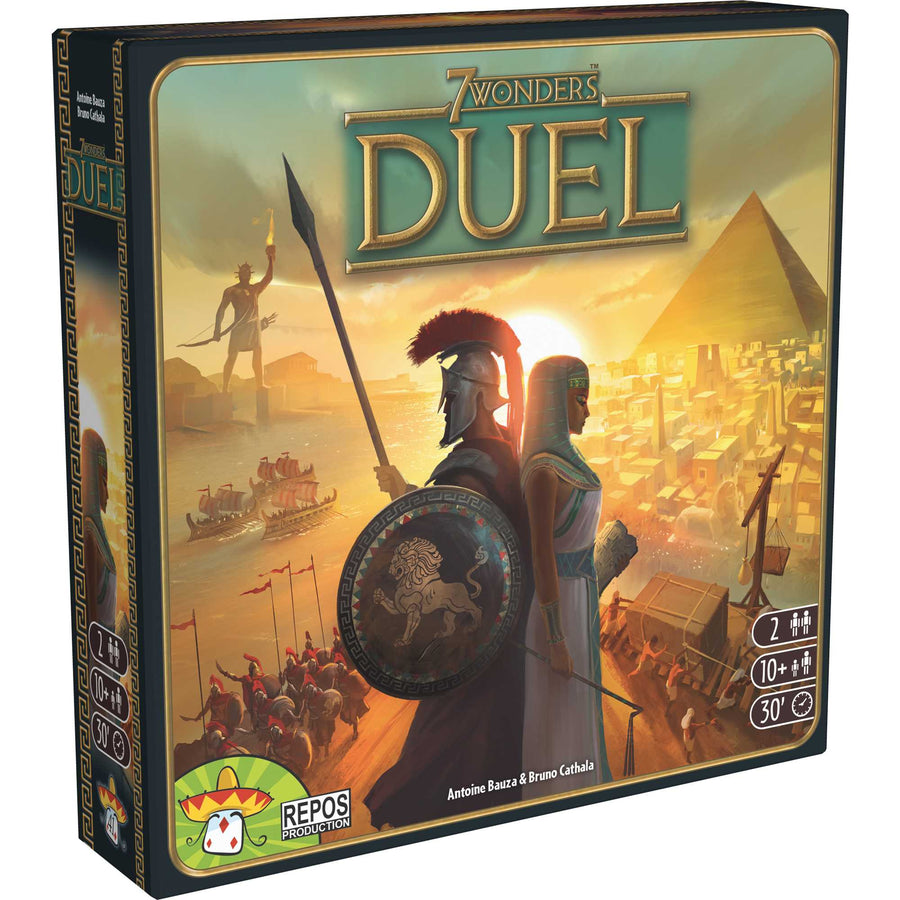
The draft is also a battle over what becomes available
7 Wonders Duel gives two players a shared arrangement of overlapping cards. On a turn, select an available card and use it to develop your city, gain coins, or construct a wonder under the rules. Removing a card can expose another, so a good purchase may also hand the opponent a better one.
B3 recommends it for a pair that wants a compact civilization race with several forms of pressure. The card symbols need a teach, but the bigger challenge is judging how the current draft changes the opponent's next choice.
Resources make later choices affordable
Production and commercial development shape what you can build. Missing resources can require purchasing them, with costs affected by the opponent's production. A card is therefore valuable for what it enables as well as its printed points.
Follow the resource procedure carefully: production is reusable capacity rather than a pile of wooden goods spent and returned. A small example purchase makes the economy easier to understand than reading every symbol before play.
A valuable card can be the wrong one to uncover
Imagine taking an economical resource card that exposes a military card the opponent needs to reach your capital. Improving your engine does not compensate for an immediate defeat. This is a hypothetical situation, not a particular age layout.
The same principle applies when a selection reveals an unknown card. Sometimes you accept that uncertainty because the current choice matters; sometimes you preserve the draft's shape and force the opponent to open it instead. Timing the exposure is part of skill.
Watch two sudden endings while building points
Military and scientific supremacy can end the game before normal scoring. If neither occurs, points decide the result after the final Age. You must therefore respect threats outside your own preferred scoring strategy.
Wonders and effects that alter the turn sequence can change who receives an exposed opportunity. Teach the immediate-win conditions early, then demonstrate a wonder's actual cost and effect. A newcomer should not discover a sudden loss condition only after making an irreversible selection.
A dedicated duel with its own identity
This is standalone and does not require original 7 Wonders. Pantheon and Agora are expansions, while other Duel-branded games are separate products. Start with the base rules before adding extra tactical layers.
The strongest fit is a pair that likes reading one another's opportunities and accepting some hidden-card uncertainty. It is less suitable if blocking a rival feels unpleasant or if both players want to develop independent cities without interruption. A first game is for learning the symbols and pacing; a rematch is where many of the draft's threats become easier to see.
Product and rules reference: publisher or edition information. Examples illustrate choices and do not describe a claimed play session.
Find the game
As an Amazon Associate, B3 earns from qualifying purchases.
Compare 7 Wonders Duel listings on Amazon — check the edition, language, contents, and seller.