Trophy Dark vs. Trophy Gold — Choose a Doomed One-Shot or a Dangerous Campaign

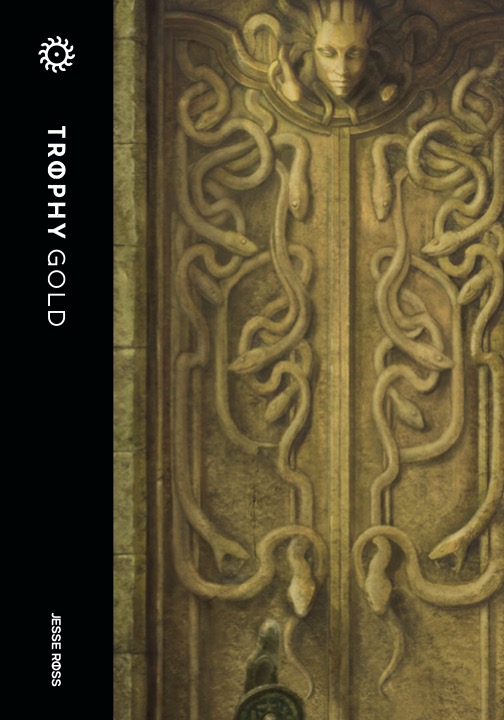
Trophy Dark and Trophy Gold share desperate treasure-hunters and dangerous places, but they make different promises about a character’s future. Jesse Ross’s Dark is designed for a short descent toward ruin. Gold supports continuing expeditions where survival and profit remain possible. Choosing between them is a decision about the story’s shape, not simply which version has more rules.
Dark makes the descent the subject
An incursion leads characters through increasingly dangerous stages, often described as rings. The environment becomes more invasive as the hunters press farther toward what they want.
That structure gives a one-shot clear momentum. The question is how these people change, compromise, and turn against their better judgment as the place takes hold. The adventure does not need a balanced sequence of encounters ending with a reliable treasure payout.
Explain the intended doom before play. Players can enjoy a tragic story while still wanting agency over how the tragedy develops. Hiding the game’s basic promise until a cherished character is lost creates a mismatch rather than a useful surprise.
Ruin links risk to transformation
Risk rolls combine different dice according to the character’s capabilities and the help or danger involved. Ruin measures how close the hunter is to being consumed or fundamentally changed by the incursion.
That makes continued effort costly even when the immediate action succeeds. A useful result can bring the character closer to an ending they would ordinarily avoid.
I like that relationship between desire and vulnerability. The treasure matters because the characters are prepared to accept something for it. The game asks what that willingness reveals, rather than treating every danger as a neutral obstacle.
Dark’s incursion format helps preparation
The rings, sensory detail, and escalating pressure give the GM a compact structure. An incursion can have strong thematic coherence without requiring a large map and a complete regional history.
The limitation is breadth. Groups wanting open-ended travel, long-term equipment development, or a durable home base are asking Dark to perform a different job. It works best when the table embraces a finite, intense experience.
The GM still needs to respond to player choices. An expected downward trajectory is not permission to narrate the same ending regardless of what anyone does.
Gold keeps the expedition open to survival
Trophy Gold adds procedures suited to continuing treasure-hunting play. Hunts, combat, burdens, and the need to return with enough value create a campaign rhythm around entering danger and getting out again.
The hunters remain vulnerable, but the game does not assume every outing should consume them. That difference gives practical planning and retreat more enduring significance.
Gold is the better fit when the group wants a recurring party, changing resources, and several expeditions. It preserves horror and temptation while allowing the question “Was this trip worth it?” to matter after the session ends.
Hunt tokens change exploration’s rhythm
Gold’s hunt procedures provide a way to investigate a set and gain tokens that support discovery and progress. This is more structured than simply rolling for every object in a room.
The approach can keep exploration moving, but it is not the same as a traditional dungeon where every hidden detail has a fixed location waiting to be found. Players who chiefly enjoy precise mapping and exhaustive spatial deduction should examine the procedures before choosing it.
The useful comparison is between discovering through this shared system and navigating a fully specified location. Neither approach is automatically better; they create different kinds of attention.
Decide what the players want to preserve
Ask whether they want to watch one group of hunters reach a terrible ending or see whether a party can build a life through repeated dangerous ventures. That answer selects the version more clearly than a comparison of page counts.
Also agree on the horror material. Ruin and bodily transformation can become intense, and the game’s pressure works better when everyone has chosen the intended experience.
B3’s verdict
Choose Trophy Dark for a concentrated tragic one-shot with escalating environmental horror. Choose Trophy Gold for dangerous expeditions where survival, treasure, and return can sustain a campaign. Both make desire costly and give the GM a strong structure. Their main limitation is fit: Dark should not be sold as a dependable heroic campaign, and Gold’s hunt procedures should not be assumed to reproduce a conventional mapped dungeon crawl.
Where to start: rules, editions & buying options
Choose Dark for the tragic one-shot experience and Gold for recurring dangerous expeditions. They are distinct games, not a required core book and expansion pair. Use the official page’s purchase links for the version you want; Trophy Loom is a setting resource rather than either game’s core rules.
Find the book
As an Amazon Associate I earn from qualifying purchases.
- Search Amazon for Trophy Dark & Trophy Gold — Amazon search