The Witch’s Heart Review — Angrboda, Family, and the Human Cost of Norse Myth
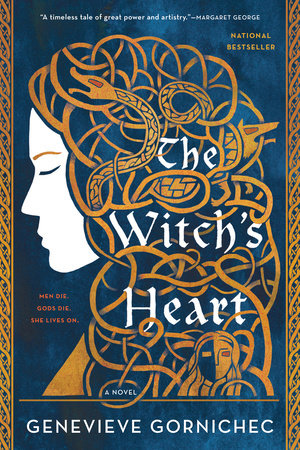
The Witch’s Heart retells Norse myth by making Angrboda’s life the center rather than a note beside other figures’ destinies. Genevieve Gornichec follows her survival, relationship with Loki, and motherhood under the shadow of prophecy. The novel’s most valuable shift is one of attention: beings treated as threats in a larger myth are also someone’s children.
Angrboda’s story begins after violence
The opening places her beyond a burning, seeking a life away from the gods who harmed her. Survival is therefore not an abstract virtue. It involves recovering a sense of self and deciding where safety might be possible.
That makes her remote home more than picturesque isolation. It is a practical attempt to set the terms of a life after other people have asserted authority over it.
The mythic setting gives the experience extraordinary scale, but the need is recognizable. Someone who has endured violence may want distance, ordinary work, and relationships that do not repeat the earlier imbalance.
Loki brings affection and instability
The relationship creates warmth and intimacy while remaining shaped by Loki’s divided obligations and unpredictable conduct. The novel does not require a reader to consider him dependable simply because he can be charming.
That is an important qualification for anyone choosing the book as a mythological romance. The emotional experience includes attachment to someone whose presence does not guarantee security.
I find Angrboda’s need to assess that relationship more interesting than treating every familiar mythic appearance as a reward for the reader. Recognizing a god’s name is less important than seeing what that god’s choices do to her life.
The children change the scale of prophecy
Hel, Fenrir, and Jormungand are familiar to readers of Norse mythology through their later roles. Here, their place in Angrboda’s family gives those roles another emotional meaning.
A prophecy about dangerous beings becomes a threat to particular children. The gods’ concern with the future can therefore look different from a mother’s position, especially when powerful people act as though their fear justifies anything.
That is the retelling’s strongest idea. It does not erase mythic scale; it shows what that scale can conceal when the story is told chiefly through rulers and warriors.
Skadi and Gerd broaden the life around her
Relationships beyond Loki provide companionship, knowledge, and perspectives that matter to Angrboda’s survival. They keep the book from making one romantic bond her only connection to the world.
The domestic work and visits also give time texture. Motherhood, healing, and maintaining a home occupy attention beside visions and divine conflict.
Readers expecting continuous battles may find those passages slow. Their purpose is to establish what later danger threatens. A home must feel lived in before its loss or disruption can carry more than mythological significance.
Foreknowledge creates a different suspense
Many readers will know the outline of Ragnarok or the fate associated with the named children. The book’s suspense is therefore not dependent solely on surprising them with every event.
The questions become how Angrboda understands what is coming, what she can still choose, and what a meaningful act looks like when prophecy narrows the future.
That makes the novel reflective rather than purely plot-driven. Readers who dislike foreknown tragedy should consider the premise carefully. A retelling can offer a different emphasis without promising that familiar mythology will become a gentle story.
Familiarity is helpful, not mandatory
The novel supplies enough context to follow its central relationships without first studying the Eddas. Some prior knowledge adds recognition, but it can also encourage reading only for departures from an expected version.
Approach it as a novel with a particular viewpoint. Its work is not to reproduce every source neutrally. It selects whose experience deserves narrative space.
Expect violence, grief, and threats involving children. The quiet home scenes do not make the overall experience cozy.
B3’s verdict
The Witch’s Heart is a strong choice for readers who want a myth retelling centered on survival, motherhood, and the cost of other people’s prophecies. Angrboda’s relationships make the familiar monsters and gods feel less abstract. Its measured domestic pace and tragic pressure are the main qualifications. Read it for the lives a grand myth can push to the margins, with romance treated as one difficult part of that life.
Find the book
As an Amazon Associate I earn from qualifying purchases.