The Inheritance Trilogy Review — Gods, Family Power, and a Changing Point of View
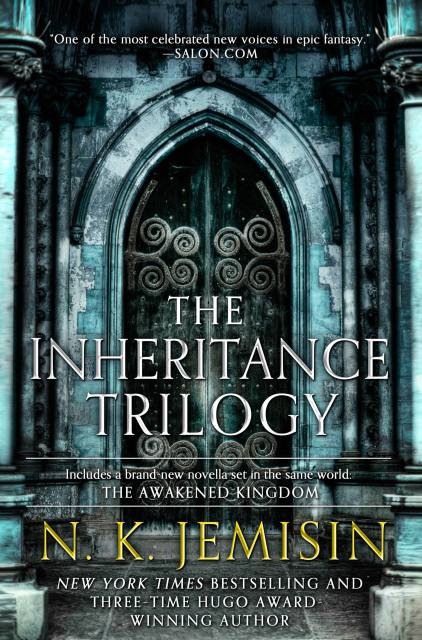
The Inheritance Trilogy makes gods part of a political family’s machinery. N. K. Jemisin begins with a struggle over the Arameri succession, then changes viewpoint and scale as divine relationships reshape the world. Its strongest quality is the way intimacy and authority remain entangled. The trilogy is less a single heroine’s uninterrupted quest than three connected accounts of power’s consequences.
The Hundred Thousand Kingdoms begins inside the ruling family
Yeine is summoned from Darr to Sky after her mother’s death and brought into a succession contest she did not know she belonged to. The palace’s beauty and status conceal a family prepared to use inheritance as coercion.
The captive gods make that authority specifically fantastical. Divine beings are not distant symbols invoked to justify rule; their enforced service is part of how the family maintains it.
That creates a strong central question. What does it mean to enter an inheritance when the wealth and power being offered depend on another being’s subjugation? Yeine’s personal search and the political order cannot remain separate.
The gods are relationships as well as forces
Nahadoth, Sieh, Itempas, and the wider divine history carry emotional attachments, betrayals, and unequal obligations. Their scale does not make their relationships simple.
The attraction and intimacy in the trilogy matter because approaching a god also means approaching extraordinary asymmetry. Affection does not automatically erase differences in power, knowledge, or vulnerability.
I find that tension more interesting than gods functioning only as quest-givers or final enemies. They can alter the world while still being shaped by their connections to one another and to mortals.
The Broken Kingdoms moves away from the palace center
The second novel follows Oree Shoth, a blind artist living in the city beneath the palace, and a mystery involving murdered godlings. The change of viewpoint reveals what the transformed order looks like from another social position.
That is a valuable sequel choice. Rather than simply increase the first protagonist’s problems, it asks what earlier events mean for people outside the succession’s immediate circle.
The mystery gives Oree a concrete reason to encounter the larger divine conflict. Her art and perception also provide a different relationship to the world than Yeine’s political inheritance did.
The Kingdom of Gods changes the perspective again
The third novel centers Sieh and his connections with younger members of the Arameri family. Mortality, change, and the consequences of older relationships become more immediate from the godling’s point of view.
That completes the trilogy’s pattern of shifting who gets to tell the story. The same world can be understood through a political outsider, an artist, and a divine being whose own identity is becoming unstable.
The shifts can also be a barrier. A reader deeply attached to one narrator may resist beginning again with another, even when familiar figures and consequences remain. Expect connected novels with distinct emotional centers rather than one continuous first-person account.
The narrative voices are part of the experience
The books use intimate perspectives that shape how information arrives. Explanations are tied to what a narrator understands, remembers, or chooses to emphasize.
That gives the series personality, but it can make orientation demanding. Divine history, family politics, and unusual relationships accumulate together. Readers wanting a simple map of factions before the story begins may find the opening less comfortable.
The trilogy also contains violence, coercion, and sexual material. Its divine romance should not be sold as a gentle escape from political harm.
Which edition should a reader consider?
The three novels are The Hundred Thousand Kingdoms, The Broken Kingdoms, and The Kingdom of Gods. An omnibus is convenient for a reader already committed to the full sequence; the first volume alone is a smaller way to test the voice and premise.
Some collections include additional related material, so check the contents of the specific edition. Do not confuse this trilogy with Jemisin’s separate Broken Earth books.
B3’s verdict
The Inheritance Trilogy is a strong choice for readers who want divine fantasy to examine captivity, family power, and intimate dependence. Its changing viewpoints broaden the consequences instead of merely escalating the same quest. The density and narrator changes are the main reservations. Begin with the first novel if the palace premise appeals, and expect later books to show what that world looks like from substantially different positions.
Find the book
As an Amazon Associate I earn from qualifying purchases.