The City of Brass Review — Beautiful Magic, Complicated Loyalties
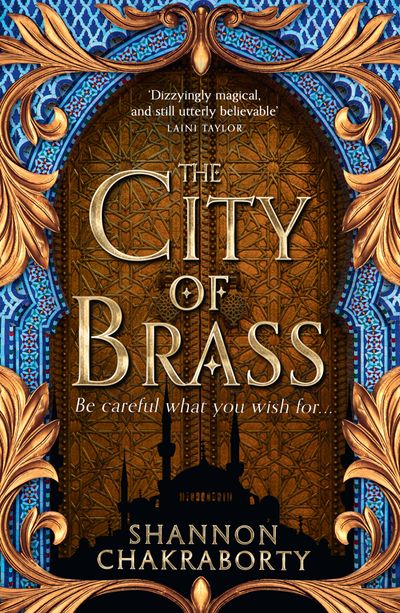
The City of Brass uses the wonder of a hidden magical city to draw readers into competing accounts of its past. S. A. Chakraborty gives Nahri an extraordinary journey, but arriving in Daevabad does not mean finding a trustworthy explanation of who she is. Beauty, inheritance, and political belonging are tangled together from the start.
Nahri’s practical life makes the discovery engaging
In Cairo, Nahri survives through wit, performance, and unusual healing abilities she does not fully understand. She is used to assessing people for practical reasons. An encounter with the warrior Dara forces her to consider explanations that exceed her existing view of the world.
That makes her more interesting than an innocent newcomer waiting to be told everything. She has skills and skepticism before entering magical society. Her vulnerability comes from lacking information, rather than lacking intelligence.
The journey toward Daevabad establishes a world of djinn and other supernatural forces, but the central question is personal: why does this world seem to have a place prepared for someone who never knew it existed?
Dara is a guide with a history
Dara can explain things Nahri cannot yet understand, while carrying loyalties and experiences that shape what he tells her. That imbalance creates useful tension. The most helpful person in a dangerous situation is not necessarily a neutral source of truth.
The relationship has romantic energy, but it also functions as a struggle over knowledge and obligation. Nahri needs help without wanting to surrender her independence. Dara’s connection to the past gives the guidance emotional and political weight.
I like that the book does not let attraction settle the question of trust. Someone can care about another person while still introducing them to a selective version of events.
Ali supplies a view from inside power
The second major viewpoint follows Ali, a prince whose convictions sit uneasily beside his position in the ruling family. His concerns about Daevabad’s treatment of marginalized people expose pressures Nahri initially encounters from the outside.
The alternating perspectives are useful because the city is too complicated to be understood through a single arrival narrative. Ali knows institutions Nahri must learn, yet that familiarity brings obligations and blind spots of its own.
The viewpoints also create a pacing cost. Just as one strand becomes urgent, attention can move elsewhere. Readers preferring a single close journey may need time to appreciate how the two accounts complicate each other.
The city’s divisions are the actual story
Tribal identities, the treatment of shafit, dynastic rule, and memories of earlier violence shape who is considered legitimate. Daevabad’s history remains active in everyday relationships, not simply recorded in an appendix.
That gives the setting substance. A magical heritage can confer authority on one person while making another vulnerable. A family’s account of justice can sound very different to people who suffered under its rule.
The number of terms and relationships is the main learning barrier. I would read the opening with enough attention to distinguish groups rather than expect every unfamiliar name to become clear immediately. The book rewards that investment, but it asks for it.
Romance shares space with political uncertainty
The relationships are important without turning the novel into a simple romance whose wider world exists to supply obstacles. Attraction, loyalty, and inherited identity affect one another, making apparently personal choices politically consequential.
That is appealing for readers who want romance embedded in a larger fantasy conflict. Someone seeking a clearly signposted romantic resolution may find the factional complexity less satisfying. The book begins the Daevabad trilogy, continued in The Kingdom of Copper and The Empire of Gold, so many consequences remain in motion.
The first installment’s job is partly to show how incomplete the characters’ initial explanations are. It should not be purchased on the assumption that entering the city settles its central questions.
B3’s verdict
The City of Brass is a strong choice for readers who enjoy immersive settings, divided loyalties, and magical discovery complicated by political history. Nahri’s practicality and Ali’s conflicted position give Daevabad two useful points of entry. Its density and series-opening structure are the main reservations. Read it for the pleasure of discovering a beautiful world that becomes more difficult to judge the better you understand it.
Find the book
As an Amazon Associate I earn from qualifying purchases.
- The City of Brass S A Chakraborty — Amazon search