Spinning Silver Review — Bargains, Winter, and the Work of Staying Alive
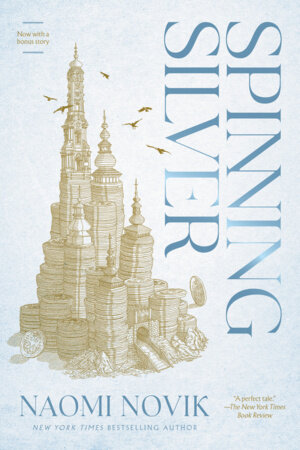
Spinning Silver takes a fairy-tale bargain and gives it an economic foundation. Naomi Novik follows women whose survival depends on understanding what they are owed, what they can offer, and what a powerful person might demand in return. Its winter magic is striking, but the work of keeping a household alive is what makes that magic matter.
Miryem’s competence attracts the wrong attention
Miryem’s father lends money without successfully collecting it, leaving his family struggling. She takes over the practical task of demanding repayment. Her success exposes the difference between being kind and allowing other people to benefit from your household’s deprivation.
A boast about turning silver into gold draws the attention of the Staryk, supernatural beings associated with the winter world. What was an expression of financial skill becomes a demand with literal magical stakes.
That is an effective transformation of the familiar Rumpelstiltskin pattern. The story begins with labor and exchange, so the impossible bargain grows from something Miryem actually does rather than arriving as a random test of destiny.
Wanda makes work a route toward safety
Wanda’s position in Miryem’s household connects debt to another family’s hardship. Her experience shows how employment, money, and domestic authority can determine whether a person has any practical room to act.
She brings the novel closer to everyday vulnerability. The larger magical conflict does not erase the importance of wages, food, and protection from an abusive home. Those needs remain meaningful beside courts and supernatural bargains.
I value that scale. Fantasy can make ordinary work disappear as soon as magic enters the plot. Here, the same habits of attention and persistence that sustain a household also become useful in extraordinary circumstances.
Irina’s marriage opens another form of confinement
Irina’s position as a nobleman’s daughter gives her more status but not unrestricted control over her future. Her marriage connects her to royal power and a danger that appearances do not adequately explain.
The contrast between the women is useful. Their circumstances differ, yet each encounters arrangements that treat her as a resource within someone else’s plan. Their responses emerge from their own knowledge and responsibilities rather than one interchangeable model of resistance.
The multiple viewpoints widen the story but can make its transitions demanding. The narration changes speakers without always providing the most explicit signposting. Readers need to attend to voice and context, especially while the cast expands.
Bargains are precise and morally uneven
The Staryk’s understanding of exchange gives promises unusual weight. A payment, gift, or obligation can carry implications a human character does not initially recognize.
That is where much of the tension lives. The women need to understand terms while powerful beings assume their own rules should govern the encounter. Cleverness is valuable, but the story does not pretend that every negotiation occurs between equal participants.
The winter imagery reinforces that imbalance. Beauty can be dangerous, and a marvelous court can remain an unwelcoming place. The supernatural world is attractive without becoming automatically benevolent.
Community supplies an alternative to isolated cleverness
Family relationships, household work, and acts of help make the story broader than one woman outwitting a monster. People preserve one another’s options through ordinary support.
Miryem’s Jewish identity also matters to how she and her family are perceived. The novel’s treatment of moneylending cannot be separated from the prejudice around it. Collecting a legitimate debt can still be cast as evidence against someone already treated as an outsider.
That gives the fairy-tale revision substance beyond changing the protagonist’s gender. It questions who gets called cruel, who is allowed to demand payment, and whose need is treated as invisible.
B3’s verdict
Spinning Silver is a strong choice for readers who enjoy winter folklore, exacting bargains, and several intertwined perspectives. Miryem, Wanda, and Irina make its magical stakes inseparable from work, family, and constrained choices. Its changing narrators and measured development are the main barriers. Read it for the way practical competence becomes resistance—and for a world where a beautiful offer still deserves careful examination.
Find the book
As an Amazon Associate I earn from qualifying purchases.