Sorcerer to the Crown Review — Magical Gatekeeping with Regency Wit
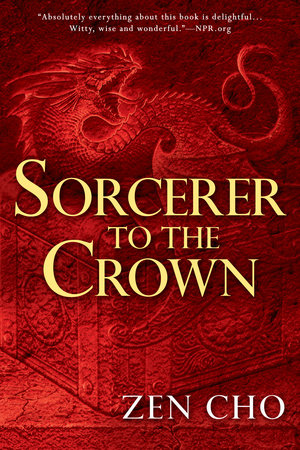
Sorcerer to the Crown puts magical ability inside a society determined to recognize it selectively. Zen Cho’s Regency fantasy follows Zacharias Wythe, the new Sorcerer Royal, and Prunella Gentlewoman, whose capabilities exceed the role she has been allowed. Its wit is attractive, but the social exclusions beneath that wit are what give the novel substance.
Zacharias has an office without secure acceptance
As a Black man leading England’s magical establishment, Zacharias faces suspicion and hostility that cannot be explained simply as ordinary disagreement about policy. His appointment gives him formal authority without ensuring that his peers will treat it as legitimate.
England’s declining magical supply makes the position harder. He has an actual problem to investigate while opponents interpret that problem through their existing prejudice. Competence does not free him from having to navigate the institution’s judgments.
That makes his restraint interesting. Politeness can be a practical strategy, but it also places pressure on the person expected to remain composed while being insulted. The comedy has a sharper edge because manners distribute that burden unevenly.
Prunella refuses the available role
Prunella’s circumstances place her in a school concerned with containing women’s magical abilities. Her power and ambition challenge assumptions about what women may properly do, especially when class and uncertain parentage shape how others perceive her.
She brings a more disruptive energy than Zacharias. Where he has reasons to protect his office carefully, she has reasons to question why permission should matter so much in the first place.
Their contrast is the novel’s best engine. Neither formal status nor raw ability is enough by itself. Their different approaches make the institution’s exclusions visible from two directions.
The shortage leads beyond English drawing rooms
Fairyland and international magical interests expand the problem beyond domestic professional rivalry. The world’s supernatural relationships are not arranged solely for the convenience of England’s magicians.
That is useful because the shortage might otherwise become a technical mystery solved by the most talented scholar. Instead, it raises questions about entitlement and dependence: what does the establishment assume it is owed, and by whom?
The magical encounters also provide a more extravagant register beside the social comedy. The novel can move from a polite conversation to a distinctly fairy-tale difficulty without abandoning its interest in bargains and authority.
Etiquette creates actual obstacles
Invitations, introductions, schooling, and professional recognition affect access. The rules of polite society are not merely decorative language surrounding a fantasy plot. They determine who can be heard and which claims receive serious consideration.
I like that relationship between tone and subject. A supposedly courteous refusal can do more damage than an openly hostile speech because the institution treats it as reasonable. The novel’s humor exposes the absurdity of that arrangement.
Readers who enjoy historical manners and social maneuvering will have a clearer reason to appreciate the pace. Those wanting rapid combat or a tightly explained magic system may find the conversational stretches less immediately satisfying.
Romance and comedy lighten the movement
The relationships provide warmth and friction without removing the larger concerns. Prunella’s refusal to behave as expected can be funny while remaining a serious challenge to who is allowed ambition.
The book’s whimsical quality should not be confused with an absence of racism or sexism. Those pressures are visible, and the characters have to act within them. The tone makes the experience more buoyant than grim fantasy, but it does not erase the difficulty.
The novel has a related follow-up, The True Queen. This first story provides a substantial arc of its own; readers do not need to treat the purchase as the beginning of an endless saga to understand its attraction.
Who will enjoy it most?
Choose it if you like the combination of Regency manners, fairy-tale magic, and capable people confronting institutional nonsense. It is especially appealing when social intelligence feels as interesting as a spectacular spell.
Be more cautious if you want a solemn epic with meticulously classified supernatural rules. Its pleasure is partly the lively interaction between familiar social constraints and unpredictable magical circumstances.
B3’s verdict
Sorcerer to the Crown is a strong choice for witty historical fantasy with a clear interest in who receives permission to be powerful. Zacharias and Prunella make complementary challenges to the establishment, while Fairyland keeps the problem larger than a professional quarrel. The measured social pace is its main qualification. Read it when a difficult conversation and a magical encounter can both count as meaningful action.
Find the book
As an Amazon Associate I earn from qualifying purchases.